The Shifting Landscape of Data Science Roles
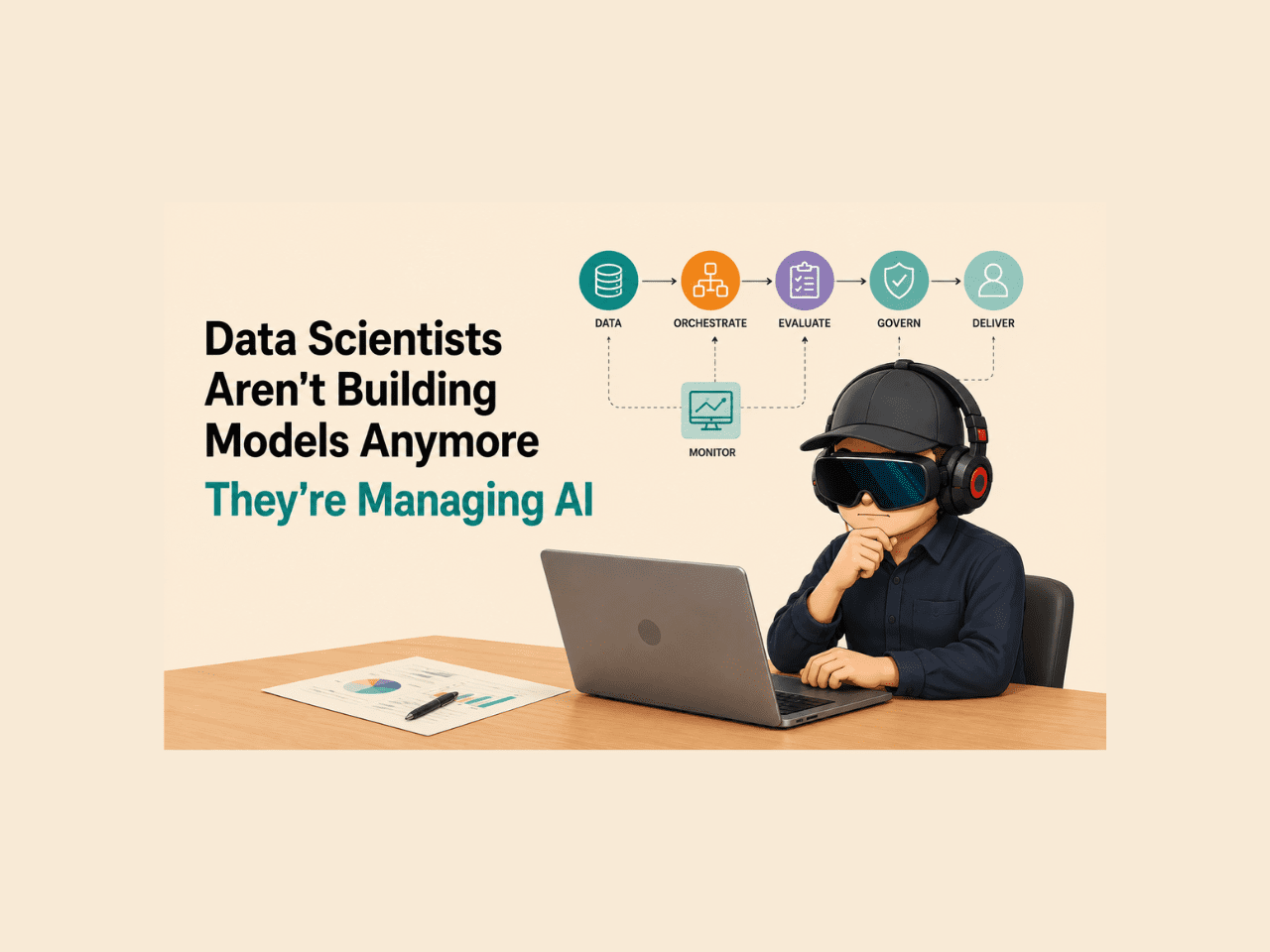
The traditional image of a data scientist often conjures up an individual deeply engrossed in algorithms, meticulously crafting and fine-tuning machine learning models. However, the reality of the profession is undergoing a profound transformation. Across industries, data scientists are finding their roles evolving from hands-on model builders to strategic AI managers. This shift is driven by the increasing maturity and deployment of AI systems, which demand a different set of skills focused on governance, integration, and lifecycle management rather than just initial development.
This evolution means that the core responsibilities are moving beyond the experimental phase of model creation. Instead, data scientists are increasingly tasked with ensuring that deployed AI models operate effectively, ethically, and in alignment with business objectives. This includes monitoring performance, managing data drift, ensuring regulatory compliance, and integrating AI solutions into broader organizational workflows. The focus is no longer solely on the elegance of a single model but on the robust and reliable performance of an entire AI ecosystem.
Consider the analogy of a chef versus a head chef. The chef meticulously prepares individual dishes, focusing on ingredients and technique. The head chef, while understanding the culinary arts, oversees the entire kitchen, manages the staff, ensures quality control across all dishes, and makes strategic decisions about the menu and operational efficiency. Similarly, the data scientist is moving from the role of the chef to that of the head chef, managing the complex operation of AI systems within an organization.

Key Responsibilities in AI Management
The new responsibilities for data scientists in AI management are multifaceted. A primary concern is the operationalization of AI models. This involves deploying models into production environments, ensuring they are scalable, and that they can handle real-world data volumes and velocities. This is a stark contrast to the often isolated, experimental environments where models are initially built and tested.
Monitoring and maintenance form another critical pillar. Once deployed, AI models are not static. They are subject to concept drift and data drift, where the underlying patterns in the data change over time, leading to performance degradation. AI managers are responsible for setting up sophisticated monitoring systems to detect these changes and trigger retraining or recalibration processes. This requires a deep understanding of the model's behavior in production, not just its theoretical performance on historical data.
Furthermore, ethical considerations and governance are becoming paramount. As AI systems become more integrated into decision-making processes, issues of bias, fairness, transparency, and accountability come to the forefront. Data scientists in management roles must ensure that AI systems are developed and deployed responsibly, adhering to internal policies and external regulations. This often involves collaborating with legal, compliance, and ethics teams, translating complex technical concepts into actionable governance frameworks.
Integration with existing business processes is also a key task. An AI model, no matter how accurate, provides little value if it cannot be seamlessly integrated into the tools and workflows that business users rely on. This requires data scientists to understand the broader business context, identify opportunities for AI integration, and work with software engineers and product managers to embed AI capabilities effectively. This collaborative aspect underscores the shift from an individual contributor role to a more cross-functional leadership position.
Skills in Demand for the Evolving Role
The skillset required for this new breed of AI manager is expanding beyond pure statistical modeling and programming. While a strong foundation in these areas remains essential, proficiency in areas like MLOps (Machine Learning Operations) is becoming critical. MLOps encompasses the practices, tools, and methodologies for deploying and maintaining ML models in production reliably and efficiently. This includes skills in CI/CD (Continuous Integration/Continuous Deployment) for machine learning, infrastructure management, and robust testing frameworks.
Communication and stakeholder management are also increasingly vital. AI managers need to articulate the capabilities and limitations of AI systems to non-technical audiences, manage expectations, and build consensus among diverse teams. They must be able to translate business problems into AI solutions and explain the impact of AI initiatives in business terms. This involves strong presentation skills, the ability to negotiate trade-offs, and a capacity for strategic thinking.
Domain expertise is another area that gains importance. Understanding the specific industry or business unit where the AI is being deployed allows managers to better identify relevant data sources, interpret model outputs in context, and anticipate potential ethical or operational challenges. This deeper understanding enables more effective decision-making regarding model selection, evaluation, and deployment strategies.
Finally, a proactive approach to continuous learning is indispensable. The field of AI is evolving at an unprecedented pace. AI managers must stay abreast of new research, emerging tools, and best practices in areas such as responsible AI, explainable AI (XAI), and federated learning. This requires a commitment to lifelong learning and a curiosity that extends beyond the immediate task at hand.
Implications for the Future of AI Development
This shift has significant implications for the future of AI development. It suggests a move towards more standardized, industrialized approaches to AI deployment. The focus will be on creating robust, scalable, and maintainable AI systems rather than on one-off model experiments. This could lead to increased efficiency and faster time-to-market for AI-driven products and services.
The demand for specialized roles within the AI lifecycle may also increase. As data scientists move into management, there might be a greater need for individuals focused purely on model research and development, or on specific aspects of MLOps. This specialization could foster deeper expertise in particular areas, accelerating innovation.
The democratization of AI tools and platforms, coupled with this role evolution, could also lead to AI becoming more embedded and accessible across various business functions. When data scientists are empowered to manage and integrate AI, rather than being solely responsible for its creation, the potential for wider adoption and impact grows substantially. The challenge for organizations will be to cultivate these new management skills and to create the necessary organizational structures to support this evolving profession.
What nobody has addressed yet is the potential for a