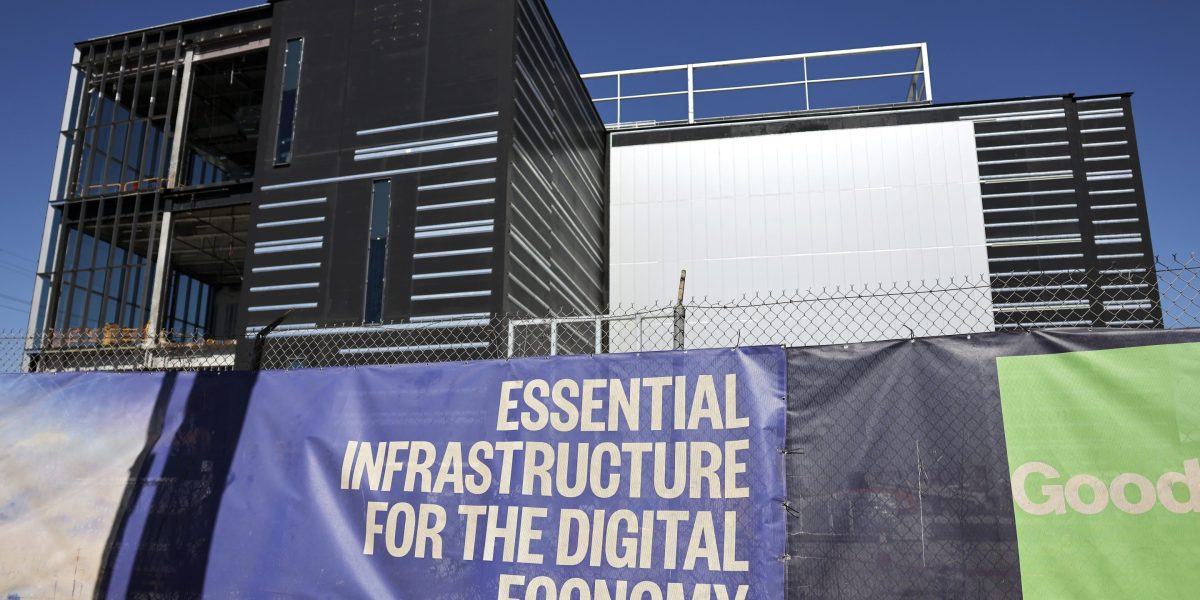
The Hidden Energy Tax: How Data Centers Are Reshaping Power Grids
The insatiable appetite of data centers for electricity is no longer a niche concern for tech professionals. New analysis reveals that the rapid expansion of these digital powerhouses has directly contributed to a staggering $23 billion increase in electricity prices for the public. This surge isn't merely an abstract number; it translates into higher utility bills for millions of households and businesses, effectively acting as a hidden tax levied by the digital economy's infrastructure.
At the heart of the issue is the sheer scale of energy consumption. A single, large data center can consume as much electricity as a small city. As companies like Microsoft, Amazon, and Google continue to build more sprawling facilities to power cloud computing, artificial intelligence, and streaming services, the demand on local and regional power grids skyrockets. This increased demand, particularly in areas where grids are already strained, forces utility companies to invest in new infrastructure, generate more power (often from more expensive sources), and ultimately pass these costs onto all their customers. The Fortune report highlights that this phenomenon is not confined to a few isolated incidents but is a systemic issue driven by the exponential growth of digital services.
The Economics of Energy Demand
The $23 billion figure represents the estimated total increase in electricity costs directly attributable to the additional load imposed by data centers over a recent period. This calculation factors in the increased operational costs for utilities, the capital expenditures required to upgrade grid capacity, and the marginal cost of generating additional power to meet this demand. When a new data center comes online, it fundamentally alters the supply-and-demand equation for electricity in its service area. If the grid's capacity is not significantly expanded to match this new demand, the existing power supply becomes more scarce and, consequently, more expensive for everyone connected to it. Think of it less like adding a new appliance to your home and more like a new industrial complex suddenly plugging into your neighborhood's power line – the strain is disproportionately felt.
What makes this particularly concerning is that the growth in data center energy consumption is outpacing projections. The increasing prevalence of AI workloads, which are notoriously energy-intensive, is a significant driver. Models like GPT-4 and others require vast computational power, and thus, vast amounts of electricity. This means that the projections used by utility companies and regulators to plan for future energy needs are often rendered obsolete before they can be implemented. The result is a reactive approach to grid management, where infrastructure upgrades lag behind demand, leading to price hikes.
The Unseen Impact on Consumers
For the average consumer, this translates into tangible increases on their monthly electricity bills. These costs are not itemized as a 'data center surcharge,' but rather are absorbed into the general rate increases that utilities implement to cover their rising operational and capital expenses. This is especially burdensome for low-income households, where energy costs represent a larger portion of their budget. Furthermore, businesses, particularly small and medium-sized enterprises that may not have the same negotiating power with utilities as large tech companies, also face increased operating costs. This can stifle growth and competitiveness, creating a ripple effect throughout the economy.
The situation is compounded by the geographical concentration of data centers. Many of these facilities are built in regions with abundant, and historically cheap, electricity. However, as demand surges, these areas can experience power shortages and price volatility. This has led to situations where utilities are forced to draw on more expensive, peak-demand power sources or even import electricity from other regions, further inflating costs for everyone.
The Path Forward: A Complex Challenge
Addressing this challenge requires a multi-pronged approach. For developers and infrastructure planners, understanding the true energy footprint of their applications and services is paramount. Optimizing code for energy efficiency, exploring more efficient hardware, and strategically locating compute resources can all contribute to mitigating demand. For utility companies, proactive investment in grid modernization, renewable energy sources, and smart grid technologies is essential. This includes not only increasing generation capacity but also improving transmission and distribution efficiency.
Regulators also play a critical role. They must ensure that the costs associated with data center expansion are allocated fairly and that utilities are incentivized to invest in sustainable and efficient energy solutions. Transparency in how energy costs are calculated and passed on to consumers is also vital. The public needs to understand the direct link between the digital services they consume and the energy bills they pay.
What remains to be seen is how quickly and effectively the energy sector can adapt to the unprecedented demands of the AI era. The $23 billion figure is a stark warning, indicating that our current energy infrastructure is already struggling to keep pace. Without significant and immediate action, this hidden tax on electricity is likely to grow, impacting economies and consumers worldwide.