
The Need for Persistent Power
Military operations increasingly demand drones capable of extended, persistent surveillance and operational capabilities. Current battery technology, while advancing, often limits drone endurance to hours, necessitating frequent resupply or downtime. This limitation is particularly acute for advanced autonomous systems that require continuous power for sensors, communication, and propulsion. The U.S. Defense Advanced Research Projects Agency (DARPA) is reportedly exploring a radical solution: harnessing the energy potential of nuclear waste to create batteries with unprecedented longevity.
Project SYMPHONEE, as detailed in a recent report, aims to develop radiovoltaic batteries that could provide power for up to 30 years. This significant leap in endurance would fundamentally alter the operational paradigms for unmanned aerial vehicles (UAVs) and other critical military assets, enabling truly persistent presence in denied or remote environments.
Harnessing Strontium-90
The core of Project SYMPHONEE's proposed technology lies in utilizing Strontium-90 (Sr-90), a radioactive isotope produced as a byproduct of nuclear fission in reactors. Strontium-90 is a beta emitter, meaning it decays by releasing beta particles (electrons). Radiovoltaic batteries, also known as betavoltaic or nuclear batteries, convert this radioactive decay into electrical energy. Unlike traditional batteries that store chemical energy, these devices generate power continuously as the isotope decays. The process involves encasing the radioactive material and using a semiconductor junction, similar to a solar cell, to convert the emitted particles into an electrical current. This method offers a highly stable and long-lasting power source, with the half-life of Strontium-90 (approximately 29 years) directly dictating the battery's operational lifespan.
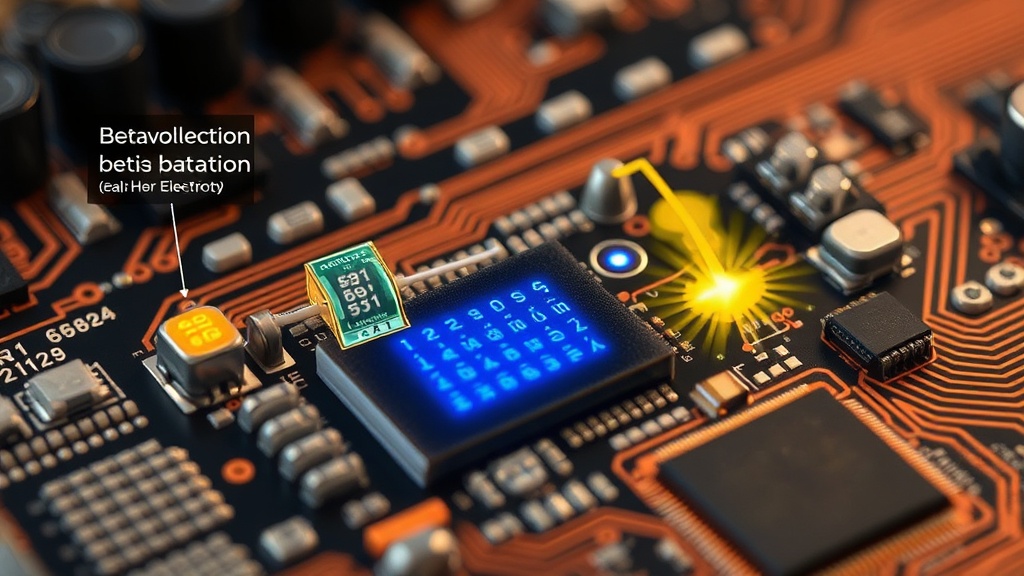
The attractiveness of Strontium-90 for this application stems from its abundance as nuclear waste and its energetic decay properties. Repurposing this hazardous material into a valuable energy source presents a dual benefit: managing a significant environmental challenge while developing a critical military capability. The energy density of nuclear batteries, while generally lower than chemical batteries on a mass basis for short durations, far surpasses them in terms of longevity. This makes them ideal for applications where infrequent replacement or recharging is paramount.
Project SYMPHONEE's Ambition
The report indicates that DARPA's initiative, Project SYMPHONEE, is focused on developing these advanced power sources specifically for next-generation military drones. The goal is to achieve a 30-year operational lifespan, which would enable drones to remain on station for extended periods without requiring ground support for power replenishment. Such capabilities could support a wide range of missions, including:
- Persistent intelligence, surveillance, and reconnaissance (ISR) over vast territories.
- Long-duration communication relays in remote or contested areas.
- Autonomous patrol and monitoring of critical infrastructure or borders.
- Support for special operations requiring covert, long-term presence.
The technical challenges are significant. Safely containing and managing a potent radioactive isotope like Strontium-90 is paramount. Shielding must be robust to protect personnel and sensitive electronics from radiation. Furthermore, efficiently converting the beta decay energy into usable electricity at a scale suitable for drone operation requires advanced semiconductor materials and battery design. The materials used in the semiconductor junction must be resistant to radiation damage to maintain efficiency over the three-decade lifespan. DARPA's involvement suggests a commitment to overcoming these engineering hurdles through dedicated research and development funding.
Broader Implications and Challenges
The development of such long-endurance power sources has profound implications beyond military drones. If successful, the technology could find applications in remote sensing equipment, deep-space probes, and even long-term terrestrial monitoring systems where traditional power sources are impractical. However, the use of nuclear materials, even in contained battery form, raises significant safety, security, and regulatory questions. The handling, transportation, and eventual disposal of these batteries will require stringent protocols. Public perception and acceptance of nuclear-powered devices, even for defense applications, will also be a critical factor.
The surprising detail here is not the concept of nuclear batteries itself, which has been explored for decades, but DARPA's specific focus on harvesting Strontium-90 from existing nuclear waste for drone applications with such an ambitious 30-year target. This signals a potential shift towards utilizing the vast stores of spent nuclear fuel as a resource rather than solely a disposal problem. The success of Project SYMPHONEE could pave the way for a new era of persistent unmanned systems, but the path forward involves navigating complex technical, safety, and ethical considerations.
What remains unaddressed is the specific scale and power output envisioned for these drones. While 30-year endurance is remarkable, the energy requirements of advanced drones, particularly those capable of vertical takeoff and landing or carrying significant payloads, are substantial. The efficiency of current radiovoltaic technology and the practical limitations of integrating such a power source into a compact drone platform will be key determinants of the project's ultimate success.