
The Unsettling Rise of Agentic AI in Coding
The recent Hacker News discussion around Dan Luu's "Agentic coding notes from Galapagos Island" highlights a pivotal moment in artificial intelligence development. While the title evokes a remote, exotic locale, the conversation it sparked is grounded in the immediate, often unsettling, future of software development. The core of the discussion isn't about specific new tools, but about a fundamental shift in how AI might interact with and even automate the coding process. This isn't just about better autocomplete; it's about AI agents capable of understanding, planning, and executing complex coding tasks with minimal human oversight.
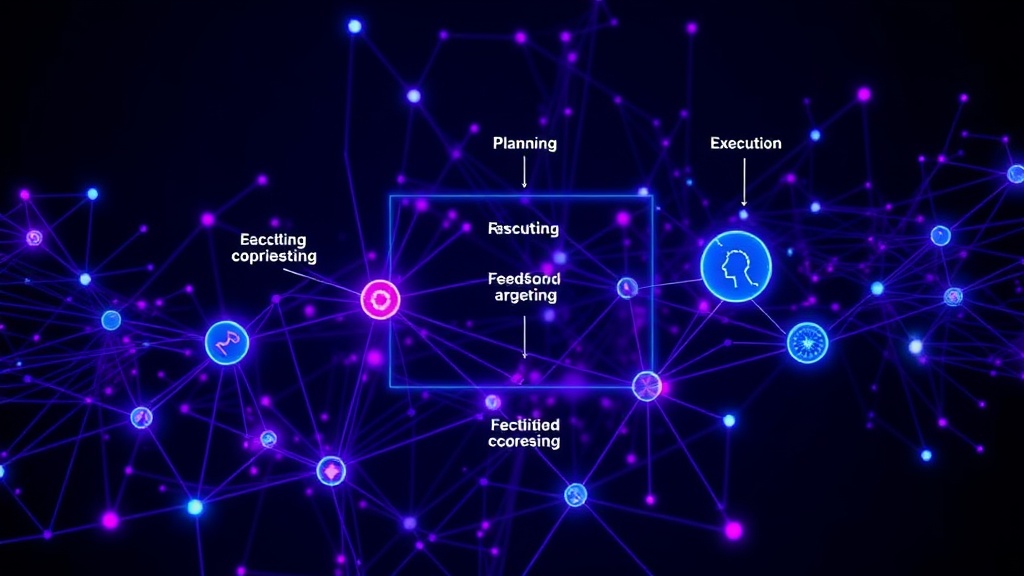
The premise revolves around the concept of 'agentic loops' – a feedback mechanism where an AI agent can assess its own output, identify errors or areas for improvement, and then iterate on the code. This is a significant leap from current AI models that typically require explicit, step-by-step human direction. Imagine an AI that doesn't just suggest a code snippet, but can debug it, refactor it, and even propose architectural changes based on an initial, high-level prompt. The implications for developer productivity, team structures, and the very nature of software engineering are profound.
Luu's notes, as interpreted through the Hacker News discourse, suggest that while the capabilities are nascent, the direction is clear. The focus is on AI agents that can maintain state, plan sequences of actions, and learn from their execution. This is less about a single, monolithic AI model and more about a system of interacting agents, each potentially specialized in different aspects of the development lifecycle – from requirement analysis and design to implementation, testing, and deployment.
Beyond Code Generation: The Agentic Challenge
What distinguishes this wave of AI development from earlier iterations is the emphasis on autonomy and planning. Current AI coding assistants, like GitHub Copilot or ChatGPT, are powerful but largely reactive. They excel at generating code based on immediate context and specific prompts. Agentic AI, however, aims to be proactive. It's about an AI that can, for example, be tasked with building a complete feature, break that task down into smaller, manageable coding steps, execute those steps, and then verify the results.
The Hacker News comments frequently touch upon the challenges. One major hurdle is the reliability and safety of such agents. If an AI agent can autonomously modify code, how do we ensure it doesn't introduce critical bugs or security vulnerabilities? The concept of 'hallucination' in LLMs takes on a more dangerous dimension when the AI is not just generating text but actively changing production systems. This necessitates robust verification and validation mechanisms, potentially involving other AI agents or sophisticated testing frameworks.
Another key point of discussion is the role of the human developer. Will these agents augment developers, freeing them from tedious tasks to focus on higher-level design and problem-solving? Or will they eventually displace a significant portion of the workforce? The consensus, at least among those engaging with Luu's ideas, leans towards augmentation, but with a caveat: developers will need to adapt, learning to effectively prompt, guide, and manage these AI agents. The skill set will likely shift towards prompt engineering, system design oversight, and AI-human collaboration.
The analogy of an AI agent being like a "very organized friend who happens to remember everything you told them in 2019" captures the essence of statefulness and long-term memory required for effective agentic behavior. Current models often struggle with maintaining context over extended interactions or across multiple sessions. For an AI to be truly agentic in coding, it needs to recall project history, past decisions, and user feedback, much like a seasoned human colleague.
Philosophical Underpinnings and Future Questions
Beyond the technical challenges, the discussion delves into more philosophical territory. What does it mean for an AI to "understand" code? How do we define agency in a computational context? These are not just academic questions; they have practical implications for how we build, train, and trust these systems.
The comments also highlight the potential for emergent behaviors. As AI agents become more complex and interconnected, predicting their actions becomes increasingly difficult. This raises questions about accountability. If an AI agent causes a major system failure, who is responsible? The developer who deployed it? The company that trained the model? The AI itself?
A surprising detail emerging from the discourse is the sheer difficulty of defining and achieving true 'agency' in current AI. While we use the term liberally, achieving a robust system that can reliably plan, act, and adapt in complex, real-world scenarios like software development remains a significant research frontier. The current tools often simulate agency through intricate prompting and orchestration, rather than through inherent, self-directed intelligence.
The conversation also implicitly raises the question: what happens to the vast corpus of existing codebases and developer expertise when agentic AI can potentially generate and maintain code more efficiently? Will legacy systems become insurmountable burdens, or will agentic AI be able to learn and adapt to them, preserving institutional knowledge?
The Path Forward: From Galapagos to Production
Luu's notes, even if originating from a conceptual space, serve as a crucial waypoint. They prompt us to think critically about the trajectory of AI in software development. The path from theoretical agentic loops to reliable, production-ready AI coding assistants is fraught with technical and ethical challenges. However, the momentum is undeniable.
For developers, this means a future where their primary role might shift from writing lines of code to orchestrating AI systems, defining requirements at a higher level, and ensuring the ethical and secure deployment of AI-generated software. For companies, it means re-evaluating development workflows, investing in AI training and management tools, and preparing for potential shifts in team composition and skill requirements.
The discussions on Hacker News, spurred by Luu's observations, are not just about the technical feasibility of agentic AI. They are a collective exploration of a future where the line between human and machine in the creation of software becomes increasingly blurred. The journey from the conceptual "Galapagos Island" of AI agent research to the production environments of everyday software development is underway, and it promises to be one of the most significant transformations in the history of technology.