
The Daily Puzzle Site Challenge
Daily puzzle sites, exemplified by the success of Wordle, present a deceptively simple exterior that belies interesting technical challenges. The core requirement is a single puzzle available to all users each day, resetting at midnight. This daily reset mechanic is the crux of the problem, demanding specific architectural choices. Developers looking to replicate this model must consider how to serve these daily puzzles consistently and reliably.
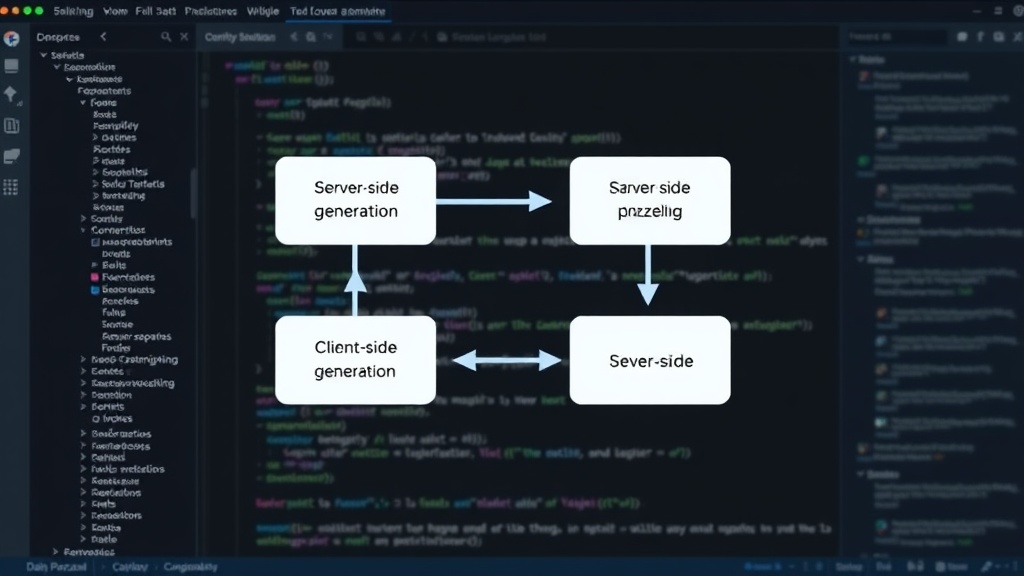
There are two primary approaches to generating and serving the daily puzzle:
Option 1: Server-Generated Puzzles
In this model, the backend server is responsible for selecting or generating the puzzle of the day. When a user requests the puzzle, the server fetches it from its data store and serves it via an API. This offers a high degree of control: puzzles can be updated, changed, or curated remotely. It also simplifies the client-side implementation, as the client only needs to fetch and display the puzzle data. However, this approach necessitates a server infrastructure, which incurs costs and requires ongoing maintenance. The server must be robust enough to handle user requests, especially during peak times. For a site aiming for viral growth, scaling this backend becomes a critical concern. Managing the daily reset requires a scheduled task or cron job on the server to update the 'puzzle of the day' at the precise midnight cutoff.
Option 2: Deterministic Client-Side Generation
This approach shifts the puzzle generation logic to the client (the user's browser). A deterministic algorithm is used, meaning that given the same input (typically the current date), the algorithm will always produce the same output (the puzzle). The client, upon loading, uses the current date to seed a random number generator or a similar mechanism to derive the day's puzzle. This eliminates the need for a server to actively serve puzzles, drastically reducing backend infrastructure costs and complexity. The puzzle itself can be embedded within the client-side code or fetched from a static asset. The primary challenge here is ensuring the client-side code and its date-based logic are consistent across all users and devices. Any discrepancies in timekeeping or algorithm implementation could lead to different users seeing different puzzles on the same day. Updates to the puzzle generation logic require redeploying the client-side application.
Backend Considerations
Even with client-side generation, a backend is often necessary for other functionalities. User accounts, high scores, and analytics all require a server to store and process data. For a daily puzzle site, a simple backend might involve:
- Database: To store user information, game progress, and potentially pre-generated puzzles if a hybrid approach is used. PostgreSQL or MySQL are robust relational choices, while NoSQL databases like MongoDB could be suitable for flexible user data.
- API: A RESTful or GraphQL API to handle user authentication, score submission, and fetching of puzzle data (if server-generated).
- Authentication: Secure user login, potentially using JWT (JSON Web Tokens) for stateless authentication.
- Scheduled Tasks: For server-generated puzzles, a cron job or a similar scheduler is essential to update the puzzle data precisely at midnight.
Frontend Development
The frontend is where users interact with the puzzle. Key considerations include:
- Framework: A modern JavaScript framework like React, Vue, or Svelte can accelerate development with component-based architecture and efficient rendering.
- State Management: Managing the game's state (current input, guesses, game status) is crucial. Libraries like Redux (for React) or Vuex (for Vue) can help organize complex state.
- User Interface: A clean, intuitive UI is paramount for puzzle games. This includes clear visual feedback for correct/incorrect guesses, game progress indicators, and the shareable result component.
- Share Functionality: Implementing a