
Introducing (Ω, D) Dynamics: A New Paradigm for System Study
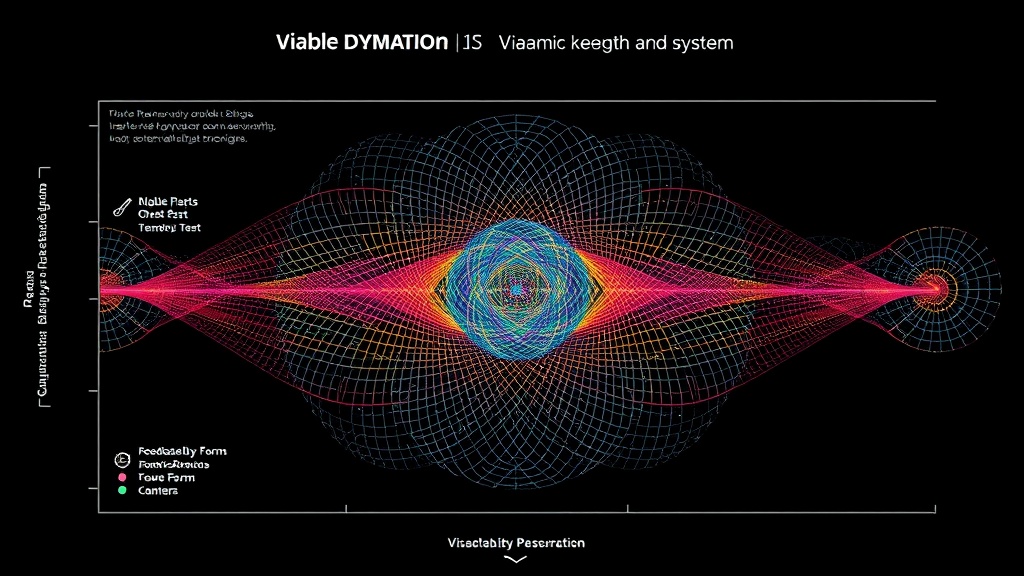
A novel research framework, dubbed (Ω, D) Dynamics, has emerged, offering a distinct perspective on how systems operate and evolve. Unlike traditional approaches that often focus on prediction or explicit goal achievement, (Ω, D) Dynamics centers on the concept of 'viable form preservation.' This framework posits that certain systems are fundamentally driven by the imperative to maintain their own structural integrity and operational coherence over time, rather than by external objectives or environmental forecasting.
The creator, identified on Reddit as /u/rutan668, shared this work, noting its implementation using the new ChatGPT Sites feature. While finding the feature functional, they pointed out the exposure of usernames in the generated URLs as a minor drawback. The core of (Ω, D) Dynamics is to provide a lens through which to study systems that act to preserve their own viable form. This contrasts sharply with paradigms like reinforcement learning or predictive modeling, which often assume an agent or system is optimizing for a specific, externally defined reward or outcome.
Consider a biological organism. While it may respond to environmental stimuli and exhibit behaviors that appear goal-directed (like seeking food or shelter), its most fundamental drive, according to this framework, is to maintain its own complex structure and life processes. The organism doesn't necessarily 'predict' the exact location of food; rather, its internal dynamics and inherited structures compel it to seek and consume resources in a way that sustains its own existence. Similarly, (Ω, D) Dynamics looks at systems where the preservation of the system's own form is the primary driver of its actions.
Distinguishing from Goal-Oriented and Predictive Models
The distinction between (Ω, D) Dynamics and more conventional AI and systems theory models is crucial. Most AI agents are trained to maximize a reward function. This function is typically defined by an external observer and represents a desired outcome or state. For example, a game-playing AI aims to maximize its score, a recommendation engine aims to maximize user engagement, and a control system aims to maintain a target parameter.
Predictive models, on the other hand, focus on forecasting future states of a system or environment. While essential for many applications, they are primarily concerned with understanding 'what will happen' rather than 'how the system itself ensures its continuity.' (Ω, D) Dynamics, however, shifts the focus inward. It asks: what are the internal mechanisms and constraints that allow a system to persist through perturbations and changes? The 'viable form' is not a fixed state but a dynamic set of conditions that define the system's identity and functionality.
This framework is particularly relevant for understanding complex adaptive systems, biological systems, and potentially even certain types of organizational or social structures. The idea is that these systems possess inherent feedback loops and structural properties that actively resist deviation from their essential form. When faced with internal or external disturbances, their response is not necessarily to achieve a new, predefined goal, but to reconfigure themselves in a way that allows their core identity and function to continue.
The Mechanics of Viable Form Preservation
The framework likely involves concepts such as structural stability, attractors in state space that represent the viable forms, and the dynamics of adaptation. Instead of a single objective function, (Ω, D) Dynamics might explore a landscape of viable states. Actions taken by the system are those that steer it away from states that would lead to the loss of its viable form and towards states that reinforce it.
This could involve studying concepts like:
- Autopoiesis: A concept from biology describing systems that continuously produce and maintain themselves.
- Structural Coupling: How a system interacts with its environment while maintaining its own identity.
- Homeostasis: The tendency of biological systems to maintain a stable internal environment.
The challenge in applying this framework lies in formally defining and measuring 'viable form' for non-biological systems, especially artificial ones. What constitutes the essential form of a software system, an AI agent, or an organization? How do we mathematically represent the dynamics that preserve this form against entropy or external pressures?
The creator's use of ChatGPT Sites suggests an interest in exploring these dynamics in the context of generative AI, perhaps examining how large language models or other AI architectures inherently strive to maintain their operational coherence or specific behavioral patterns, even when presented with novel or challenging inputs. The TLDR provided – "This is a framework for studying systems that act by preserving their own viable form, not by predicting the world or chasing an explicit goal" – succinctly captures this shift in perspective.
Broader Implications and Future Research Directions
The implications of (Ω, D) Dynamics could be far-reaching. In AI safety, it might offer new ways to think about robust AI systems that are intrinsically stable and less prone to catastrophic failures or unintended emergent behaviors. Instead of trying to align AI goals with human values (a form of external goal-setting), one might focus on ensuring the AI's 'viable form' is one that is safe and beneficial.
For systems engineering, it could lead to designs that are inherently more resilient and adaptable. Rather than building systems optimized for specific operating conditions, engineers might focus on designing systems whose internal dynamics ensure their continued function across a wider range of environmental variability.
The research library, as presented, is an invitation for others to engage with this perspective. It poses an unanswered question: what are the practical computational or mathematical tools needed to fully operationalize the study of viable form preservation in complex artificial systems? Current AI development is heavily invested in goal-oriented learning. Shifting focus to intrinsic form preservation requires a rethinking of objective functions, training methodologies, and evaluation metrics. This framework challenges us to consider systems not just as problem-solvers, but as self-sustaining entities.