
Strategic Pivot: From DRAM to NAND Flash
China's dominant memory chip manufacturer, Changxin Memory Technologies (CXMT), is reportedly charting a significant course correction, aiming to enter the highly competitive 3D NAND flash memory market. This strategic pivot, if realized, would mark CXMT's ambitious expansion beyond its established stronghold in Dynamic Random-Access Memory (DRAM) and position it as a key player in the Solid State Drive (SSD) component supply chain.
Sources suggest that CXMT is actively pursuing research and development programs for 3D NAND technology, with plans to establish a pilot line at its upcoming second manufacturing facility. This new fab, slated for construction near Beijing, is envisioned as the crucial nexus for CXMT's foray into NAND flash production. The move signifies a substantial escalation of China's domestic semiconductor ambitions, particularly in memory technologies that are critical for a vast array of consumer electronics, enterprise storage, and data centers.
CXMT has long been recognized as China's premier DRAM producer, a position it has cultivated through significant investment and government support. Its success in DRAM has been a cornerstone of the nation's strategy to reduce reliance on foreign semiconductor suppliers. However, the global memory market is bifurcated, with DRAM and NAND flash representing distinct technological paths and market dynamics. Entering the NAND space means CXMT must navigate a landscape dominated by established giants like Samsung, SK Hynix, Micron, and Kioxia, all of whom possess extensive intellectual property and manufacturing expertise in 3D NAND.
The decision to pursue 3D NAND is not merely about diversification; it's about capturing a larger share of the memory market. NAND flash is the fundamental building block of SSDs, which have largely replaced traditional hard disk drives (HDDs) in personal computers, servers, and mobile devices due to their speed, durability, and power efficiency. The global demand for SSDs, driven by increasing data generation and the proliferation of cloud services, continues to grow. By developing its own 3D NAND capabilities, CXMT could potentially offer a more integrated domestic supply chain for China's burgeoning tech industry, from memory components to finished storage devices.
Technological Hurdles and Market Realities
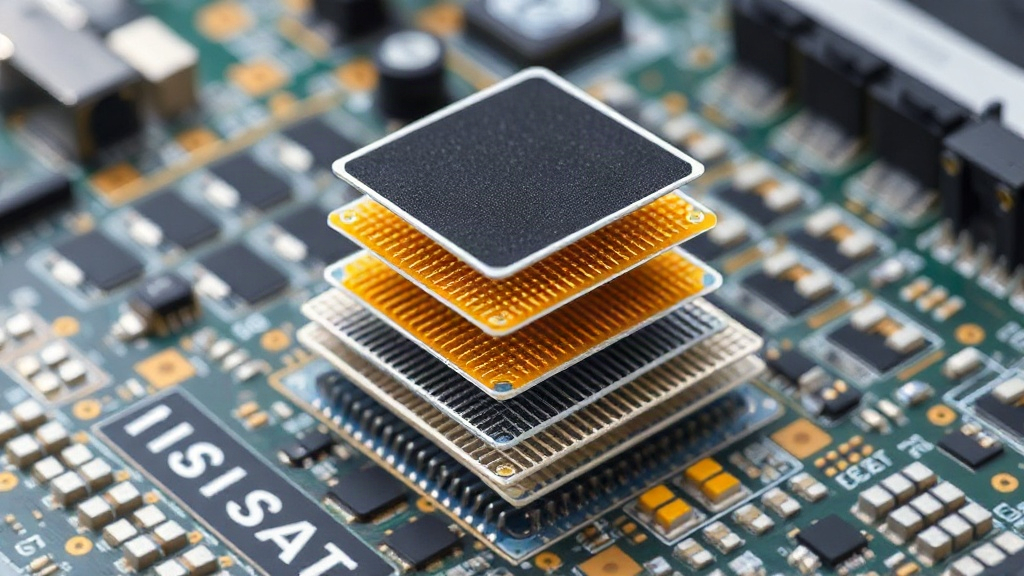
The path to becoming a credible 3D NAND manufacturer is fraught with significant technical and financial challenges. Unlike DRAM, which relies on capacitors and transistors to store data, NAND flash uses floating-gate transistors arranged in a three-dimensional stack. This intricate layering process, known as 3D NAND, involves etching billions of microscopic holes through numerous layers of material. Each generation of 3D NAND requires increasing the number of layers (e.g., 128-layer, 176-layer, 232-layer, and beyond) while simultaneously shrinking the feature size to improve density and reduce costs.
Developing and scaling this technology requires immense capital expenditure, sophisticated process technology, and a deep understanding of materials science. CXMT's rumored investment in a 3D NAND R&D line and pilot facility near Beijing signals a commitment to overcoming these hurdles. The proximity to the capital could also facilitate closer collaboration with research institutions and government agencies, which are crucial for fostering domestic innovation in advanced semiconductor manufacturing.
Furthermore, the NAND market is characterized by cyclical supply and demand, often leading to significant price fluctuations. Success in this arena demands not only technological prowess but also astute market timing and cost management. CXMT's entry could intensify competition, potentially impacting global pricing trends and supply dynamics. However, the immediate impact might be felt most acutely within China, as domestic SSD manufacturers may gain access to a more stable and localized source of NAND flash, reducing their dependence on international suppliers and potentially lowering costs.
Implications for China's Semiconductor Ecosystem
CXMT's potential move into 3D NAND production is a critical development in China's long-term strategy to achieve self-sufficiency in key semiconductor technologies. For years, the nation has been a massive consumer of memory chips, importing billions of dollars worth of DRAM and NAND annually. While progress in DRAM has been notable with CXMT's rise, NAND flash has remained a more elusive target due to its inherent complexity and the entrenched market positions of existing players.
A successful transition by CXMT into 3D NAND would represent a significant leap forward. It could foster a more complete domestic memory ecosystem, enabling Chinese companies to design and manufacture not only the memory chips but also the SSDs that utilize them. This vertical integration is a strategic imperative for any nation aiming for leadership in advanced technology sectors, as it enhances supply chain security, promotes innovation, and creates higher-value economic opportunities.
The rumored development also arrives at a time of heightened geopolitical tension and trade restrictions, particularly concerning advanced semiconductor manufacturing equipment and intellectual property. By investing in its own 3D NAND capabilities, CXMT is building resilience against potential external pressures. The success of this venture could reshape the global memory landscape, offering a new source of supply and potentially altering the competitive balance, especially in the vast Chinese domestic market.
What remains to be seen is the timeline and the ultimate scale of CXMT's ambitions. Developing a competitive 3D NAND product line is a multi-year endeavor, requiring sustained investment and overcoming significant technical challenges. The company's ability to achieve parity with global leaders in terms of performance, endurance, and cost will be the ultimate determinant of its success in this demanding market. If CXMT can successfully establish a robust 3D NAND production capability, it will not only solidify its position as a memory giant but also significantly bolster China's strategic autonomy in critical technology sectors.