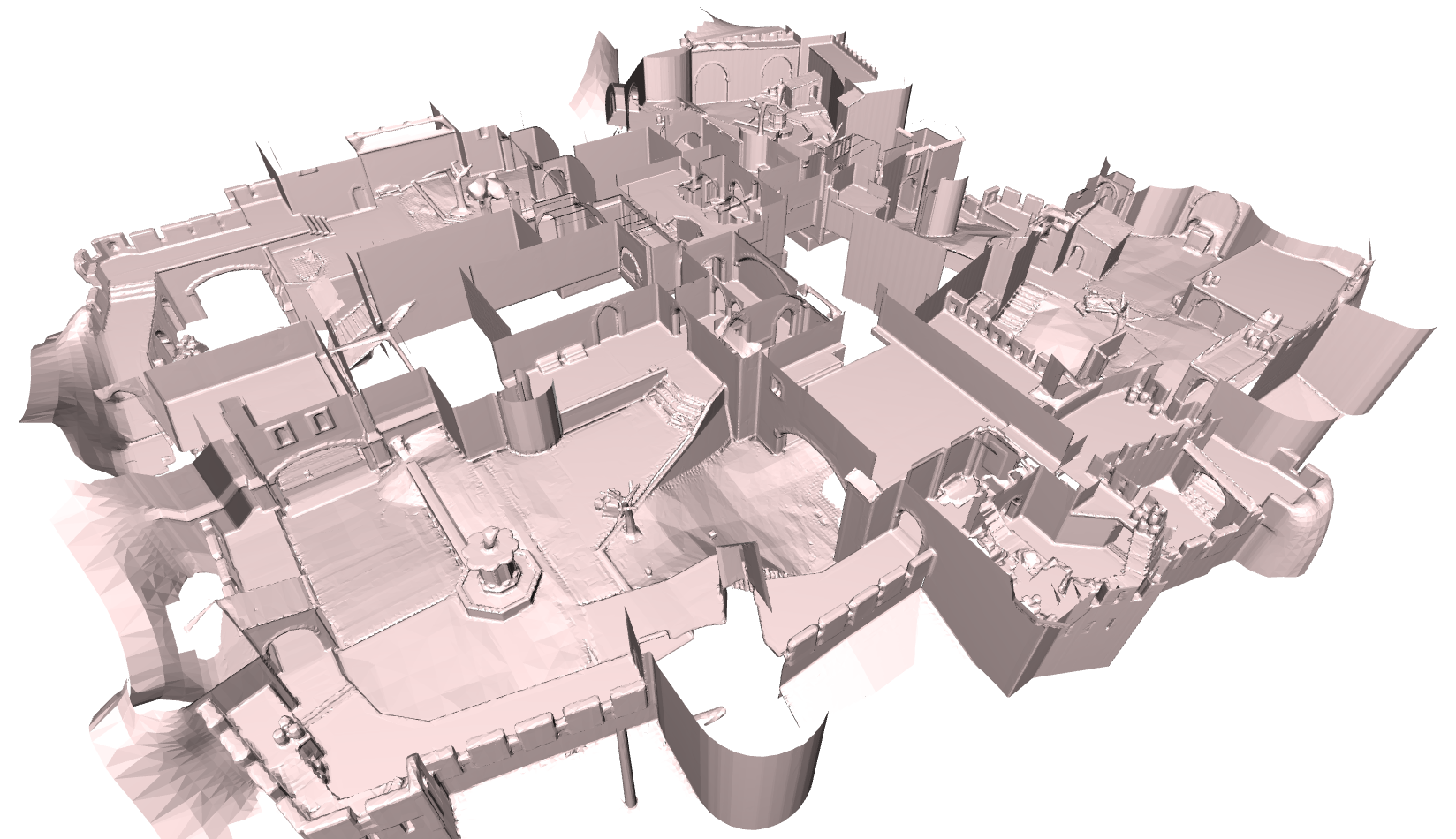
The Problem: Wallhacks in CS2
Counter-Strike 2, like many competitive online shooters, is plagued by cheaters. One of the most prevalent cheats is the wallhack, which allows players to see enemies through walls, negating the game's core tactical elements of positioning and map knowledge. Traditional anti-cheat measures often struggle to keep pace with evolving cheat technology. Developers are constantly seeking innovative ways to disrupt cheat functionalities at a fundamental level.
Introducing CS2 Fog Of War
A new project, dubbed "CS2 Fog Of War," proposes a novel approach to combatting wallhacks. Instead of relying solely on client-side detection or complex server-side analysis of player behavior, this technique focuses on controlling the information sent to each player's client. The core idea is to implement server-side occlusion culling, a graphics technique traditionally used to optimize rendering by not drawing objects that are not visible to the camera.
How Occlusion Culling Works for Anti-Wallhacking
In a typical online game, the server often has full knowledge of every player's position and status. It then sends this information to all connected clients. A wallhack cheat intercepts this data on the client-side and renders enemy outlines or positions, even when they are behind solid geometry. The "CS2 Fog Of War" approach flips this model. The server, which has the definitive map geometry and player positions, determines what each individual player can and cannot see.
By employing occlusion culling on the server, the game can calculate which entities (players, objectives, etc.) are occluded from a specific player's viewpoint by other game objects (walls, cover, other players). Only the entities that are *not* occluded are then sent to that player's client. This means that if an enemy player is behind a wall from your perspective, the server simply doesn't send any data about their current position or state to your client. The enemy effectively becomes invisible, not because the client is programmed to hide them, but because the server never told the client they exist in that moment.
Technical Implementation and Challenges
Implementing this on a large scale for a game like CS2 presents significant technical hurdles. Server-side occlusion culling is computationally expensive. The server must perform these visibility calculations for every player, on every frame, for potentially dozens of entities across a complex map. This requires substantial processing power and optimized algorithms to maintain acceptable server performance and low latency, which is critical for a fast-paced shooter.
The project's GitHub repository, linked via Hacker News, suggests a focus on developing this capability. The core challenge lies in the real-time nature of the game. A player's visibility can change in milliseconds as they move, peek around corners, or throw grenades. The server must react instantaneously to these changes to ensure the game state remains consistent and fair for all players. Any delay or inaccuracy in the culling process could lead to players seeing enemies that should be hidden, or vice-versa, creating a new set of unfair gameplay scenarios.
Potential Impact on Gameplay and Cheating
If successfully implemented and scaled, this server-side occlusion culling could fundamentally disrupt the wallhack cheat ecosystem. Without the server providing the data, client-side wallhacks would have nothing to display. This moves the detection and prevention of such cheats from the client, where they are often modified, to the server, where they are more tightly controlled.
However, it's important to acknowledge that this is not a silver bullet. Advanced cheats might evolve to try and infer enemy positions through other means, such as sound cues or network packet analysis. Furthermore, the performance demands of this system could potentially limit the number of players per server or necessitate higher-spec server hardware, impacting the game's accessibility or operational costs. The project's success will hinge on its ability to balance cheat prevention with game performance and scalability.
The Future of Competitive Shooters
The "CS2 Fog Of War" concept represents a significant shift in how game developers might approach cheat prevention. It moves beyond reactive measures to a proactive, architectural solution embedded within the game's data pipeline. As games become more complex and cheat technology more sophisticated, innovative solutions like server-side occlusion culling will likely become increasingly important in maintaining fair play and competitive integrity.
What remains to be seen is whether this specific implementation can achieve the necessary performance and accuracy for a game as demanding as Counter-Strike 2, and if Valve, the game's developer, will consider adopting such a radical approach to server architecture. The potential payoff – a significantly cleaner competitive environment – is enormous.