
The Core Idea: Learning What Not to Say
Traditional language models are trained to predict the next token in a sequence, a process that, while effective, can be inefficient and prone to generating plausible-sounding but incorrect information. Contrastive Language Models (CLMs) introduce a fundamental shift by incorporating negative examples into the training loop. Instead of solely learning to assign high probability to the correct continuation, CLMs are trained to assign low probability to incorrect or undesirable continuations.
This approach is conceptually similar to how humans learn. We don't just learn what a cat looks like by seeing many cats; we also learn what a cat is NOT by being shown dogs, rabbits, or other animals and being told, "That's not a cat." By explicitly learning to distinguish between good and bad outputs, CLMs aim to develop a more robust understanding of language and factual accuracy.
The primary benefit of this contrastive learning approach is its potential to improve the efficiency and effectiveness of large language model training. By actively penalizing incorrect outputs, models can theoretically converge faster and achieve better performance with less data or fewer parameters. This is particularly relevant in an era where training massive models requires immense computational resources and vast datasets.
How Contrastive Training Works
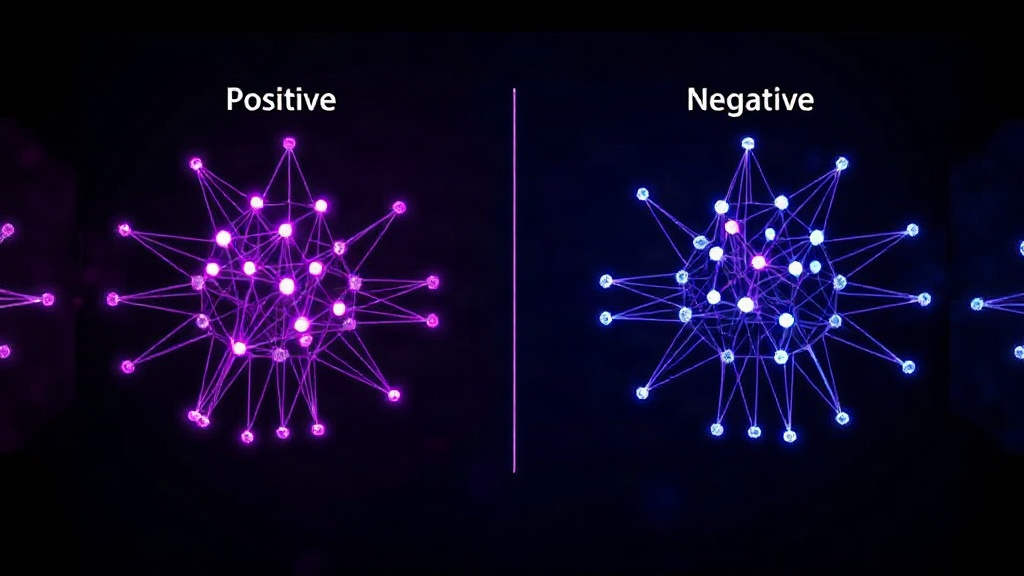
The mechanics of contrastive learning in language models typically involve a loss function that encourages a specific separation between representations of positive (correct) and negative (incorrect) examples. For a given prompt, the model is presented with the correct next token or sequence (the positive example) and one or more incorrect or undesirable continuations (the negative examples).
The contrastive loss function then aims to:
- Maximize the similarity or probability assigned to the positive example.
- Minimize the similarity or probability assigned to the negative examples.
This forces the model to learn a more discriminative representation space. Instead of just learning to be "good" at predicting the right answer, it learns to be "bad" at predicting the wrong ones. This distinction is crucial. For instance, if a model is asked to complete a sentence about a historical event, a standard model might generate a plausible but factually incorrect statement. A contrastive model, trained to penalize such inaccuracies, would learn to assign a lower probability to that incorrect statement, pushing it towards more accurate completions.
Several methods exist for generating these negative examples. They can be sampled from the model's own output (self-contrast), generated by other models, or derived from human feedback. The sophistication and quality of these negative examples directly impact the effectiveness of the contrastive training.
Potential Advantages and Applications
The implications of contrastive language modeling are significant, addressing several key challenges in current LLM development:
Reducing Hallucinations and Improving Factual Accuracy
One of the most persistent problems with LLMs is their tendency to "hallucinate" – generating confident but false information. By explicitly training models to identify and penalize incorrect statements, contrastive methods offer a promising avenue for mitigating this issue. The model learns to be more discerning, understanding not just what is likely, but what is factually grounded.
Enhanced Efficiency and Reduced Computational Cost
Training state-of-the-art LLMs is astronomically expensive. Contrastive learning's ability to potentially achieve comparable or superior performance with less data or fewer training steps could lead to substantial cost savings and a more democratized AI landscape. This could enable smaller research teams or companies to develop powerful language models without the need for massive, specialized compute clusters.
Improved Control and Alignment
Contrastive training can also be used to align model behavior with desired human values or specific task requirements. By defining negative examples that represent undesirable behaviors (e.g., generating toxic content, biased responses), models can be trained to actively avoid them, leading to safer and more controllable AI systems. This is akin to teaching a model not just what to do, but what not to do, which is a more direct form of alignment.
Nuanced Understanding and Reasoning
The ability to differentiate between subtle variations in meaning and correctness could lead to models with a more nuanced understanding of language. This could translate into improved performance on complex reasoning tasks, summarization, and question answering, where distinguishing between similar but factually distinct pieces of information is critical.
Challenges and Future Directions
Despite its promise, contrastive language modeling is not without its challenges. The effectiveness of CLMs heavily relies on the quality and diversity of the negative examples used during training. Generating high-quality negative data at scale can be a complex and resource-intensive task in itself. If negative examples are not representative of actual errors or undesirable outputs, the model might learn to avoid incorrect answers that are still plausible or even correct in certain contexts, leading to a brittle understanding.
Furthermore, integrating contrastive losses with existing pre-training objectives requires careful architectural and algorithmic design. Researchers are exploring various ways to balance the contrastive objective with standard next-token prediction or masked language modeling objectives to achieve the best of both worlds.
The field is still evolving, with ongoing research focused on optimizing contrastive loss functions, developing more effective strategies for negative sampling, and evaluating the long-term impact of contrastive training on model generalization and robustness. As LLMs become more integrated into critical applications, techniques like contrastive learning that promise greater accuracy, control, and efficiency will undoubtedly play a crucial role in their future development.