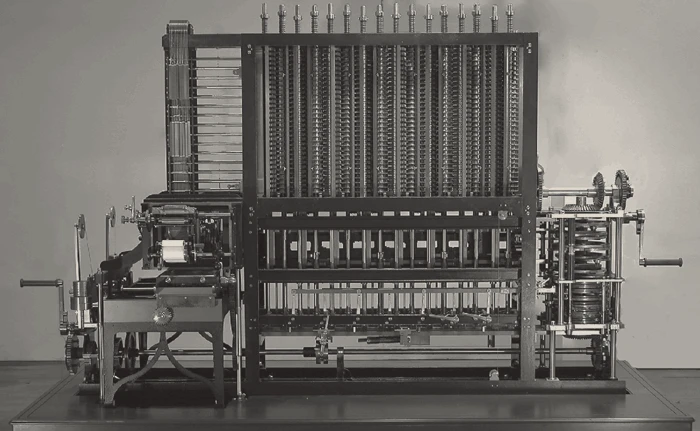
The Universal Language of Change
We tend to think of computation in terms of computers: silicon chips, lines of code, algorithms. But this view is far too narrow. At its core, computation is a far more fundamental concept, a universal language that describes how systems change, process information, and evolve. It’s not just about digital logic; it’s about the very fabric of reality, from the unfolding of a biological cell to the dynamics of a stock market.
Consider a simple physical process: a ball rolling down a hill. This isn't just physics; it's computation. The ball's position and velocity at any given moment are a result of previous states and the application of rules (gravity, friction). The universe, in this view, is a colossal computational system, where every interaction is a step in a grand, ongoing calculation. This perspective reframes our understanding, suggesting that computation isn't something we *do* with machines, but a fundamental property of existence itself.
This idea draws parallels to how we understand other universal concepts. Think of energy: it's not confined to a battery or a power plant; it's a property inherent in all matter and interactions. Similarly, computation, as a universal concept, is the property that allows systems to transform and exhibit behavior over time. It's the mechanism by which information is processed, whether that information is encoded in DNA, the stock prices, or the bits and bytes of a server.
From Abstraction to Application
The power of viewing computation as universal lies in its ability to unify disparate fields. In biology, the development of an embryo is a complex computational process governed by genetic instructions and environmental feedback. In economics, market fluctuations can be modeled as emergent behaviors of countless individual computational agents (traders) interacting according to specific rules. Even human thought, with its intricate network of neurons processing stimuli and generating responses, can be seen as a biological computational system.
This abstract framework allows us to identify common patterns and principles across these domains. The concept of feedback loops, for instance, is crucial in both engineering control systems and ecological population dynamics. Error correction mechanisms are vital for both reliable data transmission and the faithful replication of DNA. By abstracting computation, we gain a powerful lens for cross-disciplinary insight and innovation. It suggests that solutions or understanding developed in one field might have direct applicability in another, simply by recognizing the underlying computational structure.
The implication for technology is profound. Instead of solely focusing on building faster hardware or more efficient algorithms for specific tasks, we can explore how to design systems that better mimic or leverage these universal computational principles found in nature. This could lead to novel approaches in AI, where systems learn from observing natural computational processes, or in materials science, where materials are designed with inherent computational properties.
The Unanswered Question: Measuring Universal Computation
While the concept of computation as a universal property is compelling, a significant challenge remains: how do we rigorously measure or quantify this universal computation in non-digital systems? We have clear metrics for computational complexity and efficiency in computers, but applying these to biological organisms, economic systems, or even the universe itself is far more abstract and difficult. What are the units of computation for a gene? How do we compare the computational power of a brain to a galaxy?
This isn't just an academic puzzle. Developing ways to measure and understand computation in these broader contexts could unlock unprecedented capabilities. Imagine being able to quantify the computational efficiency of a biological pathway to design more effective drugs, or to assess the computational stability of an economic model to prevent crashes. The ability to translate between different forms of computation, from the digital to the biological and beyond, represents a frontier of scientific and technological exploration.
The pursuit of this understanding requires a shift in perspective. It means looking beyond the immediate application of computing devices and recognizing the computational processes that underpin the world around us. It's an invitation to see the universe not just as a collection of matter and energy, but as an immense, interconnected computational engine, constantly processing, transforming, and evolving.
This perspective, championed by thinkers exploring the fundamental nature of computation, suggests that our technological advancements are not creating computation, but rather discovering and harnessing its pre-existing, universal form. The future may well belong to those who can best understand, model, and interact with this fundamental aspect of reality.