AI-Powered Flow Generation
CodeZero's latest canary release marks a significant step forward with the integration of artificial intelligence for backend automation flow generation. Users can now describe their desired automation in plain language, select from available AI models, and witness the flow being constructed in real-time within the platform. This feature is a key milestone in CodeZero's mission to democratize backend automation, catering to both visual builders and those who prefer a descriptive approach.
The AI flow generation works by taking a user's natural language prompt and translating it into executable automation logic. This eliminates much of the initial setup and boilerplate code that often hinders developers and operations teams. Imagine needing to set up a daily report that aggregates data from three different APIs and sends a summary email. Instead of manually creating each step, connecting nodes, and configuring data transformations, a user could simply prompt CodeZero with something like: "Create a daily flow that pulls sales data from Stripe, user signups from Auth0, and marketing campaign performance from HubSpot, then compiles this into a summary email sent to the operations team at 8 AM PST." The AI then generates the necessary components, allowing the user to review and refine the resulting flow.
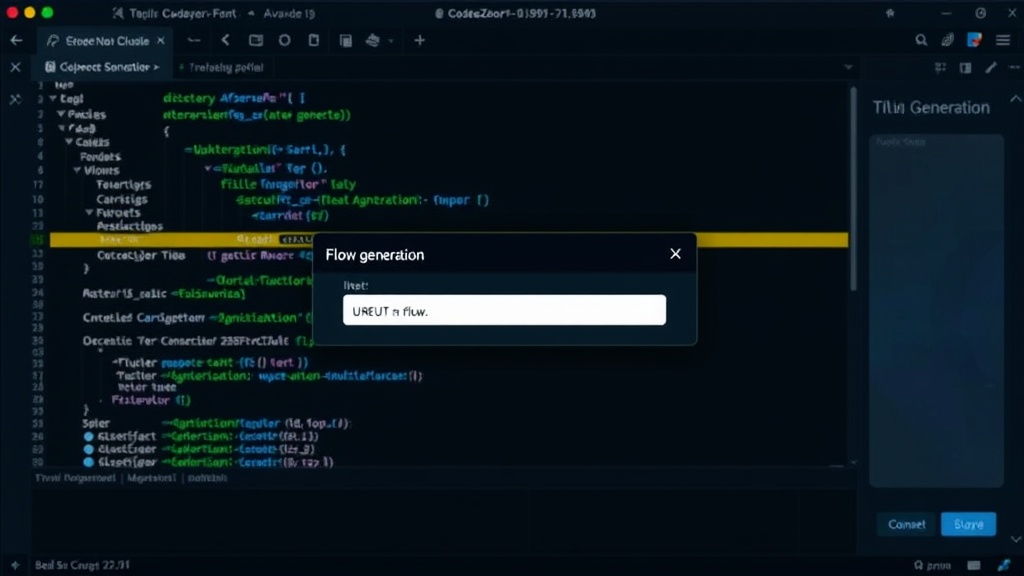
This capability is particularly impactful for teams facing resource constraints or those looking to accelerate development cycles. It lowers the barrier to entry for creating complex backend workflows, allowing less experienced team members to contribute effectively or enabling senior engineers to focus on more strategic tasks rather than repetitive automation scripting. The real-time generation aspect provides immediate feedback, facilitating an iterative design process where users can quickly adjust prompts and see the impact on the generated flow.
A New Module System for Organization
Alongside AI capabilities, this release introduces a completely revamped module system. This new architecture is designed to enhance organization and reusability within the CodeZero platform. Modules allow users to package related automation logic, configurations, and dependencies into self-contained units that can be easily shared, versioned, and deployed across different projects or teams. This addresses a common challenge in automation platforms: maintaining consistency and managing complexity as workflows grow.
The previous system likely had limitations in how users could abstract and reuse common automation patterns. The new module system aims to provide a more robust solution. Think of it like a software library for your automation. Instead of rewriting the same authentication sequence or data validation logic for every new flow, developers can create a module for it. This module can then be imported into any flow, ensuring that best practices are followed and reducing the potential for errors. Versioning is also a critical component, allowing teams to update modules and roll out changes systematically, rather than having to manually update dozens or hundreds of individual flows.
This modular approach is crucial for scaling automation efforts within an organization. As more automation is built, the ability to manage dependencies, enforce standards, and promote reuse becomes paramount. The new module system is expected to improve maintainability, reduce technical debt, and accelerate the development of new automations by providing a solid foundation of reusable components. It’s a move towards treating automation code with the same discipline as application code, fostering better engineering practices.
Enhanced IDE Integration: Execution Results View
CodeZero also enhances its Integrated Development Environment (IDE) integration with a new execution results view. This feature provides users with comprehensive insights into their flow runs directly within their development environment. Previously, understanding the detailed output, logs, and potential errors of a flow might have required switching contexts or relying on separate monitoring tools. The new view aims to streamline the debugging and monitoring process.
When a flow runs, whether manually triggered or scheduled, the execution results view will capture all relevant information. This includes step-by-step execution status, detailed logs with timestamps, input and output data for each step, and any error messages or stack traces. This direct integration means developers can identify and resolve issues much faster, without leaving their primary coding interface. It’s akin to having a super-powered debugger built directly into your workflow for your backend automations.
This improved visibility is essential for building reliable and robust backend systems. Developers can quickly pinpoint bottlenecks, diagnose failures, and verify the correctness of their automation logic. The ability to inspect data payloads at each stage of execution is invaluable for understanding how information flows through the system and for identifying unexpected transformations or data corruption. This feature directly contributes to faster iteration cycles and higher quality automation deployments.
Broader Implications for Backend Automation
The combination of AI-driven generation, a robust module system, and enhanced IDE integration positions CodeZero to significantly impact the backend automation landscape. By lowering the technical bar with AI and providing better tools for organization and debugging, CodeZero is making sophisticated backend automation more accessible to a wider audience. This could lead to increased adoption of automation across a broader range of use cases and company sizes.
For developers, this means a faster path to building and deploying automations, with less time spent on boilerplate and more time on logic and business value. For operations teams, it offers a more intuitive way to manage and monitor complex backend processes. The platform's focus on making backend automation accessible to everyone, regardless of their preferred workflow (visual or descriptive), is a strategic move to capture a larger market share. The introduction of AI is not just a feature; it's a fundamental shift in how backend workflows can be conceived and created. The question that remains is how well these AI-generated flows will scale and adapt to highly complex, mission-critical enterprise scenarios, and what guardrails will be put in place to ensure their reliability and security.