Codex Patches Sandbox Enforcement Flaw
Codex has addressed a significant security vulnerability within its memory consolidation process. A recent commit to the project's repository shores up enforcement of parent sandbox boundaries, preventing sub-processes from escaping their intended restrictions during memory summarization and storage. This fix is critical for any user running Codex on untrusted or semi-trusted tasks, where maintaining strict isolation is paramount.
Memory consolidation is the mechanism by which an agent, like Codex, learns and retains information across sessions. It allows a subsequent session to resume with context from a previous one, akin to picking up a book where you left off. The vulnerability lay in the fact that the sandbox applied to the parent process was not being inherited by the sub-process responsible for this consolidation. This meant that a seemingly benign background task designed to tidy up and store learned data could, in practice, operate with broader file access, weaker network controls, and a generally looser execution scope than its parent.
Sandbox enforcement is a fundamental security control. It acts as a digital gatekeeper, preventing an agent from accessing files it shouldn't, writing to locations it's forbidden to touch, or executing code outside its permitted environment. When this enforcement breaks down, even temporarily, the potential attack surface expands dramatically. An agent could potentially exfiltrate sensitive data, modify critical system files, or establish unauthorized network connections, all under the guise of routine memory consolidation.
The Shape of the Bug
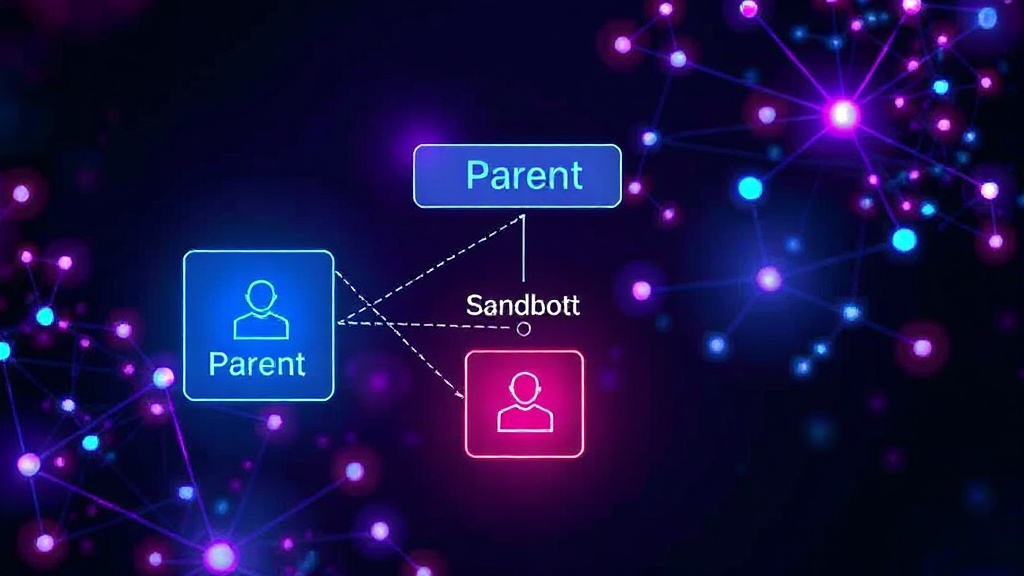
The core issue was a failure in context propagation. When a parent process initiates a task, any restrictions placed upon it—such as limiting its access to specific directories or prohibiting network communication—are meant to apply to any child processes it spawns. In this case, the memory consolidation routine, likely designed to run with fewer immediate constraints to efficiently process large amounts of data, was not properly inheriting or respecting the sandbox profile of its parent. This created a loophole: the consolidation task could operate with a de facto unrestricted environment, even if the parent process was heavily sandboxed.
Consider it like a security guard (the parent sandbox) who is instructed to only allow people with specific badges into a building. If this guard then asks a subordinate (the consolidation process) to tidy up the lobby, and that subordinate can wander into any office, bypass all the badge readers, and access any filing cabinet, the initial security instruction is rendered useless. The consolidation process, in theory, should have been confined to the lobby area and only allowed to touch the designated tidying tools.
This means that for tasks where Codex was expected to operate within strict confines—for example, analyzing sensitive documents in a read-only directory, or processing data without any network access—a compromised or malicious consolidation process could have violated these rules. The implications range from data leakage to unauthorized system modifications, depending on the privileges of the parent process and the operating system's security model.
Why This Matters for Users
For developers and users who rely on Codex for automated tasks, particularly those involving sensitive data or operating in security-conscious environments, this vulnerability represented a tangible risk. The very process meant to enhance continuity and learning for the agent could have been the vector for a security breach. The fix ensures that the integrity of the sandbox is maintained throughout the agent's operational lifecycle, including its background processes.
The commit message itself highlights the focused nature of the fix: "preserves parent sandbox enforcement for memory consolidation." This indicates a precise correction rather than a broad architectural change. However, the impact is significant for anyone concerned with the security posture of AI agents performing complex tasks. It underscores the ongoing challenge of ensuring that all components of an AI system, including background maintenance and learning functions, adhere to the security policies established for the system as a whole.
The broader implication is that even seemingly routine operations like data summarization require robust security considerations. As AI agents become more sophisticated and integrated into critical workflows, the potential for subtle security flaws in their internal processes grows. Developers must remain vigilant, not only about the explicit actions an agent takes but also about the implicit permissions and behaviors of its supporting functions.
Looking Ahead
While this specific vulnerability has been patched, it serves as a reminder of the complexities involved in securing AI systems. The dynamic nature of AI agents, their ability to learn and adapt, and the intricate processes they employ for self-improvement necessitate continuous security auditing and robust enforcement mechanisms. The fix in Codex is a positive step, but the landscape of AI security is constantly evolving, demanding ongoing attention from developers and researchers alike.
What remains to be seen is how other AI frameworks handle memory consolidation and similar background processes. Are there similar latent vulnerabilities in other systems? The diligence shown by the Codex team in addressing this specific issue should set a precedent for thoroughness in securing all facets of AI agent operation.