The Power of Model Ensembles for Codex Exec Command
Codex, OpenAI's powerful code generation model, has opened new avenues for AI-assisted software development. However, maximizing its potential, particularly through the `exec` command for executing code directly, requires strategic approaches. A key technique for enhancing the reliability and capability of Codex's execution is the use of model ensembles. This method involves combining the outputs of multiple AI models to achieve a more robust and accurate result than any single model could provide alone.
The `exec` command in AI coding agents, often built upon models like Codex, allows the agent to run code snippets, test hypotheses, and interact with its environment. This is crucial for tasks such as debugging, generating unit tests, or even performing system operations. However, a single model might produce flawed code, misinterpret instructions, or fail to handle edge cases. By orchestrating an ensemble, we can mitigate these individual model weaknesses.
Building a Robust Ensemble Strategy
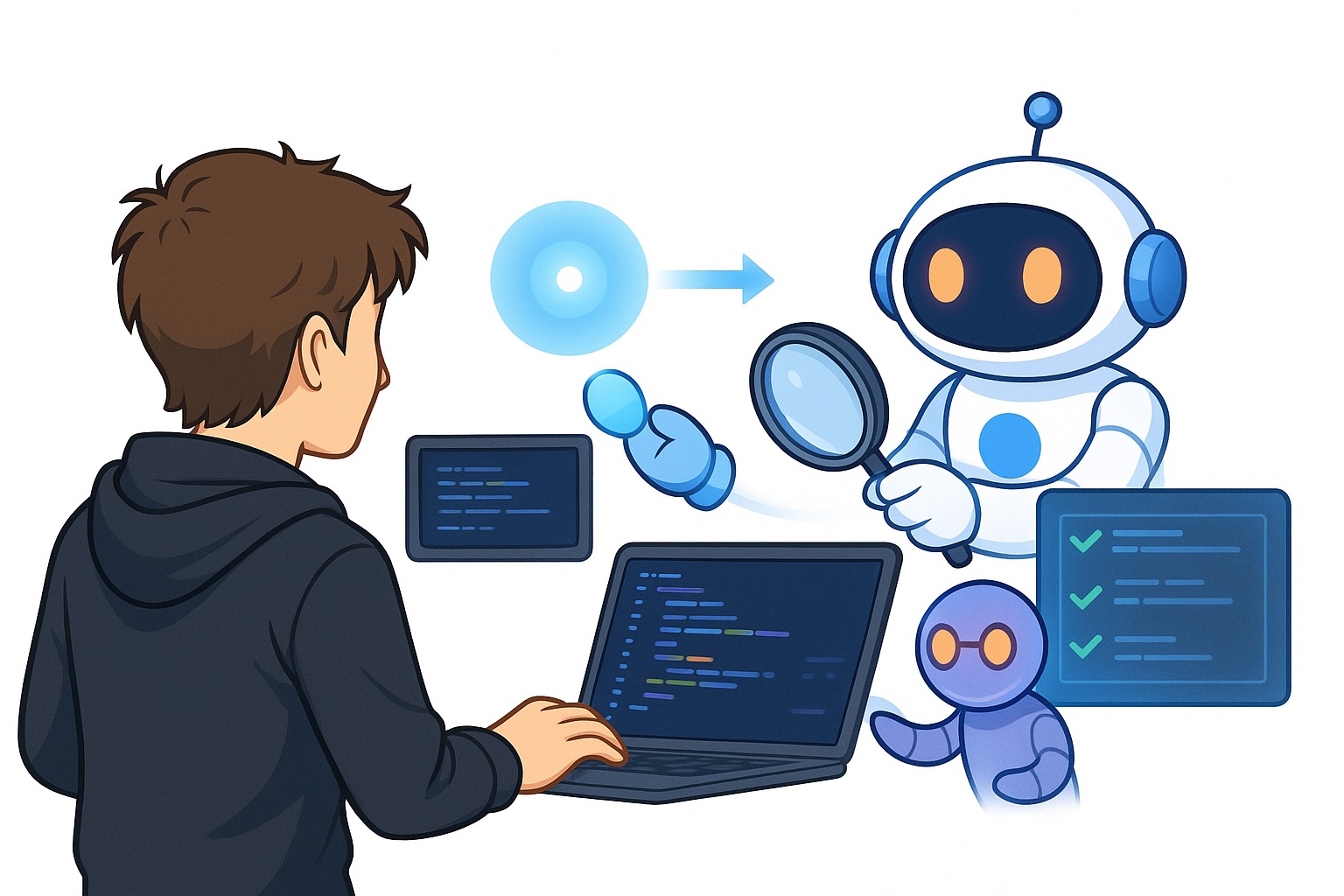
An ensemble for Codex `exec` command typically involves a primary model for generating the code and one or more secondary models for validation, refinement, or alternative generation. The primary model, perhaps a fine-tuned version of Codex or a similar large language model (LLM), generates the initial code based on the user's prompt. This could be a Python script to analyze data, a shell command to manage files, or a JavaScript snippet to interact with a web page.
Following generation, the code needs to be safely and effectively executed. This is where the ensemble strategy becomes critical. Instead of executing the first piece of code generated, the system can pass the generated code to a second LLM, specifically tasked with reviewing it for errors, security vulnerabilities, or adherence to best practices. This reviewer model acts as a static analysis tool, but with the contextual understanding of an LLM.
A third model could be employed to generate alternative solutions if the primary model's output is deemed insufficient or incorrect by the reviewer. This diversity in generation and validation helps ensure that the final code executed is not only functional but also secure and efficient. The process can be visualized as a pipeline: prompt -> generator model -> reviewer model -> (optional) alternative generator model -> execution validation -> execution.
The Role of Validation and Safety
Executing arbitrary code, even within an AI agent, presents significant security risks. A sophisticated ensemble approach must prioritize safety. The reviewer model, for instance, can be trained or prompted to identify common security pitfalls: unsanitized inputs, excessive permissions, infinite loops, or external network requests that are not explicitly intended. If such issues are detected, the code is flagged, and either the generator is prompted to revise it, or the execution is halted altogether.
Furthermore, the execution environment itself must be sandboxed. This means running the code in an isolated container or virtual machine that has limited access to the host system's resources and data. This isolation is a fundamental security layer, irrespective of the code's quality. The ensemble's role is to enhance the intelligence and safety *within* that sandboxed environment.
Consider the analogy of a team of programmers working on a critical piece of software. One programmer writes the initial code. A second programmer, acting as a code reviewer, checks it for bugs and security flaws. A third might suggest a more efficient algorithm. Only after this multi-stage review process is the code submitted for integration and testing. An LLM ensemble mirrors this collaborative, iterative process, but at machine speed.
Maximizing `exec` Command Utility
To truly maximize the `exec` command using ensembles, consider these strategic points:
- Task Specialization: Train or prompt specific models for distinct roles within the ensemble. One model might excel at generating Python scripts, another at Bash commands, and a third at reviewing code for security vulnerabilities.
- Feedback Loops: Implement mechanisms where the results of the execution (e.g., error messages, performance metrics) are fed back to the ensemble. This allows the models to learn from their mistakes and improve future generations.
- Confidence Scoring: Assign confidence scores to the outputs of each model. If the primary generator's confidence is low, or the reviewer's confidence in the code's safety is low, the system can automatically trigger alternative generation or halt execution.
- Contextual Awareness: Ensure the ensemble has access to relevant context, such as the project's existing codebase, dependencies, and the user's overall goals. This allows for more coherent and integrated code execution.
Referenced Sources
- verified