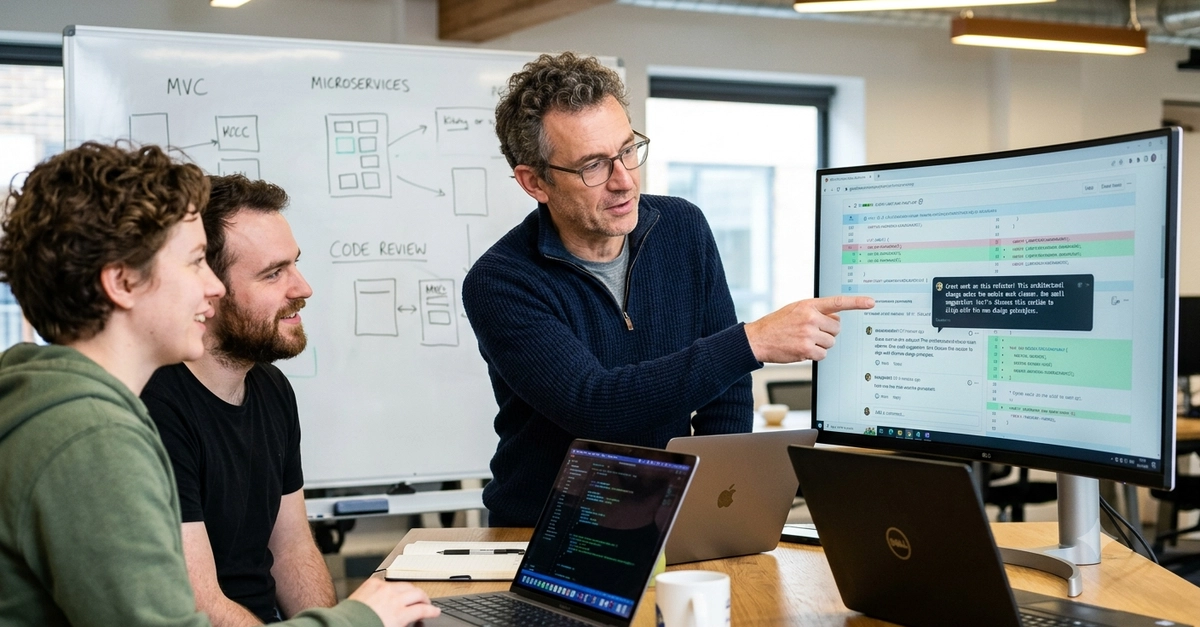
The True Purpose of a Code Review
For many software engineers, code reviews serve as the final hurdle before merging code. However, for senior engineers and high-performing teams, they represent a significantly richer opportunity. A well-executed code review is a powerful tool for enhancing software quality, fostering knowledge dissemination across the team, proactively preventing costly production bugs, reinforcing established engineering standards, and accelerating the growth of junior developers. Unfortunately, a common pitfall is treating code reviews as a mere formality or an exercise in gatekeeping. This often leads to reviewers fixating on superficial formatting issues rather than critical architectural decisions, authors becoming defensive, and pull requests ballooning into unmanageable sizes. The result is a lose-lose scenario for everyone involved. The most effective engineering teams, in contrast, approach code reviews with a deliberate focus on collaboration, maintainability, and the long-term health of the product, rather than simply aiming for the fastest possible approval. This shift in perspective unlocks the full potential of the code review process.
Shifting from Gatekeeping to Collaboration
The fundamental shift required is moving from a gatekeeper mentality to one of collaboration. When a code review is perceived as a hurdle to overcome, it breeds an adversarial dynamic. Developers might submit code that is just “good enough” to pass muster, rather than striving for optimal solutions. This approach stifles creativity and discourages proactive problem-solving. Instead, teams should cultivate an environment where reviews are seen as a shared responsibility for building the best possible product. This means reviewers should aim to understand the author’s intent, offer constructive suggestions, and engage in dialogue. Authors, in turn, should be open to feedback, viewing it as an opportunity to learn and improve, rather than a personal criticism. This collaborative spirit transforms the review from a potential conflict point into a powerful engine for collective improvement and knowledge sharing. Think of it less like a security checkpoint and more like a guided tour of a complex system, where the guide (reviewer) helps ensure the traveler (author) doesn't miss any crucial landmarks or take a wrong turn.
Key Elements of Effective Code Reviews
Effective code reviews hinge on several key practices:
Clear and Concise Pull Requests
Authors must take responsibility for submitting well-structured pull requests. This includes providing a clear description of the changes, explaining the problem being solved, and detailing the approach taken. For larger changes, breaking them down into smaller, more manageable pull requests is essential. This makes the review process less daunting and allows reviewers to focus on specific aspects without getting overwhelmed. A pull request that is thousands of lines long is almost guaranteed to receive a superficial review, if it gets reviewed thoroughly at all. Aim for small, focused changes that are easy to understand and verify.
Constructive and Actionable Feedback
Reviewers have a critical role in providing feedback that is both constructive and actionable. Instead of simply stating “this is wrong,” reviewers should explain why a change might be problematic and suggest specific alternatives. For instance, a reviewer might point out a potential performance bottleneck and suggest a more efficient algorithm or data structure. The feedback should be objective, focusing on the code itself rather than the author. Using a consistent tone and framing comments as questions or suggestions can help maintain a positive and collaborative atmosphere. For example, instead of saying “You should not use this approach,” a better phrasing is, “Have you considered using approach X here? It might offer better performance under Y conditions.”
Focus on What Matters Most
While minor stylistic issues can be automated with linters and formatters, reviewers should prioritize substantive feedback. This includes commenting on architectural decisions, potential security vulnerabilities, complex logic, maintainability, and adherence to overall design principles. Reviewing code is an opportunity to catch design flaws early, when they are cheapest to fix. It’s also a chance to ensure that the code aligns with the team’s long-term vision for the product. Overly pedantic reviews focused solely on whitespace or minor style preferences detract from the more critical aspects of code quality and can frustrate both authors and reviewers.
Timeliness and Responsiveness
Code reviews should not become a bottleneck. Teams need to establish clear expectations around review turnaround times. Prompt reviews ensure that development velocity is maintained and that authors don’t face long delays waiting for feedback. Similarly, authors should respond to feedback in a timely manner, engaging in discussions and making necessary changes promptly. A culture of quick, efficient reviews, coupled with rapid iteration based on feedback, is a hallmark of productive engineering teams. If a pull request sits unreviewed for days, the context might be lost, and the author may have already moved on to other tasks, making the review less effective.
The Impact on Junior Developers
Code reviews are an invaluable learning tool for junior engineers. They provide direct exposure to best practices, common pitfalls, and the thought processes of more experienced developers. When done well, reviews can demystify complex codebases and accelerate a junior developer’s understanding of the system. It is imperative that senior engineers invest time in providing thorough, educational feedback to their less experienced colleagues. This investment pays dividends in the form of faster onboarding, increased confidence, and the development of well-rounded engineers who can contribute more effectively to the team over time. The review process, when framed as mentorship, becomes a powerful mechanism for talent development within the organization.
Beyond the Merge Button
Ultimately, approaching code reviews with a mindset focused on collaboration, knowledge sharing, and continuous improvement elevates them beyond a mere procedural step. It transforms them into a cornerstone of high-quality software development, team cohesion, and individual growth. By prioritizing meaningful feedback, clear communication, and a shared commitment to excellence, teams can harness the full power of code reviews to build better software and foster a stronger engineering culture. This proactive, collaborative approach is what separates good teams from great ones.