
The Impact of Code Quality on AI Developers
The rapid advancement of AI coding agents promises to reshape software development, but a new study reveals a critical dependency: code cleanliness. Research published on arXiv, and discussed on Hacker News, indicates that the performance of these agents degrades significantly when tasked with understanding and modifying messy, unorganized codebases. This finding is not merely an academic curiosity; it has direct implications for how we train, evaluate, and ultimately deploy AI development tools.
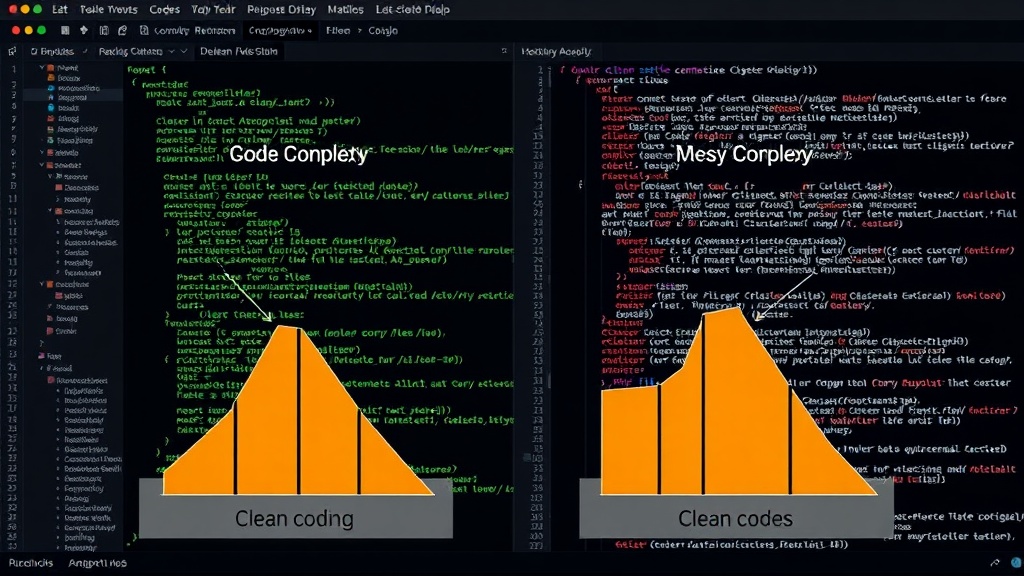
The study, titled "Does Code Cleanliness Affect Coding Agents?", explores how various metrics of code quality—such as readability, adherence to style guides, modularity, and comment density—influence the efficacy of AI agents in tasks like code generation, debugging, and refactoring. Initial findings suggest a strong correlation: cleaner code leads to higher accuracy and efficiency from AI agents, while poorly structured code introduces substantial friction.
Think of it less like a sophisticated AI understanding the *intent* behind code, and more like a highly skilled but literal-minded junior developer. If the instructions (the code) are ambiguous, inconsistent, or buried under layers of technical debt, even the most advanced AI will falter. It struggles to infer context, identify bugs, or propose meaningful improvements when the foundational code is a tangled mess.
Methodology and Key Findings
Researchers evaluated several prominent AI coding agents across a curated dataset of code snippets. These snippets were systematically varied in their cleanliness, ranging from meticulously documented and structured code to intentionally convoluted and error-prone examples. The agents were then tasked with common development operations, including:
- Code Completion: Predicting and generating the next lines of code.
- Bug Detection: Identifying logical and syntactical errors.
- Code Refactoring: Improving code structure and performance without altering functionality.
- Natural Language to Code: Translating human-readable descriptions into executable code.
The results were stark. On average, agents demonstrated a performance drop of up to 30% when operating on code with low cleanliness scores. This decline was particularly pronounced in tasks requiring deep semantic understanding, such as complex refactoring or nuanced bug detection. Agents were more prone to introducing new errors or failing to complete tasks accurately when faced with code that lacked clear structure, consistent naming conventions, or adequate comments.
One surprising detail emerged from the analysis: even agents trained on vast code corpora, which one might assume would make them robust to code imperfections, showed a significant performance dip. This suggests that the training data itself might not fully prepare them for the messy reality of legacy code or rapid, less-than-perfect development cycles.
The Human Element in AI Development
This research underscores a critical point: AI coding agents are not magic bullets that can instantly overcome years of accumulated technical debt. Their effectiveness is intrinsically linked to the quality of the code they interact with. For developers and teams, this means prioritizing code hygiene is more important than ever, not just for human maintainability and collaboration, but for maximizing the utility of future AI development tools.
The implications extend to the training data used for these AI models. If AI agents are primarily trained on pristine, curated code, they may develop a fragile understanding that breaks down when exposed to the varied and often suboptimal code found in real-world projects. This could lead to AI tools that are excellent in a sandbox environment but falter in production.
What nobody has addressed yet is the potential for AI agents to actively *improve* code cleanliness. While current research focuses on their performance *on* varying code quality, future agents might be trained to identify code smells, suggest refactorings for improved readability, and even automatically enforce style guides during development.
Future Directions and Recommendations
The study's authors recommend several avenues for future research and practical application. Firstly, there is a clear need for more robust AI models that are inherently more resilient to code imperfections. This could involve novel training methodologies or architectural changes that allow agents to better infer intent and context from less-than-ideal code.
Secondly, developers should view code cleanliness not as an optional aesthetic but as a critical factor for AI integration. Investing in static analysis tools, linters, code formatters, and consistent documentation practices will yield tangible benefits as AI assistants become more deeply embedded in the development workflow. If you're a team lead, consider that improving your codebase's clarity could directly boost your team's AI-assisted productivity.
Finally, the development of AI tools specifically designed to *assist* in code cleanup and refactoring presents a significant opportunity. Such tools could act as invaluable partners in modernizing legacy systems and maintaining high code quality standards across large organizations.
The findings challenge the notion that AI can simply abstract away the complexities of software engineering. Instead, they suggest a symbiotic relationship: AI thrives on well-structured code, and well-structured code, in turn, can be more effectively managed and improved with the aid of AI.