
The End of Dynamic IPs and Port Forwarding Headaches
For years, securely exposing self-hosted services—whether at home, in a small office, or for personal projects—has been a recurring pain point for developers. The traditional approach involved a complex dance of dynamic IP address management, intricate modem interface configurations for port forwarding, and setting up firewall rules. Each step presented a new hurdle, consuming valuable time that could have been spent on development. This was particularly frustrating for side projects or test environments where the overhead of robust network security felt disproportionate to the project's scope.
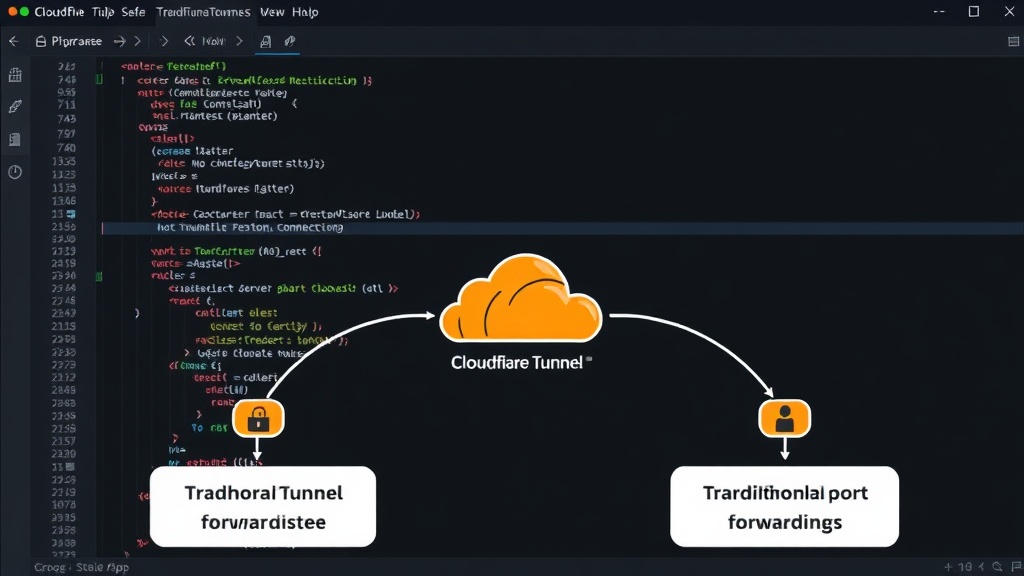
Cloudflare Tunnel emerged as a significant solution, fundamentally altering this paradigm. Instead of wrestling with inbound connections, a lightweight daemon called cloudflared, running on your local network, establishes a single, persistent outbound connection to Cloudflare's global network. This outbound-only model means no inbound firewall ports need to be opened, and no complex router configurations are necessary. The result is a dramatically simplified setup process and a more secure posture by default.
Unpacking the Security Advantages
The core security benefit of Cloudflare Tunnel lies in its elimination of direct inbound exposure. Traditional methods often require exposing a service directly to the public internet, creating a large attack surface. Any vulnerability in the service or the network infrastructure becomes a potential entry point for malicious actors. With Cloudflare Tunnel, the cloudflared client initiates an outbound connection to Cloudflare's edge. Cloudflare then acts as a secure proxy, directing traffic to your service through this established tunnel. This architecture means your origin server never directly accepts connections from the internet, significantly reducing the risk of direct attacks like DDoS or brute-force attempts against your server's IP address. Furthermore, because the connection is outbound, it bypasses many common network security appliances and policies that might otherwise block necessary inbound traffic, simplifying deployment in restrictive network environments.
Ease of Use and Deployment
Beyond security, the operational simplicity is a major draw. Setting up a tunnel typically involves installing the cloudflared client, authenticating it with your Cloudflare account, and specifying which local services (e.g., a web server on port 8000) should be routed through the tunnel. Once configured, Cloudflare handles the external routing, DNS resolution (associating a public domain name with the tunnel), and SSL/TLS encryption. This abstracts away the complexities of managing dynamic IPs, DDNS services, and certificate management for publicly accessible services. Developers can focus on building and deploying their applications, confident that the network access layer is handled securely and reliably by Cloudflare's infrastructure. This is akin to having a dedicated network engineer who works tirelessly behind the scenes, ensuring your services are reachable without you ever needing to touch a router or firewall interface.
Cost and Resource Efficiency
For self-hosted services, especially those with variable traffic or those run on modest hardware, Cloudflare Tunnel offers significant cost and resource advantages. Traditional solutions often require a static IP address, which can incur extra costs from ISPs. Moreover, managing the infrastructure for dynamic IP handling, port forwarding, and SSL certificates adds an ongoing operational burden. Cloudflare Tunnel, on the other hand, leverages Cloudflare's existing infrastructure. The cloudflared client is a lightweight application, consuming minimal system resources on the host machine. By routing traffic through Cloudflare's edge, it also allows for efficient caching and protection against volumetric attacks, which might otherwise overwhelm a self-hosted solution. This means that even small, resource-constrained setups can offer robust, secure, and highly available access to their services, without the need for expensive dedicated hardware or complex network setups.
Beyond Basic Access: Enhanced Features
Cloudflare Tunnel is more than just a way to bypass NAT and firewalls. It integrates seamlessly with Cloudflare's broader security and performance suite. This includes features like Zero Trust Network Access (ZTNA) via Cloudflare Access, allowing for granular, identity-aware access controls to your self-hosted applications. You can implement policies that require users to authenticate with specific identity providers before they can reach a service, even if they are on the same local network. Additionally, the tunnel can be used to expose services running on non-HTTP protocols, such as SSH or databases, securely through Cloudflare's network. This versatility makes it a powerful tool for modern infrastructure management, extending robust security and accessibility to a wide range of self-hosted applications and services.
The simplicity of establishing a single outbound connection, coupled with the inherent security benefits and integration with Cloudflare's ecosystem, positions Cloudflare Tunnel as an indispensable tool for anyone looking to securely and efficiently host services outside of traditional cloud environments. It effectively democratizes secure remote access, making it achievable for individuals and small teams without requiring deep networking expertise.