
Cloudflare Ships AI Agent Readiness at the Edge
Cloudflare has launched a significant feature that could redefine website accessibility for AI agents. During its recent "Agents Week," the company introduced a single dashboard toggle that, with no code changes required at the origin, makes any site on Cloudflare's network usable by browser AI agents. This move significantly accelerates the timeline for websites to become "agent-ready," a problem many developers have considered a future concern.
The new functionality, available under Browser Run → Agent Readiness in developer preview, operates by performing two key actions at the edge, ahead of the origin server. This means your existing website infrastructure remains untouched.
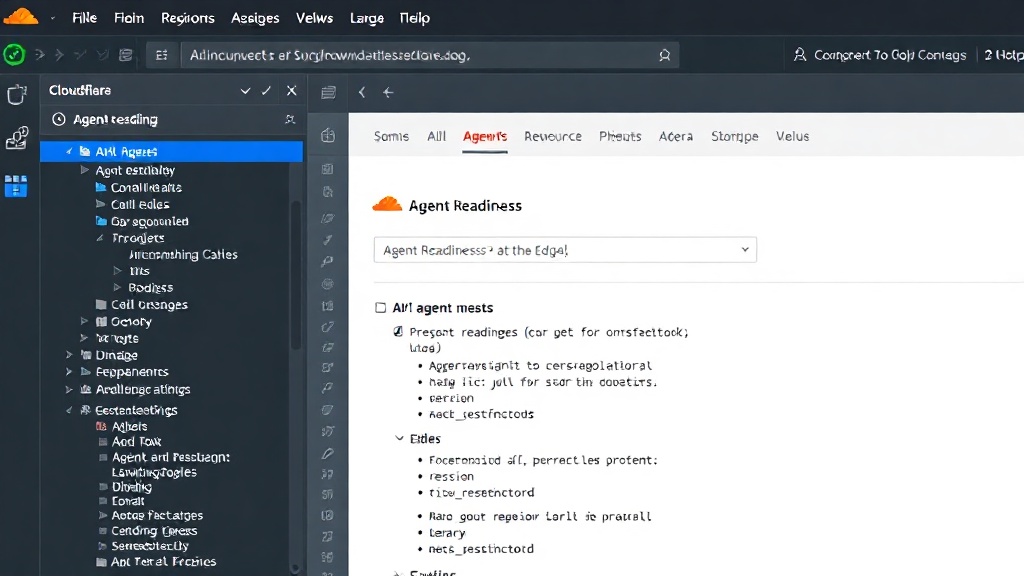
How Cloudflare's Edge Injection Works
The core of the feature relies on Cloudflare's HTMLRewriter. When enabled, Cloudflare injects a single line of JavaScript into your HTML responses: <script type="module" src="/.webmcp/bridge.js"></script>. This script acts as a bridge, enabling AI agents to interact with your site as if they were a human user.
This edge injection is crucial because it abstracts away the complexities of making a website compatible with AI agents. Traditionally, preparing a site for AI interaction might involve extensive refactoring, adding specific APIs, or implementing complex state management to ensure agents can navigate and understand the content. Cloudflare's approach bypasses these origin-level modifications.
What Agent Readiness Actually Does
When the "Agent Readiness" toggle is activated, Cloudflare's edge network intercepts requests and modifies responses. The injected script, bridge.js, is designed to:
- Capture User Interactions: It can record and interpret actions that an AI agent might take, such as clicking buttons, filling forms, or navigating between pages.
- Provide Site Context: The script helps the AI agent understand the structure and content of the web page, making it easier for the agent to perform tasks.
- Simulate Browser Behavior: It aims to present the website to the AI agent in a way that closely mimics how a human would experience it in a browser.
The goal is to make dynamic web applications accessible to AI agents without requiring developers to implement specific AI-friendly interfaces or APIs. This is particularly important for complex applications where user flows can be intricate.
What's Still on Your Plate
While Cloudflare handles the edge-side integration, the launch post doesn't detail the responsibilities that remain with the website owner. The "no code changes" claim primarily refers to the *initial* activation and basic interaction layer. Several critical aspects of true agent readiness are still left to the developer:
1. Content and Structure for AI Understanding
AI agents, like humans, need well-structured and semantically rich content. While Cloudflare's injection helps in capturing interactions, it doesn't inherently make your content more understandable to an AI. This means:
- Semantic HTML: Ensuring your HTML uses appropriate tags (e.g.,
<nav>,<article>,<button>) remains vital for AI to parse the page structure correctly. - Clear Labeling: Buttons, links, and form fields should have descriptive labels that AI agents can easily identify and use. ARIA attributes may still be necessary for complex interactive elements.
- Content Quality: The actual text and information on your site must be clear, concise, and logically organized. AI agents can only process the information presented.
2. Managing Agent-Specific Workflows and State
AI agents might perform tasks in sequences that differ from human users. Handling these workflows and managing the state of the interaction at the origin server could still be a challenge:
- Session Management: If agents maintain sessions or require specific state information to be passed between requests, your origin server logic must accommodate this. Cloudflare's edge injection doesn't manage server-side state.
- Complex Forms and Interactions: For multi-step forms or highly interactive components, developers might need to ensure their backend can handle the sequence of actions initiated by an agent reliably.
- Rate Limiting and Security: While Cloudflare provides edge security, developers must still consider how to prevent abuse by AI agents, such as botting, scraping, or denial-of-service attacks targeting specific functionalities. Implementing origin-level rate limiting or CAPTCHAs might still be necessary for sensitive operations.
3. Performance and User Experience
The injected script adds overhead. While Cloudflare aims to minimize this, developers must still:
- Monitor Performance: Track how the edge injection impacts page load times and overall user experience for both human visitors and AI agents.
- Optimize Assets: Ensure that images, scripts, and other assets are optimized to maintain good performance, as AI agents will also be subject to these loading times.
The Broader Implications
Cloudflare's move democratizes basic AI agent accessibility. It lowers the barrier to entry for sites to be discoverable and interactable by the next generation of AI tools. Think of it less like a full AI integration and more like ensuring your physical store has a clear entrance and legible signage for any visitor, including those who might be using a mobility aid (the AI agent).
However, the true depth of agent readiness—making your site perform complex tasks efficiently and securely for AI—still requires careful consideration and potential origin-level adjustments. The "one-click" solution gets agents to the door, but ensuring they can effectively navigate and complete tasks inside requires ongoing effort. This is particularly relevant for businesses relying on their web applications for critical functions, where the nuances of AI interaction could significantly impact user experience and operational efficiency.
The surprising detail here is not that Cloudflare is enabling AI agent interaction, but the speed and simplicity with which they've pushed this functionality to the edge. This preempts a wave of potential developer requests for similar edge-based solutions, setting a new baseline for web application readiness in the age of AI.
What nobody has addressed yet is how this will impact the SEO landscape. Will search engines begin prioritizing sites that are agent-ready, or will this simply become another layer of technical optimization that benefits specific AI-driven services?