The Problem: Cloudflare's Unseen Barrier
For many web scraping operations, encountering Cloudflare's "Attention Required" challenge signals an inevitable escalation: the need to purchase expensive residential proxies. This is the common wisdom across forums and vendor blogs. However, at IntelDif, a company that crawls competitor pages to alert users to meaningful changes, this assumption proved costly. When one of their monitored domains began consistently returning Cloudflare's bot challenge, the immediate response was to investigate their IP reputation. The conventional advice pointed towards acquiring residential proxies, a solution that incurs significant recurring costs based on data usage.
Before committing to this expensive workaround, the IntelDif team conducted a straightforward yet illuminating 2x2 experiment. This approach is a valuable lesson for anyone facing similar bot detection hurdles. The experiment aimed to isolate the variable Cloudflare was using to flag their crawler as a bot. The core of the problem wasn't a bad IP address, but rather how their crawling tool presented itself to the web.
Deconstructing the Bot Detection
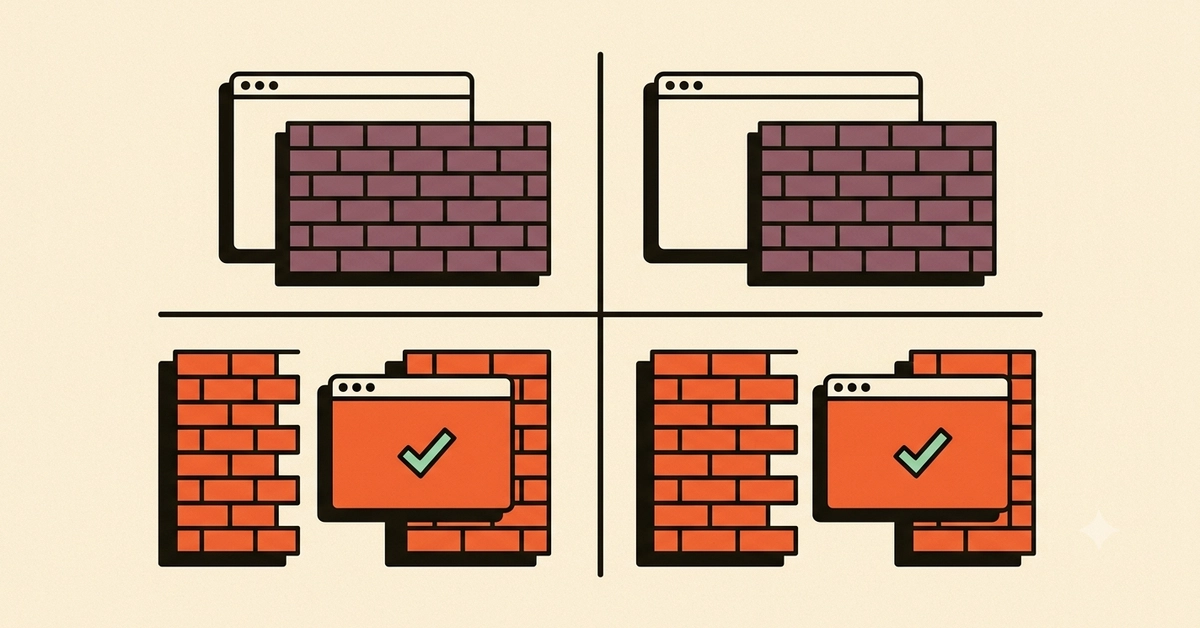
The team set up an experiment with two key variables: the IP address used for requests and the browser's fingerprint. The hypothesis was that Cloudflare's detection might be more sophisticated than merely looking at IP reputation. They configured four distinct test scenarios:
- Scenario 1: Bad IP, Standard Browser Fingerprint. This setup mimicked their existing crawler's behavior, using an IP address known to have a poor reputation, but presenting a typical browser's characteristics.
- Scenario 2: Good IP, Standard Browser Fingerprint. Here, they used an IP address with a clean reputation, again with a standard browser fingerprint. This is the baseline for what a typical, non-suspicious IP should look like.
- Scenario 3: Bad IP, Unique Browser Fingerprint. This combined a poor IP reputation with a browser fingerprint that was less common or potentially suspicious.
- Scenario 4: Good IP, Unique Browser Fingerprint. This scenario used a clean IP address paired with a unique or atypical browser fingerprint.
The results were telling. Scenarios 1 and 2, which used the standard browser fingerprint, were both blocked by Cloudflare. The IP reputation, whether good or bad, was irrelevant when the browser's signature was recognized as typical. This indicated that Cloudflare was not primarily concerned with the IP address itself, but rather with the characteristics of the browser making the request. The "Attention Required" page was triggered because their crawler's browser fingerprint was too generic, too easily identifiable as automated, or lacked certain expected browser attributes.
The Escalation Ladder: Beyond IP
This revelation shifted the focus from IP management to browser emulation. The common advice to buy residential proxies, while sometimes effective, is a blunt instrument. It addresses the symptom (a flagged IP) rather than the cause (a non-human-like browser). The real challenge for sophisticated scrapers is to mimic human browsing behavior so closely that bot detection systems cannot differentiate.
Cloudflare's bot detection, like many others, relies on a layered approach. IP reputation is just the first rung. Below that lies the browser fingerprint. This includes a host of attributes: the User-Agent string, the presence and version of JavaScript engines, screen resolution, installed fonts, browser plugins, WebGL rendering, and even subtle timing differences in how a browser executes JavaScript. A crawler's default User-Agent, for instance, is often a giveaway. Libraries like Puppeteer or Playwright, while powerful for automation, can also be detected if not meticulously configured to mimic a real browser's behavior and timings.
The IntelDif team discovered that their crawler, despite using a common User-Agent string, was likely failing more subtle checks related to JavaScript execution or other browser environment variables. The "unique" browser fingerprint in their experiment was likely one that had been carefully crafted to pass these more advanced checks, irrespective of the IP address.
Mitigation and Future Implications
The solution for IntelDif was not to buy more proxies, but to refine their crawling tool's browser emulation. This involved:
- Advanced User-Agent Rotation: Using a diverse and up-to-date list of real browser User-Agents.
- JavaScript Execution Mimicry: Ensuring that their crawler's JavaScript execution matched human browsing patterns, including timing and potential variations.
- Headless Browser Configuration: Optimizing settings in tools like Puppeteer or Playwright to avoid common detection markers. This might include disabling specific automation flags or simulating human-like interaction delays.
- Canvas Fingerprinting and Font Rendering: Addressing subtle environmental factors that can betray an automated process.
This experience highlights a critical shift in the cat-and-mouse game between website owners and scrapers. Bot detection is no longer solely about IP blacklists. It's about building a comprehensive profile of the client making the request. For developers running large-scale scraping operations, this means investing in sophisticated browser emulation rather than solely relying on IP rotation. The cost of developing or acquiring such tools might be lower in the long run than the perpetual expense of residential proxies, especially as bot detection techniques continue to evolve.
What remains unaddressed is the ongoing arms race. As scraping tools become more sophisticated in mimicking human browsers, bot detection systems will undoubtedly evolve to identify even more subtle behavioral anomalies. This cycle suggests that a purely technical solution might be a temporary fix, and that a deeper understanding of website terms of service and ethical data acquisition practices could become increasingly important.