The Modern Tamagotchi Experience, Cloud-Native
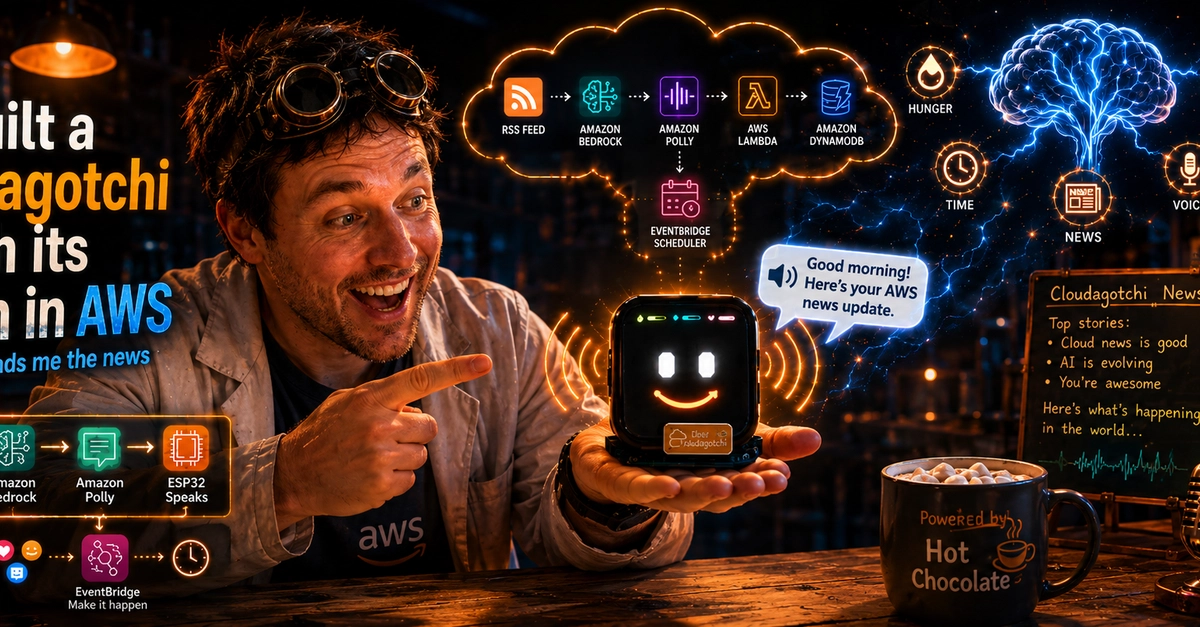
Remember Tamagotchis? Those iconic egg-shaped keychains that demanded constant attention, often leading to digital pet demise during mundane moments like math class. A modern iteration, dubbed Cloudagotchi, reimagines this nostalgic toy, transplanting its core logic and memory entirely into Amazon Web Services (AWS). This isn't just a cosmetic upgrade; it's a fundamental shift in how a digital pet's existence is managed, moving from a simple microcontroller to a sophisticated cloud infrastructure.
The Cloudagotchi boasts a 368x448 AMOLED screen, an accelerometer, and a speaker, offering a richer sensory experience than its 90s predecessor. However, the true innovation lies beneath the surface. Unlike traditional Tamagotchis where all processing and state management occur on the device itself, Cloudagotchi's "brain" resides in the cloud. This allows for a more dynamic and persistent digital pet experience.
Core Functionality Driven by AWS Services
The pet's needs, such as hunger, are managed in real-time within the AWS ecosystem. For instance, the Cloudagotchi gets hungry even when the physical device is turned off. This is achieved by leveraging Amazon EventBridge Scheduler, which dictates "dinner time" in the cloud. When the device is powered on, it syncs with this cloud-based schedule, reflecting the passage of time and the pet's resulting needs.
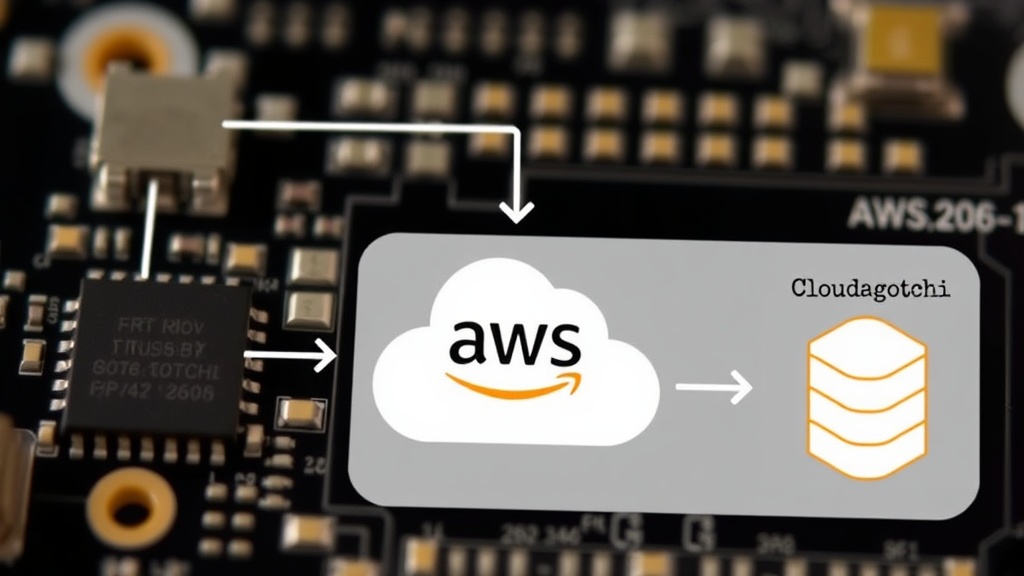
Memory and emotional state are stored in Amazon DynamoDB. This means the pet "remembers" past interactions or neglect. A guilt trip from being ignored yesterday isn't erased by a simple device reboot; the state persists in the database, creating a more compelling and continuous relationship with the digital creature. This persistent state management is a key differentiator from the ephemeral nature of older digital pets.
Interactive Inputs and Cloud Communication
User interactions are designed to be intuitive and leverage cloud connectivity. Feeding the pet involves tapping an "avocado" on the device, petting it by tapping its face, and playing with it by shaking the board. Each of these actions initiates an MQTT (Message Queuing Telemetry Transport) communication, a lightweight messaging protocol ideal for IoT devices. This data is routed through AWS IoT Core, a managed cloud service that enables devices to connect to AWS services and communicate with each other.
AWS IoT Core acts as the central hub, receiving these interaction commands from the device and translating them into actions that update the Cloudagotchi's state in DynamoDB or trigger other cloud-based logic. Conversely, the pet's status updates and visual cues are sent back to the device for display on the AMOLED screen.
Beyond Basic Needs: Sleep and News Delivery
The Cloudagotchi also exhibits more complex behaviors, such as dozing off if left unattended, complete with on-screen "zzz" animations. This adds another layer of realism and engagement. The pet's state transitions, like falling asleep or becoming hungry, are managed by AWS Lambda functions triggered by events from EventBridge Scheduler or changes in the DynamoDB state.
A particularly novel feature is the pet's ability to read the news. By integrating with a news API, the Cloudagotchi can fetch headlines and read them aloud through its speaker. This transforms the digital pet from a purely self-contained entity into an interactive companion that also serves as an information delivery system. The news fetching and reading logic is also orchestrated by AWS Lambda, processing external data and sending audio output commands back to the device.
Architectural Choices and Developer Experience
The decision to build the "brain" in AWS was driven by the desire to create a pet that evolves and remembers independently of the device's power state. This cloud-centric architecture allows for more complex behaviors and persistent memory that would be challenging or impossible to implement on a small, battery-powered microcontroller alone. Services like AWS IoT Core, Lambda, DynamoDB, and EventBridge Scheduler form the backbone of this system, illustrating a practical application of modern cloud services for an IoT project.
The developer behind Cloudagotchi highlights the flexibility and scalability offered by AWS. For instance, managing the pet's mood or hunger levels as rows in a DynamoDB table is far more robust than trying to simulate complex state on limited embedded hardware. The round-trip communication via MQTT ensures that user actions are processed promptly, and the pet's visual feedback is almost instantaneous, creating a seamless user experience despite the cloud latency inherent in such a system.
This project serves as a compelling example of how cloud computing can enhance the capabilities of even simple, nostalgic devices. It bridges the gap between the tangible world of IoT hardware and the boundless potential of cloud-based logic, creating a digital pet that is more alive, more aware, and more interactive than ever before.