The Evolution of Cloud Security: A Twenty-Year Retrospective
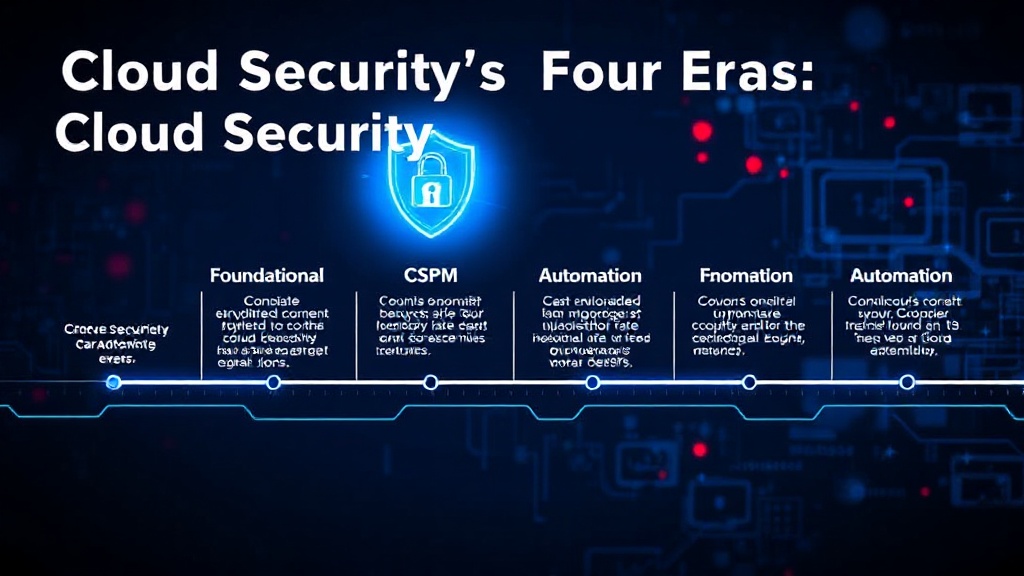
Scott Piper's March 2026 analysis provides a crucial framework for understanding the trajectory of cloud security. Over two decades, the field has transformed from nascent beginnings to a sophisticated, AI-infused discipline. Piper’s work outlines four distinct eras, each marked by specific challenges, dominant research themes, and the emergence of critical security primitives. This history is essential for anyone navigating the complexities of securing cloud environments.
Foundational Era (2006–2016): Building the Bedrock
The first decade of cloud security was characterized by the cloud providers themselves building the fundamental security building blocks. Before this period, robust security controls were largely absent. Key milestones include the introduction of Identity and Access Management (IAM) in 2011, which laid the groundwork for principle of least privilege. CloudTrail, launched in 2013, provided the first semblance of an audit trail, enabling security teams to track actions within the cloud. Later, services like AWS Organizations and Service Control Policies (SCPs) arrived in 2016, offering mechanisms for establishing organizational boundaries and enforcing policies at scale. During this foundational period, security research was often a secondary pursuit for individuals already established in broader IT security roles, reflecting the nascent nature of cloud-specific threats and defenses.
CSPM Era (2016–2021): The Rise of Misconfiguration Detection
As cloud adoption accelerated, the complexity of managing configurations across distributed environments became a significant challenge. This led to the emergence of Cloud Security Posture Management (CSPM) tools. These tools automated the detection of misconfigurations, compliance violations, and security risks that arose from improperly configured cloud services like S3 buckets, security groups, and IAM policies. The focus shifted from building basic controls to monitoring and remediating the security posture of existing cloud deployments. Research during this phase began to concentrate on identifying common misconfigurations, developing best practices for secure deployment, and creating automated ways to audit compliance against industry standards.
Automation Era (2021–2026): Proactive Defense and Orchestration
The period from 2021 to early 2026 saw a dramatic increase in the adoption of automation for cloud security. As the attack surface expanded and the speed of cloud deployments increased, manual security processes became unsustainable. Security teams began to leverage Infrastructure as Code (IaC) security tools, policy-as-code (PaC) solutions, and automated remediation workflows. This era emphasized proactive security measures, integrating security checks directly into CI/CD pipelines (DevSecOps). Tools evolved to not only detect issues but also to automatically fix them, orchestrate responses to incidents, and continuously enforce security policies. The research focus broadened to include the security of containerized environments, serverless architectures, and the intricate dependencies within cloud-native applications.
AI Era (2026–Present): Intelligent Security at Scale
The current era, beginning in 2026, is defined by the pervasive integration of Artificial Intelligence (AI) and Machine Learning (ML) into cloud security. AI is transforming how security threats are detected, analyzed, and mitigated. This includes AI-powered threat detection that can identify novel and sophisticated attacks by analyzing vast datasets for anomalous patterns, far beyond the capabilities of traditional signature-based methods. AI is also being used for automated vulnerability prioritization, intelligent incident response, and predictive security analytics. Security teams now leverage AI to sift through the noise of security alerts, identify genuine threats, and automate complex response actions. This era is characterized by a shift towards more intelligent, adaptive, and predictive security strategies, where AI acts as a force multiplier for human security professionals.
The Unanswered Question: What About Developer Workflows?
While Piper's framework brilliantly maps the evolution of cloud security tooling and research, a critical question emerges: What has been the consistent impact on the developer workflow across these eras? Each phase introduced new tools, processes, and responsibilities. Foundational controls like IAM and CloudTrail, while essential, added layers of complexity and approval gates for developers. CSPM tools, by highlighting misconfigurations, often led to reactive security reviews that could stall deployments. The automation era aimed to streamline this by integrating security into the pipeline, but the effectiveness varied greatly. Now, with AI, developers might see more intelligent guidance or, conversely, more opaque automated blocking. The history of cloud security is often told from the perspective of the security professional. What remains less clear is how these shifts have consistently altered, improved, or hindered the daily lives and productivity of the developers building on the cloud.
Implications for the Future
Piper's historical analysis is invaluable for understanding the technological advancements in cloud security. The journey from manual controls to AI-driven defense highlights the increasing sophistication required to protect cloud assets. As the field continues to evolve, the interplay between security and development will remain a critical area. The next phase of cloud security will likely involve even deeper integration of AI, potentially leading to more autonomous security systems and further blurring the lines between security and development practices. Understanding this historical progression provides a vital context for anticipating future challenges and opportunities in securing the cloud.