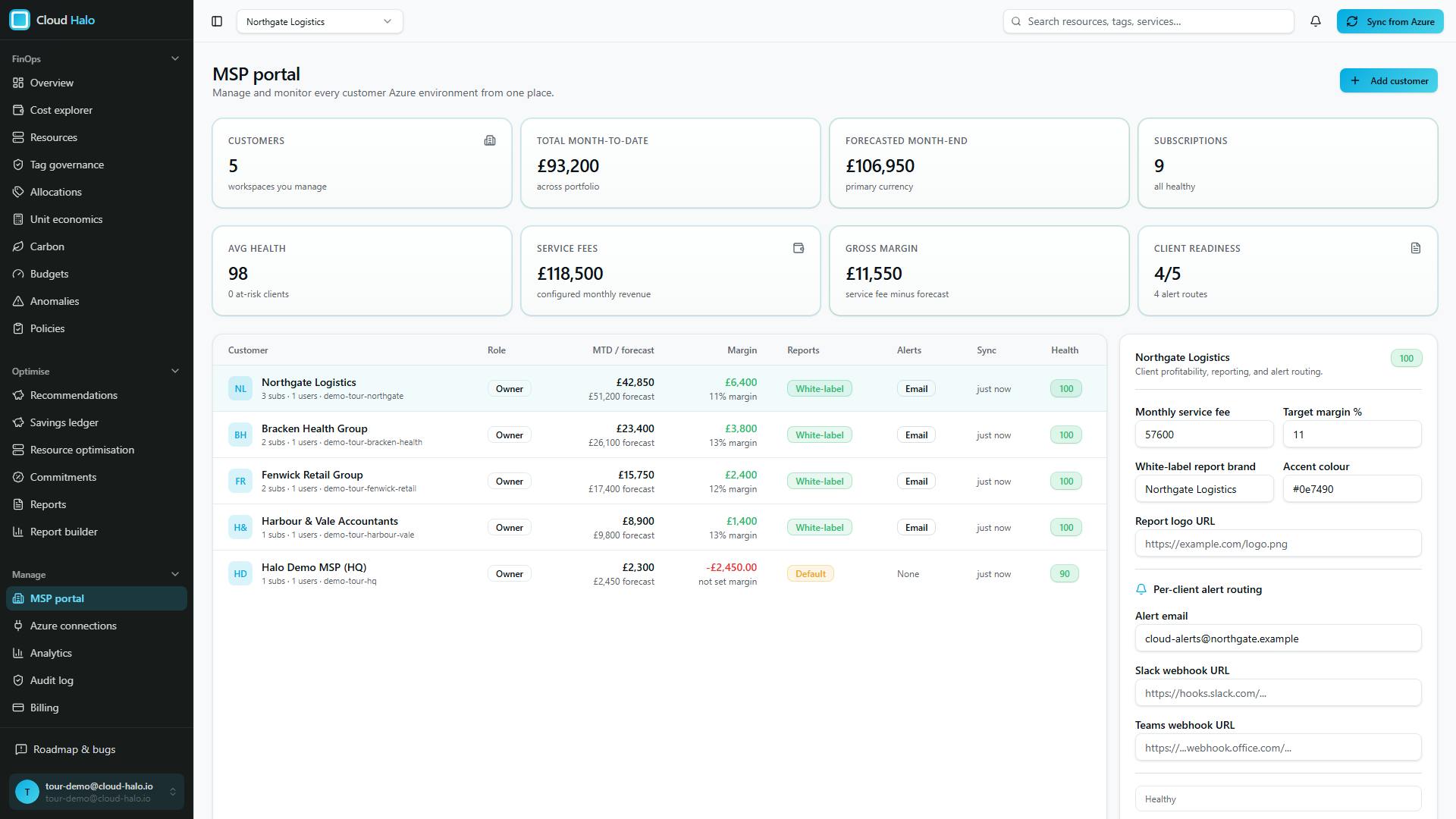
Introducing Cloud Halo: Streamlined Azure FinOps for MSPs
Cloud Halo has launched a new platform designed to address a critical pain point for Managed Service Providers (MSPs): the complexity and unpredictability of Azure cloud spending. The service offers a dedicated FinOps (Financial Operations) solution specifically tailored for MSPs, promising a simplified approach with a flat-rate pricing model. This move aims to empower MSPs to better manage their clients' Azure costs, improve profitability, and provide clearer financial insights.
For MSPs, managing cloud costs for multiple clients on Azure can be a significant operational challenge. Azure's intricate pricing structures, coupled with the dynamic nature of cloud resource utilization, often lead to unexpected cost overruns. This not only impacts the MSP's bottom line but also erodes client trust if not managed effectively. Cloud Halo positions itself as a direct solution to these issues, offering specialized tools and a transparent pricing strategy that contrasts with the often-variable costs associated with other cloud management platforms.
The core value proposition of Cloud Halo lies in its focus on financial operations within the Azure ecosystem. FinOps is an evolving discipline that brings financial accountability to the variable spend model of cloud, enabling teams to make data-driven decisions. For MSPs, this means gaining granular visibility into where client budgets are being allocated, identifying opportunities for cost optimization, and forecasting future expenses with greater accuracy. Cloud Halo’s platform is built with these specific needs in mind, aiming to automate many of the manual processes involved in cost tracking and reporting.
Key Features and Benefits
While specific feature details are emerging, the platform's announcement highlights its commitment to simplifying Azure FinOps. The flat-rate pricing is a significant differentiator, offering MSPs a predictable cost for a vital service. This predictability allows for better budgeting and margin calculation, a crucial factor for businesses operating on service contracts. Instead of a percentage of spend or per-client fees that can fluctuate wildly, a fixed monthly or annual fee provides stability.
Cloud Halo's focus on MSPs suggests a feature set designed for multi-tenancy management. This likely includes tools for aggregating cost data across numerous client accounts, applying custom tagging strategies for better allocation, and generating consolidated reports. The platform aims to reduce the overhead associated with managing diverse Azure environments for a client base, allowing MSPs to scale their cloud management services more efficiently.
Furthermore, the platform is expected to provide actionable insights for cost optimization. This could involve automated recommendations for reserved instances, identifying underutilized resources, rightsizing virtual machines, and suggesting architectural changes that lead to long-term savings. The goal is not just to track spending but to actively reduce it without compromising performance or functionality for the end-client.

The Market Landscape and Cloud Halo's Position
The cloud cost management market is increasingly crowded, with numerous tools and services vying for attention. However, many existing solutions are broad-based, attempting to cater to all cloud providers and a wide range of customer types. Cloud Halo's decision to specialize in Azure FinOps for MSPs is a strategic play. By focusing on a specific niche, the company can develop deeper expertise and tailor its product more precisely to the workflows and challenges faced by this particular segment of the IT services industry.
The rise of FinOps as a discipline underscores the growing maturity of cloud adoption. As organizations move beyond initial migration and into optimizing their cloud estates for efficiency and cost, specialized tools become essential. MSPs are on the front lines of this trend, acting as intermediaries and advisors to businesses that may not have in-house cloud financial expertise. Cloud Halo's offering directly supports MSPs in fulfilling this advisory role more effectively.
Competitors in the Azure cost management space include native Azure tools like Azure Cost Management + Billing, as well as third-party platforms that offer multi-cloud support. However, these often come with complex pricing, a steeper learning curve, or features that are not specifically optimized for the MSP business model. Cloud Halo's flat-rate, MSP-centric approach aims to carve out a defensible position by offering simplicity, predictability, and targeted functionality.
What This Means for MSPs
For MSPs currently managing Azure environments, Cloud Halo presents an opportunity to enhance their service offerings and improve operational efficiency. The platform promises to transform cost management from a reactive, often painful process into a proactive, value-adding service. By providing clear visibility and actionable optimization strategies, MSPs can deliver greater value to their clients, fostering stronger relationships and potentially opening doors for new managed service opportunities.
The flat-rate pricing model is particularly attractive. It allows MSPs to implement a consistent pricing structure for their own clients, making it easier to package and sell cloud cost optimization as a standalone or bundled service. This predictability also helps MSPs manage their own financial forecasting more accurately, reducing the risk of margin erosion due to unexpected cloud spend fluctuations.
The success of Cloud Halo will likely depend on its ability to deliver on its promise of simplicity and effectiveness. For MSPs, time is a critical resource. A platform that genuinely reduces the time spent on cost analysis and reporting, while simultaneously uncovering significant savings, will be invaluable. The platform's ability to integrate seamlessly with existing Azure environments and reporting tools will also be a key factor in its adoption.
Ultimately, Cloud Halo is stepping into a crucial area of cloud management. As Azure continues to grow in adoption, the need for specialized FinOps solutions for service providers will only increase. By focusing on this niche with a clear value proposition, Cloud Halo has the potential to become an indispensable tool for MSPs navigating the complexities of cloud financial operations.