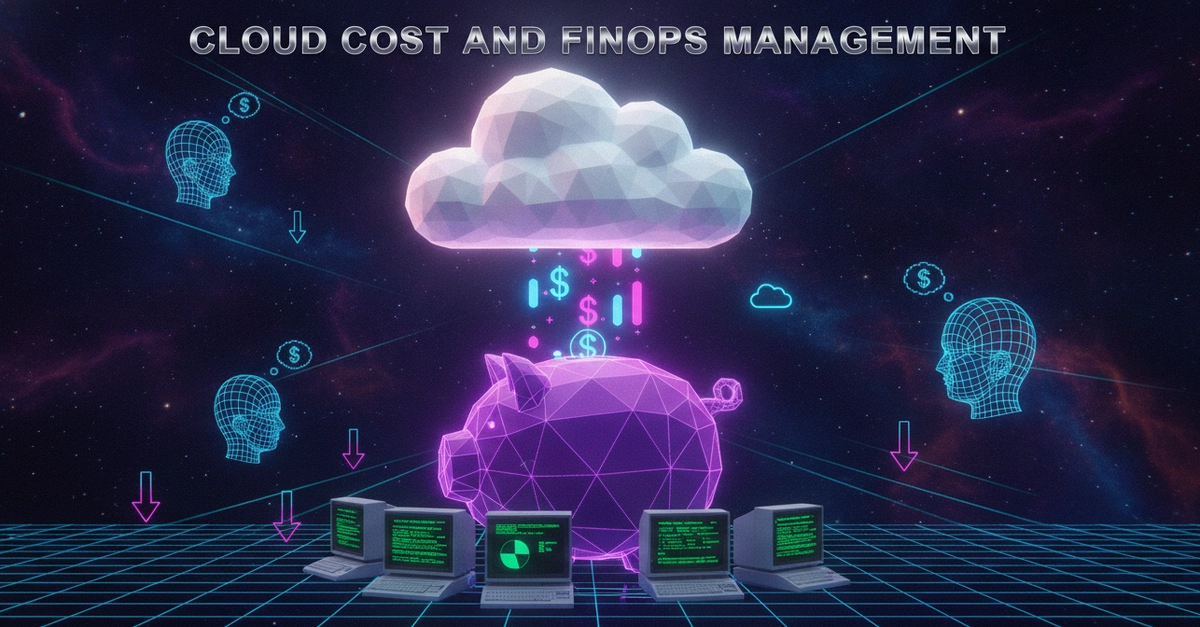
The Stealthy Ascent of Cloud Bills
For many Software-as-a-Service (SaaS) teams, the cloud initially represents pure agility. It's the engine that allows for rapid launches, swift feature iteration, seamless user support, and elastic scaling without the capital expenditure of physical hardware. This inherent flexibility is a powerful early-stage advantage. However, as the product matures and user bases expand, the very infrastructure that enabled rapid growth can become a labyrinth of opaque costs. A seemingly stable cloud bill can inexplicably spike from one month to the next. Finance departments question the increases, engineering teams defend them as essential for performance, and leadership demands better financial oversight. Yet, the fear of stifling product development or degrading the customer experience often paralyzes decisive action.
This is precisely where cloud cost visibility shifts from a helpful metric to a critical business imperative. It’s no longer just about tracking expenses; it’s about understanding the 'why' behind every dollar spent in the cloud. Visibility means knowing not only where cloud spending originates but also who owns it and, most importantly, whether that expenditure directly translates into business value and supports strategic objectives. For SaaS companies, this isn't merely an accounting problem; it’s a fundamental business, engineering, and operational challenge that impacts the bottom line and future scalability.

Defining Cloud Cost Visibility
At its core, cloud cost visibility is the practice of gaining detailed insight into your cloud expenditure. This involves dissecting your cloud bill to understand the specific services, resources, projects, teams, or applications that are consuming budget. It’s about moving beyond a single, aggregate number to a granular breakdown that answers critical questions:
- Where is the money going? Identifying specific services (e.g., compute, storage, databases, networking, managed services) and their associated costs.
- Who is spending the money? Attributing costs to specific teams, projects, applications, or even individual developers or customer accounts.
- Why is it being spent? Understanding the business justification for each cost. Is a high compute bill for a new, high-traffic feature, or for an underutilized legacy service?
- Is the spending efficient? Evaluating whether resources are provisioned optimally and if there are opportunities for cost savings without impacting performance or user experience.
Think of it less like a simple utility bill and more like a detailed, real-time inventory and performance report of your entire digital factory. Without this level of detail, you're essentially operating blind, making strategic decisions based on incomplete or misleading financial data. This lack of insight is particularly dangerous for growing SaaS companies, where the stakes are higher and the margin for error smaller.
The Perils of Cost Blindness for SaaS
The initial appeal of cloud computing—its elasticity and pay-as-you-go model—can mask underlying inefficiencies. As a SaaS product scales, user demand fluctuates, new features are deployed, and the underlying infrastructure becomes more complex. Without proper visibility, several problems emerge:
Unforeseen Budget Overruns
The most immediate consequence is the inability to predict or control spending. A sudden surge in traffic, a misconfigured service, or an unmonitored data backup process can lead to a bill that far exceeds expectations. Finance teams are left scrambling to explain variances, and engineering teams may lack the data to diagnose the root cause effectively. This unpredictability erodes confidence and makes financial planning a guessing game.
Stifled Innovation and Feature Development
When costs spiral, the natural reaction is to tighten the purse strings. However, without granular visibility, cost-cutting measures can be blunt instruments. Teams might hesitate to launch new features or experiment with new technologies for fear of the unknown cost implications. This can lead to a slowdown in innovation, a critical component for SaaS companies that rely on continuous improvement to stay competitive. The paradox is that the very agility the cloud offered is lost when cost concerns create a culture of risk aversion.
Compromised Performance and User Experience
Conversely, a lack of visibility can also lead to performance issues. Engineering teams might over-provision resources to ensure stability and speed, leading to significant waste. Or, in an attempt to cut costs without understanding the impact, essential services might be scaled down, leading to slower load times, increased latency, or even outages. Both scenarios negatively impact the end-user experience, which is often the primary differentiator for a SaaS product.
Team Friction and Accountability Gaps
When cloud bills become a point of contention, friction can emerge between departments. Finance may view engineering as reckless spenders, while engineering may feel finance doesn't understand the technical necessities. Without clear ownership and attribution of cloud costs, it becomes difficult to establish accountability. No single team or individual feels directly responsible for the overall cloud expenditure, making proactive cost optimization a collective challenge that no one is truly tackling.
Strategies for Achieving Cloud Cost Visibility
Gaining control over cloud spending requires a multi-faceted approach that integrates financial discipline with technical understanding. It’s not a one-time fix but an ongoing process.
Implement Tagging and Labeling Policies
This is the foundational step. Establish a mandatory, consistent tagging strategy for all cloud resources. Tags should identify the owner (team, project, application), environment (production, staging, development), cost center, and purpose of the resource. This allows for automatic cost allocation and makes it simple to filter and group expenses in cloud provider consoles or third-party tools.
Leverage Cloud Provider Tools
Major cloud providers (AWS, Azure, GCP) offer a suite of tools for cost management and analysis. Services like AWS Cost Explorer, Azure Cost Management + Billing, and Google Cloud's Cost Management provide dashboards, reports, and anomaly detection capabilities. Regularly reviewing these tools is essential for understanding spending patterns and identifying potential issues.
Utilize Third-Party FinOps Tools
While cloud provider tools are powerful, specialized third-party FinOps (Financial Operations) platforms can offer more advanced features. These tools often provide multi-cloud support, enhanced reporting, AI-driven recommendations for optimization, and more sophisticated cost allocation models. They can help bridge the gap between engineering and finance by providing a unified view of costs and actionable insights.
Foster a Culture of Cost Awareness
Visibility is only effective if it leads to action. Educate teams on the cost implications of their architectural decisions and development practices. Integrate cost considerations into the development lifecycle, making it a factor alongside performance and security. Encourage engineers to think about cost optimization as part of their responsibility, not just an afterthought.
Regularly Review and Optimize
Cost visibility is not a static state. It requires continuous monitoring, analysis, and optimization. Schedule regular reviews of cloud spend (weekly or bi-weekly) to track progress, identify new opportunities for savings, and ensure that cost-saving measures do not negatively impact performance or reliability. This could involve rightsizing instances, deleting unused resources, leveraging reserved instances or savings plans, and optimizing storage and data transfer costs.
The Business Imperative
For growing SaaS teams, cloud cost visibility is not a luxury; it's a necessity for sustainable growth. It empowers teams to make informed decisions, protects profit margins, fuels innovation, and ensures a positive customer experience. Without it, the very scalability that made the cloud attractive can become its greatest liability, turning a powerful growth engine into an unpredictable financial drain. Teams that prioritize and implement robust cloud cost visibility practices are better positioned to navigate the complexities of scaling, maintain financial health, and ultimately achieve their business objectives.