
Clojure 1.13 Alpha: Checked Keys Arrive
Clojure 1.13 has entered its alpha phase, and the most significant new feature is the introduction of checked keys for map literals. This enhancement aims to catch common programming errors related to data structure keys at compile time, rather than at runtime. This move signals a continued focus on developer productivity and robustness within the Clojure ecosystem.
Traditionally, Clojure maps are highly flexible. You can use any data type as a key, and there's no inherent mechanism to enforce that specific keys exist or that certain keys do not. While this flexibility is powerful, it can also lead to subtle bugs where a typo in a key name or an unexpected `nil` key causes unexpected behavior or outright errors when code attempts to access data that isn't there. Developers often resort to extensive test suites or runtime checks to mitigate these issues.
The new checked keys feature allows developers to define expectations for keys directly within map literals. This is achieved through a special syntax that specifies which keys are expected and, importantly, whether they are required or optional. For instance, a map literal can now declare that it must contain a `:user/id` key, and optionally a `:user/name` key. If the `:user/id` is missing during compilation, the compiler will flag it as an error.
This mechanism is implemented using a new namespace, `clojure.core.checked-keys`, which provides the necessary constructs. The core idea is to allow developers to annotate their data structures with explicit contracts regarding their keys. This shifts the burden of validation from runtime to compile time, a fundamental principle in building more reliable software. Think of it less like a runtime guardrail that might get bypassed, and more like a strict librarian who checks your bibliography before you can submit your paper – the error is caught before it ever reaches the reader.
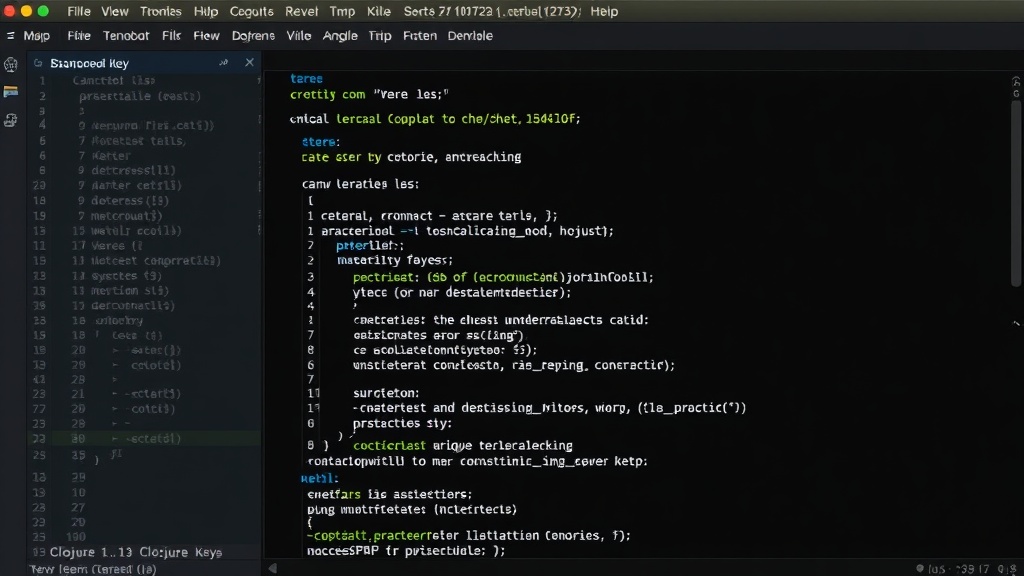
How Checked Keys Work
The syntax for checked keys involves using a new form within map literals. For example, to define a map that requires a `:name` key and optionally accepts an `:age` key, you might write something like:
(require '[clojure.core.checked-keys :as ck])

(ck/checked-map
  {:name String :age (ck/optional String)})
This `checked-map` macro defines a schema for the map. When you attempt to create a map that conforms to this schema, Clojure's compiler will verify that all required keys are present and that their values conform to any type hints provided. If a required key is missing, or if an unexpected key is present (depending on the strictness of the schema), a compile-time error will be generated.
This feature is particularly useful in scenarios where data structures have a well-defined shape, such as configuration maps, API request/response payloads, or internal data transfer objects. By enforcing these shapes at compile time, developers can gain confidence that their data is structured as expected, reducing the need for repetitive runtime checks and improving the clarity of code intent. The compiler essentially becomes an assistant, ensuring that your data conforms to predefined rules.
The implementation leverages Clojure's existing macro system and compiler infrastructure. When you use the `checked-map` macro, it generates code that the Clojure compiler can analyze. This analysis checks for the presence and validity of keys based on the schema provided. It's important to note that this is a compile-time check. Once the code is compiled and the checks pass, the runtime performance is not significantly impacted compared to standard maps, as the checking logic is baked into the compiled code or handled by the compiler itself.
Implications for Developers and Tooling
The introduction of checked keys is a significant step forward for Clojure development. It directly addresses a class of errors that have historically plagued dynamic languages, offering a more proactive approach to data integrity. Developers can now express invariants about their data structures directly in the code, making it more self-documenting and less prone to runtime surprises.
IDEs and static analysis tools will likely integrate this feature deeply. Imagine an IDE that can highlight missing required keys or flag unexpected optional keys as you type, providing instant feedback and reducing the cognitive load on developers. This aligns with the broader trend in programming languages toward providing stronger static guarantees without sacrificing the dynamic nature that many developers appreciate about Clojure.
For teams working on larger projects, this feature could drastically improve maintainability. When codebases grow, maintaining consistency in data structures becomes challenging. Checked keys provide a built-in mechanism to enforce these standards, acting as a form of automated code review for data shape. This can lead to fewer bugs, faster debugging cycles, and more confident refactoring.
The initial alpha release suggests that the feature is still under active development. We can expect further refinements and perhaps additional options for defining more complex key validation rules. The community's feedback will be crucial in shaping the final implementation, determining its exact capabilities and how it integrates with existing libraries and patterns.
Broader Impact and Future Considerations
Clojure has always prided itself on its pragmatic approach to functional programming, balancing immutability, powerful abstractions, and a REPL-driven development workflow. The addition of checked keys fits squarely within this philosophy, offering a way to enhance robustness without introducing excessive ceremony or complexity.
What remains to be seen is how widely this feature will be adopted. Will it become a de facto standard for defining data structures in new Clojure projects? How will existing libraries adapt to or integrate with this new feature? The success of checked keys will depend not only on their technical merits but also on how well they are supported by the community and integrated into the broader Clojure tooling ecosystem.
For developers coming from languages with strong static typing, this might feel like a familiar concept. However, Clojure's implementation is designed to be idiomatic to its dynamic, Lisp-like nature, providing type safety where it matters most without imposing a full static type system. It’s a targeted enhancement, not a paradigm shift.
The release of Clojure 1.13 alpha with checked keys is a positive development for anyone building applications with Clojure. It offers a compelling way to catch common data-related errors earlier in the development cycle, leading to more robust and maintainable software. As the alpha progresses, developers should experiment with the feature and provide feedback to help shape its future.