
As data volumes swell into the petabyte realm, the choice of partitioning strategy for analytical databases like ClickHouse® transforms from a technical detail into a fundamental architectural decision. A well-executed partitioning scheme is the bedrock of efficient petabyte-scale operations, directly impacting query performance, simplifying data lifecycle management, reducing maintenance burdens, and enabling significantly faster analytical workloads. Conversely, suboptimal partitioning can lead to a proliferation of small data parts, sluggish merge processes, inflated storage requirements, and ultimately, degraded query speeds. It is crucial to understand that ClickHouse partitions are not indexes; they are a physical data organization mechanism. This distinction is paramount for anyone designing schemas for large-scale deployments.
Understanding ClickHouse Partitioning Fundamentals
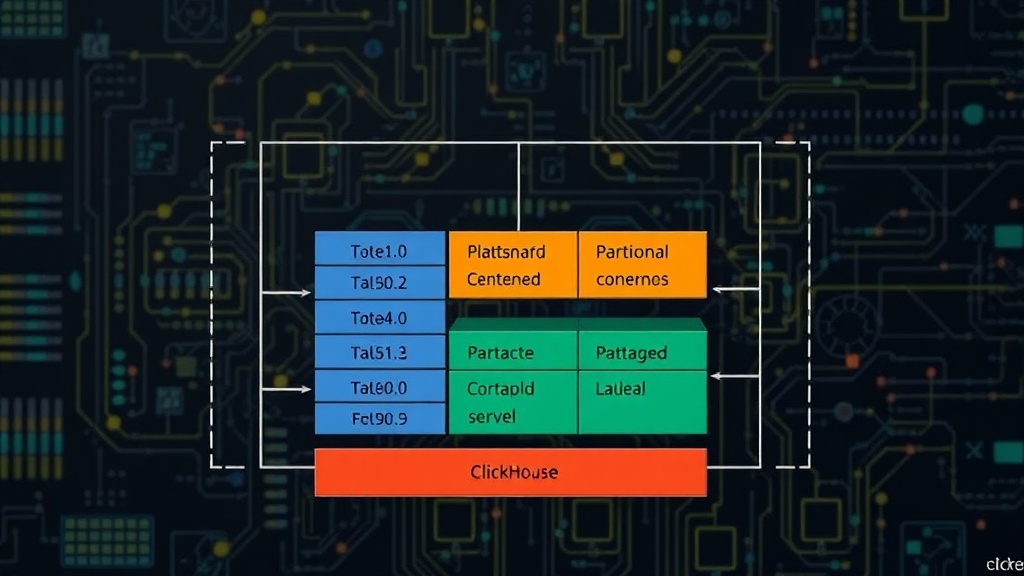
In ClickHouse, data is stored in tables, which are further divided into parts. A part is a physically contiguous block of data on disk, typically corresponding to a single partition and a single shard. Partitioning is the process of dividing a large table into smaller, more manageable chunks based on the values of one or more columns, often a date or timestamp. This division is primarily for data management, not for query acceleration in the same way a B-tree index works in traditional relational databases. When a query targets a specific partition (e.g., data from a particular month), ClickHouse can prune all other partitions, reading only the necessary data. This pruning is the core mechanism by which partitioning improves query performance. Without effective partitioning, ClickHouse would have to scan all data parts, regardless of the query's filters.
The choice of partitioning key is critical. Common choices include date/time fields (year, month, day, hour), geographical regions, customer IDs, or any other column that aligns with common query patterns. The goal is to create partitions that are large enough to be efficient for merges and storage, but small enough that queries targeting specific partitions can quickly isolate the relevant data. An imbalance here – too many small partitions or too few massive ones – can negate the benefits.
Advanced Partitioning Strategies for Petabyte Scale
Moving beyond simple date-based partitioning, petabyte-scale tables often benefit from more sophisticated strategies. The key is to align partitioning with anticipated query loads and data access patterns.
Multi-Level Partitioning
For extremely large datasets, especially those with a time-series component, multi-level partitioning can be highly effective. This involves partitioning by a coarse-grained key first, and then partitioning those resulting blocks by a finer-grained key. For example, a common pattern is to partition first by year, then by month within each year, and potentially by day within each month for very active datasets. This creates a hierarchical structure. Queries filtering by year and month will only need to access the relevant year directories and then the relevant month directories within them, significantly reducing the data scanned.
Consider a table with billions of rows spanning several years. Partitioning solely by day would result in hundreds of thousands, if not millions, of partitions. Each partition has overhead in terms of metadata management and potentially slower merge operations. By partitioning first by year, then by month, you might have only a few dozen partitions per year, each containing data for that entire month. This drastically reduces the total number of partitions and associated overhead.
The trade-off is increased complexity in schema definition and potential for suboptimal performance if queries do not align with the partitioning hierarchy (e.g., querying across multiple years without filtering by year first). However, for petabyte-scale data, the benefits of reduced data scanning and management often outweigh this complexity.
Hash Partitioning for Even Data Distribution
When the primary query patterns do not align cleanly with a single, monotonically increasing key (like a date), or when you need to ensure even distribution of data across partitions to avoid hot spots, hash partitioning is a powerful technique. This involves applying a hash function to one or more columns. The hash value then determines which partition the data belongs to.
For example, if you have a massive event log table and want to distribute data evenly, you might hash a user ID or an event type. This ensures that data for a single user or event type isn't concentrated in one partition, which could lead to performance issues during merges or queries that aggregate across many users. Hash partitioning is particularly useful for distributing write load and preventing single partitions from becoming too large or too small. It acts as a form of sharding at the partition level, ensuring that data is spread across the available storage and processing resources more uniformly.
A common pattern is to combine hash partitioning with time-based partitioning. For instance, you could partition by month, and then within each month's partition, use a hash of the user ID to distribute data. This provides both time-based pruning for time-series queries and even distribution for user-centric analysis within a given time window.
Combining Strategies
The most effective strategies often combine different partitioning types. For instance, a large e-commerce platform might partition its order data first by date (e.g., month) for efficient time-based analysis and data archival. Within each month's partition, they might then use hash partitioning on a `customer_id` or `region_id` to ensure that queries analyzing customer behavior or regional sales within that month distribute evenly across available resources. This hybrid approach leverages the strengths of both strategies: time-based pruning for historical analysis and hash-based distribution for operational queries and load balancing.
Best Practices for Managing Petabyte-Scale Tables
Regardless of the chosen strategy, several best practices are critical for managing petabyte-scale tables in ClickHouse:
- Analyze Query Patterns: This is the single most important step. Understand how your data will be queried. Which columns are most frequently used in WHERE clauses? Are queries typically time-based, user-based, or a combination? Align your partitioning scheme to these patterns.
- Avoid Excessive Partitions: While it’s tempting to create very granular partitions, each part incurs metadata overhead. Aim for partitions that are large enough (e.g., several GBs to tens of GBs) to make merges efficient. Monitor the number of parts per partition and the total number of parts in a table.
- Regularly Review and Re-evaluate: Data access patterns can change. Periodically review your partitioning strategy and its effectiveness. ClickHouse provides tools to analyze query performance and data distribution, which can inform adjustments.
- Consider Data Lifecycle Management: Partitioning is key to efficient data archival and deletion. By partitioning on time, you can easily drop old partitions that are no longer needed, which is significantly faster and less resource-intensive than deleting individual rows.
- Monitor Merge Performance: Poor partitioning can lead to excessive background merge activity, consuming valuable I/O and CPU resources. Monitor the `system.merges` table to identify bottlenecks.
- Use `ALTER TABLE ... ATTACH/DETACH PARTITION` and `DROP PARTITION` commands judiciously: These commands allow for efficient data management, especially for time-series data where entire partitions can be added or removed atomically.
The Unanswered Question: Evolving Partitioning Needs
While current best practices focus on aligning partitions with known query patterns and managing data volume, a key question remains: how will evolving data processing paradigms, such as real-time analytics on continuously streaming petabyte-scale data or federated query engines, influence future partitioning strategies? As architectures become more dynamic and data ingestion more continuous, static partitioning schemes may eventually prove insufficient. The challenge will be to design partitioning mechanisms that are not only performant for batch queries but also adaptive and efficient for a near real-time, ever-changing data landscape.