ClauseGuard's Scaling Challenge
Processing uploaded contracts at scale presents immediate engineering hurdles. ClauseGuard, a platform designed for contract analysis, identified two primary issues: efficiently selecting the correct document parser (PDF or DOCX) without embedding this logic directly into core business processes, and rapidly generating numerous clause objects without repetitive, resource-intensive reconstruction. These are common problems in applications dealing with diverse data inputs and object-heavy operations. Hardcoding parser selection leads to brittle code, difficult to maintain and extend. Reconstructing complex objects from scratch for each instance is computationally expensive and slows down throughput.
To address these challenges, ClauseGuard turned to two well-established Gang-of-Four creational design patterns: the Prototype pattern and the Factory Method pattern. These patterns offer elegant solutions to object creation and initialization problems. This article explores how ClauseGuard leverages these patterns, detailing their concepts, UML representations, Java implementations, and the strategic decision-making behind their application in the ClauseGuard pipeline.
The Prototype Pattern: Clone, Don't Construct
The Prototype pattern is a creational design pattern that allows for the copying of existing objects, rather than creating new ones from scratch. This is particularly useful when the cost of creating an object is high, or when you need to create many similar objects. Instead of calling a constructor repeatedly, you start with a pre-configured instance (the prototype) and then clone it. This clone can then be modified as needed for its specific use case.
Think of it like having a master blueprint for a house. Instead of hiring architects and builders from scratch every time you want to build a similar house, you take the existing blueprint, make a copy, and then perhaps tweak a few details like the paint color or landscaping. The core structure remains the same, saving significant time and resources.
For ClauseGuard, this means that instead of instantiating hundreds of clause objects from their base definitions every time a contract is processed, they can maintain a set of pre-initialized clause prototypes. When a new clause object is required, it is simply cloned from its corresponding prototype. This significantly reduces the overhead associated with object creation, especially for complex objects with many attributes and dependencies. The pattern is straightforward to implement in Java, often involving a `clone()` method or a copy constructor.
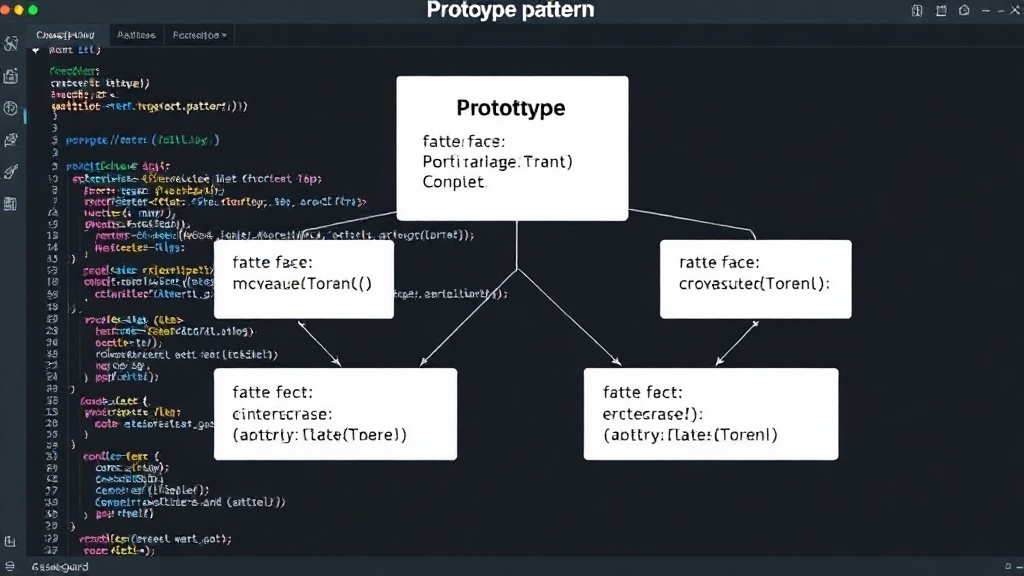
UML for Prototype Pattern
The typical UML diagram for the Prototype pattern involves a Prototype interface or abstract class that declares a cloning method (e.g., `clone()`). Concrete prototype classes implement this interface and provide the actual cloning logic. A Client class then uses these concrete prototypes to create new objects by calling their `clone()` method. The client doesn't need to know the specific concrete class it's cloning, only that it supports the `clone()` operation.
Java Implementation of Prototype Pattern
Implementing the Prototype pattern in Java can be done efficiently. A common approach is to have an interface, say ClausePrototype, with a clone() method. Concrete clause classes like PdfClause or DocxClause would implement this interface. The clone() method typically uses Java's built-in `Object.clone()` method, ensuring that the object's state is copied correctly. Care must be taken with deep vs. shallow copies, depending on whether the cloned object contains references to other mutable objects.
A simplified Java example might look like this:
interface ClausePrototype {
    ClausePrototype clone() throws CloneNotSupportedException;
    // other methods specific to clause processing
}

class PdfClause implements ClausePrototype {
    // ... attributes and constructor ...

    @Override
    public ClausePrototype clone() throws CloneNotSupportedException {
        // Perform deep copy if necessary
        return (ClausePrototype) super.clone();
    }
}

// Client code would then use:
// ClausePrototype pdfPrototype = new PdfClause(...initialization...);
// ClausePrototype newPdfClause = pdfPrototype.clone();
This approach ensures that ClauseGuard can quickly generate the necessary clause objects without the overhead of repeated full constructions. The key is that the prototype instances are pre-configured and ready to be duplicated.
The Factory Method Pattern: Decoupling Creation
The Factory Method pattern is another creational pattern that provides an interface for creating objects in a superclass but allows subclasses to alter the type of objects that will be created. It addresses the problem of needing to instantiate different types of objects based on certain conditions, without hardcoding those conditions into the client code.
Imagine a pizza delivery service. You might have an `OrderPizza` function. If you hardcode it to always create a `PepperoniPizza`, you can't easily add `MargheritaPizza` or `VegetarianPizza` without changing the core `OrderPizza` logic. The Factory Method pattern solves this by defining a `createPizza` method in a superclass, and then concrete subclasses (e.g., `OrderPepperoniPizza`, `OrderMargheritaPizza`) override this method to return the specific pizza type they are responsible for creating.
In ClauseGuard's context, this pattern is ideal for selecting the correct document parser. Instead of having a large `if-else` or `switch` statement within the main processing logic to decide whether to use a PdfParser or a DocxParser, a Factory Method pattern can abstract this decision. A superclass, such as DocumentParserFactory, would declare a factory method like `createParser()`. Concrete subclasses, like PdfParserFactory and DocxParserFactory, would implement this method to return their specific parser instances.
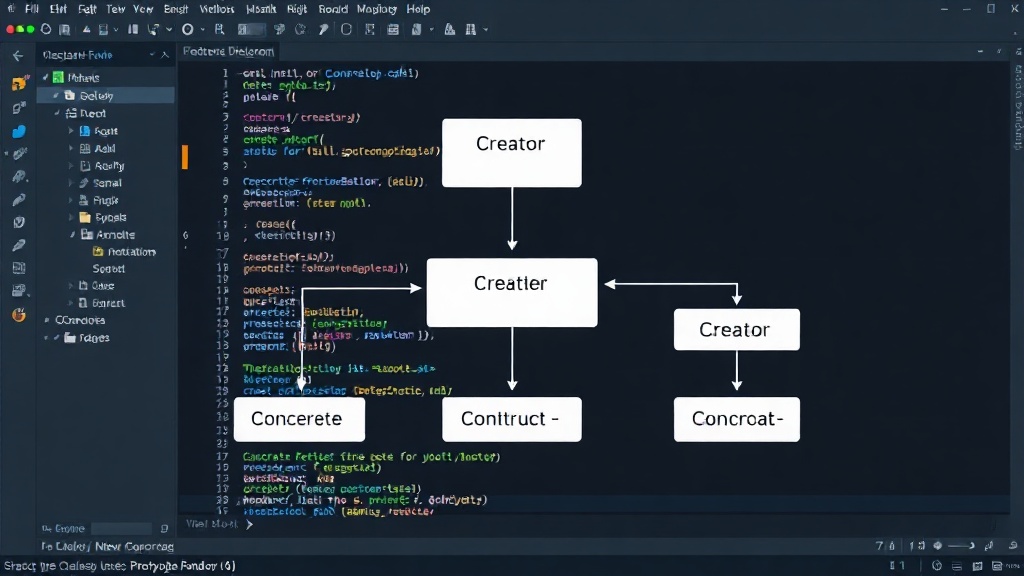
UML for Factory Method Pattern
The UML for the Factory Method pattern typically includes a Creator abstract class or interface that declares the factory method (e.g., `createProduct()`). It may also define a default implementation for a common product. ConcreteCreator classes extend or implement the Creator and override the factory method to return an instance of a specific ConcreteProduct. The Product interface or abstract class defines the objects that the factory method creates.
Java Implementation of Factory Method Pattern
Implementing the Factory Method pattern in Java involves defining an abstract factory class and concrete factory subclasses. For ClauseGuard's parser selection:
// Product Interface
interface DocumentParser {
    void parse(String contractData);
}

// Concrete Products
class PdfParser implements DocumentParser {
    @Override
    public void parse(String contractData) {
        System.out.println("Parsing PDF...");
        // PDF parsing logic
    }
}

class DocxParser implements DocumentParser {
    @Override
    public void parse(String contractData) {
        System.out.println("Parsing DOCX...");
        // DOCX parsing logic
    }
}

// Creator Abstract Class
abstract class ParserFactory {
    public abstract DocumentParser createParser();

    public void processDocument(String data) {
        DocumentParser parser = createParser();
        parser.parse(data);
    }
}

// Concrete Creators
class PdfParserFactory extends ParserFactory {
    @Override
    public DocumentParser createParser() {
        return new PdfParser();
    }
}

class DocxParserFactory extends ParserFactory {
    @Override
    public DocumentParser createParser() {
        return new DocxParser();
    }
}

// Client code would use:
// ParserFactory factory = new PdfParserFactory(); // or DocxParserFactory
// factory.processDocument(contractContent);
This pattern cleanly separates the logic for creating parsers from the main contract processing workflow. When a new document type is introduced, only a new concrete factory and product class need to be added, leaving the core processing logic untouched.
Composing Patterns in the ClauseGuard Pipeline
ClauseGuard elegantly combines both the Prototype and Factory Method patterns within its contract processing pipeline. The process likely starts with a determination of the document type. This is where the Factory Method pattern comes into play. Based on the file extension or an initial content sniff, the system selects the appropriate ParserFactory (e.g., PdfParserFactory or DocxParserFactory). This factory then produces the correct DocumentParser instance.
Once the parser is instantiated, it begins its work. As it identifies and extracts clauses, it doesn't construct each clause object from scratch. Instead, it utilizes the pre-configured clause prototypes. For each clause identified, the parser calls the clone() method on the relevant clause prototype. This yields a new, independent clause object that can then be further processed, analyzed, or stored by ClauseGuard's business logic. This composition allows for both flexible parser selection and highly efficient object instantiation for the clauses themselves.
The benefits are substantial: reduced computational overhead, improved performance, and enhanced maintainability. The code becomes more modular, making it easier to add support for new document formats or new types of clauses in the future. This strategic application of design patterns demonstrates a mature approach to solving common scaling problems in software development.