
The Limits of AI Self-Review for Code
Large language models (LLMs) are increasingly integrated into developer workflows, promising to automate tasks like code review. Tools like Anthropic's Claude are capable of analyzing code, identifying potential bugs, suggesting improvements, and even generating documentation. The allure is undeniable: faster development cycles, reduced human error, and a more efficient use of engineering time. However, a critical flaw emerges when these AI models are tasked with reviewing code generated by themselves or their direct counterparts. This phenomenon, akin to grading one's own homework, introduces a subtle but significant bias that can lead to missed critical issues.
The core problem lies in the training data and architectural similarities between models developed by the same provider or trained on closely related datasets. When Claude reviews code it generated, it's essentially looking for patterns it recognizes as 'correct' based on its own internal logic and training. It may overlook novel bugs or stylistic deviations that a different model, trained on a broader or differently curated dataset, would flag. This is not a malicious act by the AI, but a consequence of its design and learning process. It reinforces its own assumptions rather than challenging them, a fundamental limitation of any self-assessment system.
Consider a scenario where a developer uses an AI assistant to refactor a complex algorithm. The AI might produce code that is syntactically correct and passes basic tests, but contains a subtle logic error under specific edge cases. If another AI from the same family is then tasked with reviewing this code, it might approve the changes because they align with the patterns it was trained on, even if those patterns are flawed. This creates a false sense of security, allowing potentially problematic code to merge into production.
The Case for Cross-Provider AI Review
To mitigate this 'self-grading' bias, a more effective approach is to employ AI models from different providers for code review. This practice, often referred to as cross-provider AI review, leverages the diversity of training data, architectural nuances, and underlying algorithms of various LLMs. A code snippet flagged by one model as potentially problematic might be deemed acceptable by another, and vice-versa. This divergence is precisely what makes the process valuable.
Think of it less like a single teacher grading a student's essay and more like a panel of diverse experts evaluating a scientific paper. Each expert brings a unique perspective, different areas of focus, and varied criteria for assessment. A paper that passes muster with one reviewer might be sent back for revisions by another, highlighting aspects the first reviewer overlooked. This multi-faceted evaluation leads to a more rigorous and reliable outcome.
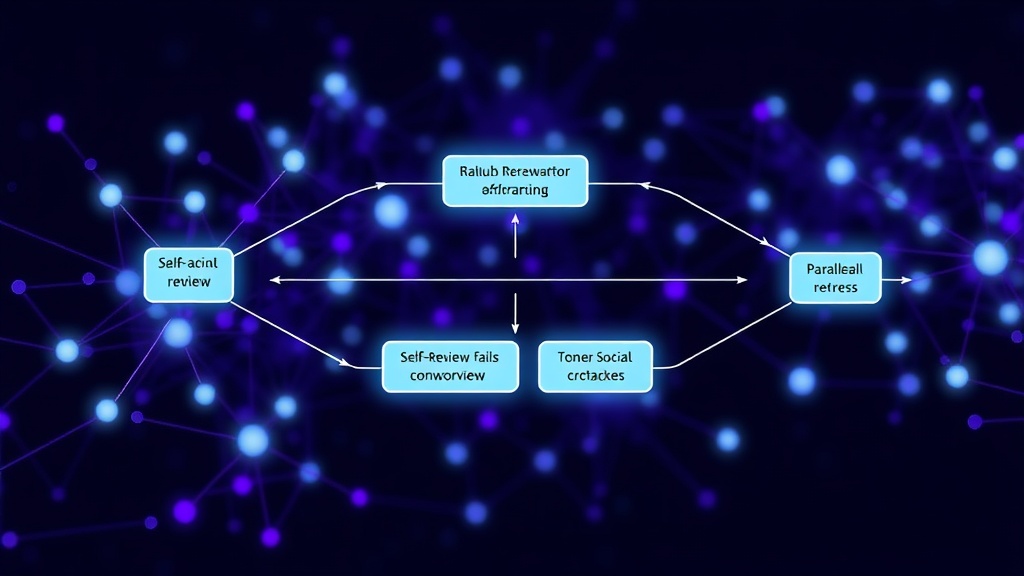
Implementing this in a development workflow typically involves integrating multiple AI code review tools into a continuous integration (CI) pipeline, such as GitHub Actions. When a pull request is opened, it can be automatically submitted to several different AI models. Each model provides its feedback, and a consolidated report is generated. This report can then be presented to the human developer, highlighting discrepancies and areas where multiple AIs flagged issues. This layered approach significantly increases the chances of catching subtle bugs, security vulnerabilities, and style inconsistencies that a single AI, particularly one predisposed to its own outputs, would miss.
Practical Implementation and Benefits
Setting up cross-provider AI code review requires careful consideration of which models to use and how to integrate them. Developers might experiment with models from OpenAI (e.g., GPT-4), Google (e.g., Gemini), and Anthropic (e.g., Claude). Each model has strengths and weaknesses; one might excel at identifying performance bottlenecks, while another might be better at spotting security anti-patterns. The key is to select models that offer complementary capabilities.
The integration can be managed through CI/CD platforms. For instance, a GitHub Actions workflow can be configured to trigger on pull requests. This workflow would then dispatch the code to different AI services via their APIs. The results from each service are collected, aggregated, and presented in a structured format. This could be a comment on the pull request, a report in a dedicated dashboard, or even an automated check that blocks merging if critical issues are flagged by a majority of the AIs.
The benefits extend beyond just bug detection. Different AI models might offer varied suggestions for code optimization or readability improvements. By comparing these suggestions, developers can gain deeper insights into best practices and different coding paradigms. This exposure to multiple AI perspectives enriches the learning process and can lead to more robust, maintainable, and efficient codebases.
What nobody has addressed yet is the cost-effectiveness of running multiple AI models for every code review. While the benefits are clear, the API call costs for each model can accumulate rapidly, especially for large teams or open-source projects with high commit volumes. Optimizing the selection and usage of these models to balance thoroughness with budget will be a key challenge for widespread adoption.
Beyond Self-Review: The Human Element Remains Crucial
Despite the advancements in AI code review, it is crucial to remember that these tools are assistants, not replacements for human developers. AI can automate the detection of common patterns and known issues, but it often struggles with understanding the broader context of a project, the specific business requirements, or the architectural nuances that a human engineer grasps intuitively. Human reviewers bring creativity, critical thinking, and a deep understanding of the system's goals that AI currently lacks.
The most effective AI-assisted code review process involves a synergy between human and machine intelligence. AI can handle the grunt work of identifying potential issues, freeing up human reviewers to focus on higher-level concerns like design, maintainability, and strategic alignment. When AI tools are used in a cross-provider fashion, the quality of the initial AI-generated feedback is enhanced, providing human reviewers with more accurate and diverse information to act upon.
Ultimately, the directive "Don't Let Claude Grade Its Own Homework" serves as a potent reminder that relying on a single, self-referential system for quality assurance is a precarious strategy. By embracing a multi-AI, cross-provider approach, developers can build more resilient systems and foster a more robust development culture, ensuring that code is not just functional, but truly high-quality.