The Challenge: Claude's Image Generation Gap
Anthropic's Claude models, while powerful for text-based tasks, have historically lacked native image generation capabilities. This has presented a hurdle for users who need to integrate AI-driven image creation directly into their Claude workflows. While Claude excels at understanding and generating code, its ability to produce visual output has been conspicuously absent. This limitation isn't necessarily a fundamental inability of the AI, but rather a strategic or perhaps budgetary decision by Anthropic to not directly offer image generation services through its own platform.
The typical approach for developers looking to bridge this gap involves using separate image generation models, often through distinct APIs. This often means managing multiple API keys, separate billing, and integrating different services, adding complexity and cost to projects. For instance, if a developer is building an application that uses Claude for text processing and needs to generate accompanying visuals, they would typically need to call out to a service like DALL-E or Stable Diffusion, incurring separate charges and requiring additional setup.
Introducing Codex-Bridge: A Cost-Saving Workaround
A new open-source plugin, dubbed codex-bridge, offers an ingenious solution to this problem. Developed under an MIT license, this plugin effectively routes image generation requests (specifically targeting gpt-image-2) and five other GPT-5 subagents through your existing Codex CLI login. The key benefit here is that these operations are then billed against your existing ChatGPT plan, rather than requiring a separate API key or incurring new, potentially higher, costs associated with a dedicated image generation service.
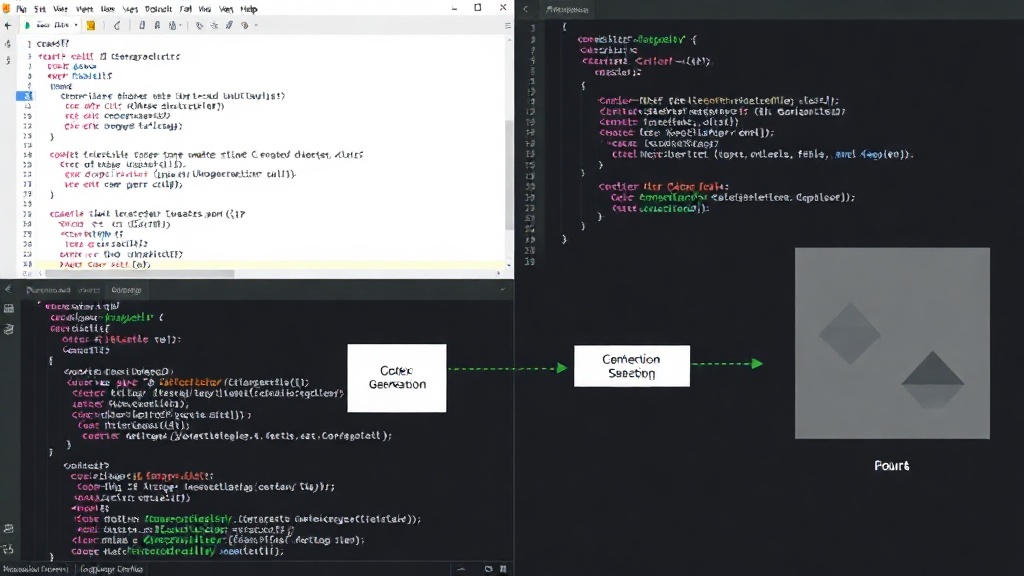
The plugin's core mechanism relies on two bash wrappers. These wrappers interface with codex exec, which is Codex CLI's non-interactive execution mode. By leveraging your established codex login credentials, the plugin enables Claude to indirectly access image generation capabilities. Before executing any commands, both scripts perform a check to ensure that codex login status is active, preventing execution failures due to authentication issues.
How Codex-Bridge Operates Technically
The plugin's technical implementation is designed for efficiency and minimal intrusion. For text-based tasks that utilize the five GPT-5 subagents, codex-bridge operates within a read-only sandbox environment. This ensures that the agent can only read data and cannot make any modifications to the system or its files. The plugin captures only the final output of these tasks, directing it to a temporary file specified by the -o <tmpfile> argument. This mechanism is detailed in the bin/codex-run script, specifically around lines 92-96.
Image generation tasks, which are the primary focus for overcoming Claude's native limitations, employ a more involved sandbox configuration. These tasks use a workspace-write sandbox. This sandbox is scoped specifically to the output directory, allowing the image generation process to write the resulting image file. The script responsible for this is bin/codex-imagegen, with the relevant section located at line 110. After the image is generated and written to the specified location, the plugin performs a verification step to confirm that the file has successfully landed in the designated workspace. This ensures the integrity of the image generation process.
The plugin handles various execution outcomes through a clear exit code system:
- Exit code 0: Indicates successful execution.
- Exit code 1: Signals a precondition failure (e.g., missing dependencies, incorrect login).
- Exit code 2: Denotes a general execution failure.
- Exit code 124: Signifies a timeout, meaning the command took too long to complete.
Implications for Developers and Users
The existence of codex-bridge has significant implications for developers and users who rely on Claude for complex AI-driven applications. Firstly, it addresses the cost factor associated with AI services. By consolidating image generation billing under an existing ChatGPT plan, users can potentially reduce their overall expenditure on AI tools. This is particularly impactful for startups or individual developers operating on tighter budgets, where managing multiple subscription tiers can become a significant overhead.
Secondly, it simplifies the integration process. Instead of managing separate API endpoints, authentication tokens, and error handling for different AI services, developers can now potentially manage a unified workflow through their Claude environment and existing Codex CLI setup. This reduces the cognitive load and the amount of boilerplate code required for integration.
However, it is crucial to note the author's disclaimer: the plugin has not been tested or run by the reviewer. This means users adopting codex-bridge should proceed with caution. Potential issues could include unexpected bugs, compatibility problems with future updates to Claude or Codex CLI, or unforeseen billing discrepancies. The reliance on codex exec, a non-interactive mode, might also introduce limitations or subtle differences in behavior compared to interactive usage.
The Underlying Problem: A Matter of Economics?
The TL;DR provided by the source, "Claude can't draw" is a budget problem, not a capability problem, is a critical observation. It suggests that Anthropic has the technical capacity to integrate image generation but has chosen not to, likely due to strategic business decisions. This could be related to market positioning, the cost of developing and maintaining such a feature, or a desire to focus on their core strengths in large language models. The emergence of plugins like codex-bridge highlights how the open-source community can find innovative workarounds to perceived gaps in commercial AI offerings.
This situation raises questions about the future of AI model integration. Will we see more plugins that act as bridges between different AI ecosystems, allowing users to leverage the best features of various models through a single interface or billing structure? The success and adoption of codex-bridge could pave the way for more such solutions, fostering a more interconnected and flexible AI development landscape. For now, it presents a compelling, albeit untested, option for developers looking to add image generation to their Claude-powered projects without incurring additional direct costs.