
Azure AI Foundry: A New Marketplace for Pre-trained AI Models
Microsoft has launched Azure AI Foundry, a new platform designed to simplify the acquisition and integration of pre-trained artificial intelligence models. This marketplace aims to democratize AI by allowing developers to discover, purchase, and embed sophisticated AI capabilities into their applications without the steep learning curve or resource investment typically associated with training models from scratch. The release in August 2026 directly addresses the burgeoning demand for accessible AI solutions, positioning Azure as a central hub for readily deployable AI power.
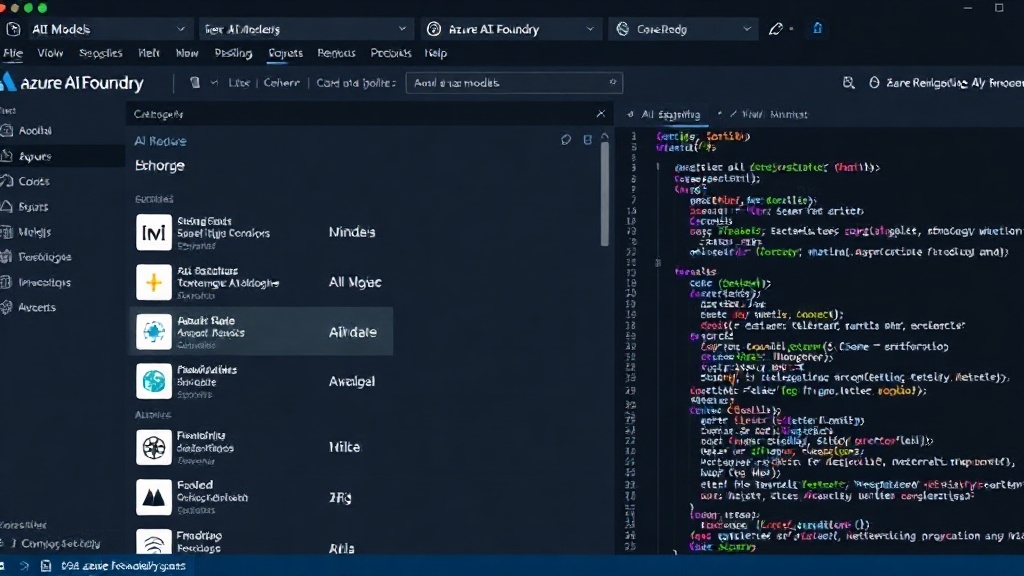
Developers can now browse a curated selection of models tailored for various tasks, from natural language processing and computer vision to predictive analytics. The Foundry emphasizes ease of use, providing clear documentation and integration pathways. A key tutorial angle focuses on integrating these pre-trained models into a .NET application using Visual Studio Code, targeting developers with intermediate proficiency. This means that if you're building a .NET application and need to add advanced AI features, you can potentially find a ready-made solution on Azure AI Foundry, saving weeks or months of development time.
.NET Aspire 1.2: Streamlining Cloud-Native Development
.NET Aspire has reached version 1.2, bringing significant enhancements to its framework for developing cloud-native applications. This release places a strong emphasis on improving containerization workflows, a critical component for modern, scalable application architectures. The core value proposition of .NET Aspire remains its ability to abstract away much of the complexity associated with distributed systems, making it easier for developers to build, deploy, and manage applications that run effectively in cloud environments.
Version 1.2 introduces refined tools for defining and managing application dependencies, service discovery, and distributed tracing. For developers already invested in the .NET ecosystem, Aspire 1.2 promises a smoother path to building resilient, observable, and production-ready cloud applications. The improvements in containerization are particularly noteworthy, offering more robust options for packaging and orchestrating applications, which is essential as more organizations adopt container-based deployment strategies like Kubernetes. This update is designed to reduce the operational overhead and cognitive load on development teams grappling with the intricacies of cloud infrastructure.
Cross-Platform Development with .NET MAUI and Visual Studio
The article also highlights advancements in cross-platform development using .NET MAUI (Multi-platform App UI) in conjunction with Visual Studio. .NET MAUI continues to mature as a framework for building native cross-platform applications from a single codebase, targeting Windows, macOS, Android, and iOS. Recent updates, likely included in the Visual Studio 2026 toolchain, focus on improving developer productivity through enhanced debugging capabilities, faster build times, and more intuitive UI design tools. The ability to iterate quickly on UI and logic across multiple platforms from one IDE is a significant productivity booster.
For developers aiming to reach a wide audience without maintaining separate codebases for each operating system, .NET MAUI offers a compelling solution. The tutorial angle here likely involves building a simple cross-platform application, demonstrating how to leverage platform-specific APIs when necessary while maintaining a core shared logic. The focus on Visual Studio integration means that the development experience is cohesive, providing a unified environment for coding, testing, and deploying applications to all target platforms. The surprising detail here is the continued investment and progress in a unified UI framework, which many developers initially viewed with skepticism but is now showing tangible benefits in terms of development efficiency and code reuse.
Key Takeaways for Developers
The convergence of specialized marketplaces like Azure AI Foundry, streamlined development frameworks like .NET Aspire, and mature cross-platform tools like .NET MAUI signals a clear direction for application development. Developers are increasingly empowered with off-the-shelf components and simplified workflows that allow them to focus on core business logic rather than infrastructure plumbing or AI model training. The emphasis is on faster time-to-market and broader reach, with tools designed to handle complexity behind the scenes. If you're a developer working on cloud-native applications or looking to integrate AI, these updates warrant your attention.