Anthropic Embeds Invisible Watermarks in Claude's Output
Anthropic, the AI safety and research company, has begun embedding an invisible, machine-readable watermark into all text generated by its Claude models. This move aims to provide a verifiable signal of AI authorship, a critical step in addressing concerns around AI-generated content, misinformation, and deepfakes. The system, documented by Anthropic, applies these watermarks at the model level, ensuring their presence regardless of the output channel, whether through the Claude API, the Claude web interface, or other integrated platforms.
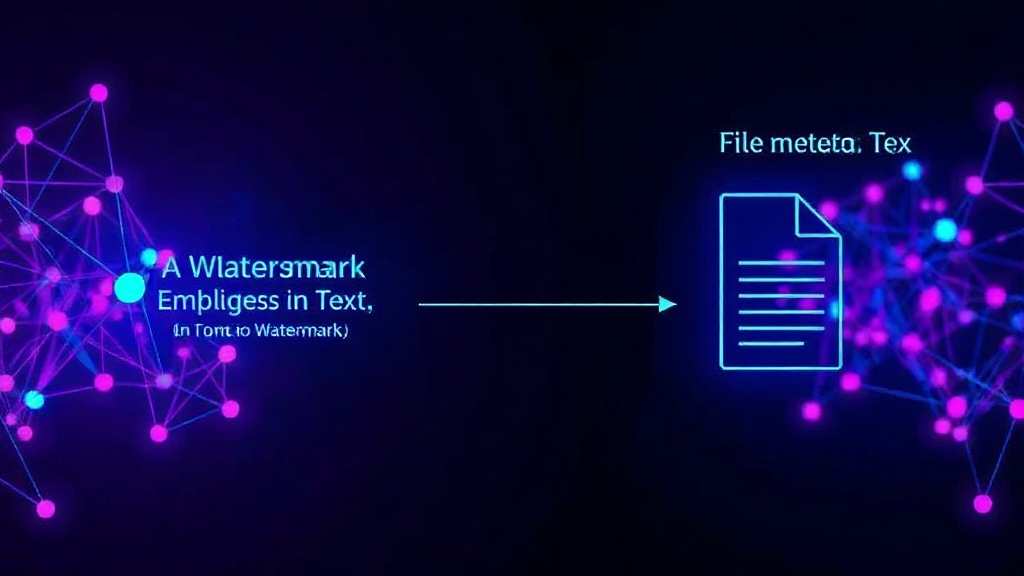
The watermarking technology operates in two primary ways, catering to both textual content and digital files. For text, the watermark is subtly woven into the fabric of the words themselves. This integration is designed to be imperceptible to human readers, meaning it does not affect the meaning, quality, or readability of the generated content. This is crucial; the utility of AI-generated text for creative writing, coding, or information synthesis should not be compromised by the detection mechanism.
For digital files such as images (PNG, JPG) and vector graphics (SVG), Anthropic is leveraging signed provenance metadata adhering to the C2PA (Coalition for Content Provenance and Authenticity) open standard. This standard allows for the secure embedding of information about a file's origin and any subsequent modifications. By signing this metadata, Claude can provide assurance that the file was generated by its system and has not been tampered with since its creation. This offers a robust method for verifying the authenticity of visual or graphical content produced by the AI.
The Technical Implementation and Implications
The watermark is applied at the model level, meaning it's an intrinsic part of the generation process rather than an add-on applied after the fact. This deep integration ensures consistency and reliability across all outputs. The imperceptible nature of the text watermark is a key design choice. It relies on subtle statistical patterns or token selection biases that are detectable by specific algorithms but indistinguishable to the human eye or ear. Think of it like a nearly invisible ink that only reveals its message under a special light, but in this case, the 'special light' is an AI-powered detector.
This development arrives at a time when the proliferation of AI-generated content poses significant challenges. The ability to create highly realistic text, images, and even audio at scale raises concerns about the spread of disinformation, the erosion of trust in digital media, and the potential for malicious actors to impersonate individuals or organizations. By providing a technical means to identify AI-generated content, Anthropic is contributing to a broader ecosystem of tools and standards aimed at fostering digital trust.
The C2PA standard, which Anthropic is adopting for file provenance, is a significant industry effort. It involves major technology companies and media organizations working together to establish a common framework for content authenticity. This collaborative approach is vital, as no single company can solve the complex problem of digital provenance alone. The success of such standards hinges on widespread adoption and interoperability.
Addressing the 'Why Now?' and Future Outlook
The decision to implement watermarking now reflects a growing urgency within the AI community and among policymakers to establish guardrails for generative AI. As AI models become more sophisticated and their outputs more indistinguishable from human-created content, the need for provenance mechanisms becomes paramount. This is not just about identifying AI-generated content; it's about enabling downstream applications to make informed decisions based on the origin of the data they process.
For developers integrating Claude into their applications, this watermark adds a layer of verifiable output. It can help build more trustworthy AI-powered services, whether for content moderation, academic integrity checks, or simply providing users with transparency about the source of information. The challenge for developers will be implementing reliable detection mechanisms for the text watermark, as Anthropic has not yet released public-facing tools for this specific purpose, though the documentation suggests it is designed for machine readability.
The broader implications extend to the ongoing debate about AI regulation and ethical AI development. Watermarking can serve as a technical complement to policy initiatives, providing a tangible method for accountability. However, it is not a silver bullet. Sophisticated actors may still find ways to remove or obscure watermarks, and the effectiveness of any watermark will depend on the robustness of the detection algorithms and the willingness of platforms to enforce their use. The question remains: how will this technology evolve as adversarial attacks become more sophisticated, and what will be the next frontier in ensuring digital authenticity?
Anthropic's move positions Claude as a leader in responsible AI deployment, at least in terms of content attribution. The company's focus on transparency and verifiable provenance signals a commitment to building AI systems that can be trusted. As other AI providers grapple with similar challenges, the industry will likely see increased adoption of watermarking and provenance technologies, shaping the future of digital content creation and consumption.