Beyond Simple Prompts: The Need for Engineering Discipline in Claude Code
Claude Code is undeniably powerful. Out of the box, however, it operates on direct prompts. This means it performs tasks as instructed, but often without the critical checks a seasoned engineer would never omit. For instance, asking Claude Code to ".fix the slow endpoint" might result in it eagerly loading a relation and deeming the task complete. It won't verify if the slowness was due to an N+1 query problem or measure the actual performance improvement. The underlying capability is present, but the necessary engineering discipline is absent because it wasn't explicitly requested in the prompt.
The solution isn't to craft ever-larger, more complex prompts. Instead, the path forward involves encoding these essential workflows into what Anthropic calls skills. This transforms ad-hoc instructions into repeatable, reliable engineering practices within the AI's operational framework.
Understanding Claude Code Skills
At its core, a Claude Code skill is a Markdown file, specifically named SKILL.md. This file contains a frontmatter section and a body of instructions. The frontmatter is crucial for making the skill discoverable and understandable by the Claude Code system. It includes metadata like the skill's name and a concise description.
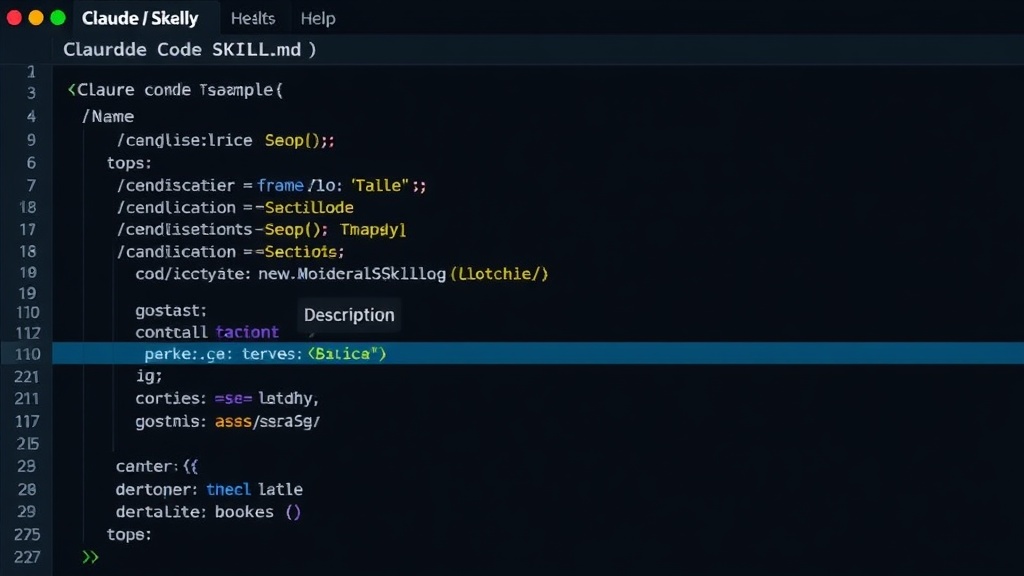
Consider the example of an N+1 query hunter. A skill designed for this purpose would have a name like n-plus-one-hunter. Its description might state: "Identifies and suggests fixes for N+1 query problems in database interactions." This metadata allows Claude Code to categorize, select, and apply the skill appropriately when a relevant task is encountered.
Encoding Engineering Workflows into Skills
The real power of skills lies in their instructional body. This is where the nuanced steps of a disciplined engineering process are defined. Instead of a broad request, a skill breaks down a complex task into granular, verifiable actions. For the N+1 hunter skill, this would involve:
- Analyzing the provided code for database query patterns.
- Identifying potential N+1 scenarios, such as loops that execute queries for each item.
- Measuring the number of queries executed for a given operation.
- Proposing specific code modifications to resolve the issue, like eager loading or batching queries.
- Potentially suggesting benchmarks to verify the fix.
This structured approach ensures that Claude Code doesn't just produce code, but produces code that adheres to best practices. It's akin to providing a junior developer with a detailed checklist and a set of established procedures, rather than just telling them to "optimize the database calls." The skill acts as a codified set of best practices, embedding engineering discipline directly into the AI's execution flow.
Skills vs. Prompts: A Fundamental Shift
The distinction between a prompt and a skill is fundamental. A prompt is a single instruction; it's a request. A skill is a repeatable, encapsulated process. When you prompt Claude Code, you are asking it to perform a task based on your immediate input. When you utilize a skill, you are enabling Claude Code to execute a pre-defined, robust workflow that incorporates multiple steps, checks, and potentially even validation criteria.
Think of it this way: asking Claude Code to ".write a Python script to sort a list" is a prompt. It will likely give you a functional script using .sort() or sorted(). However, if you have a skill called large-dataset-sorter, it might include logic to:
- Detect if the dataset exceeds a certain memory threshold.
- Select an appropriate algorithm (e.g., external merge sort for huge files).
- Handle potential I/O bottlenecks.
- Provide options for parallel processing.
This is the leap from simply getting an answer to getting a well-engineered solution. The skill doesn't just provide code; it provides a methodology.
The Future of AI-Assisted Development
The introduction of Claude Code skills signals a maturation in how we interact with large language models for software development. It moves beyond the often-unpredictable nature of prompt engineering towards a more structured, reliable, and disciplined approach. For developers, this means less time spent refining prompts and debugging AI-generated code that lacks essential checks. Instead, developers can focus on defining and refining the skills themselves, building a library of expert engineering knowledge that Claude Code can then apply.
This approach has profound implications. It allows organizations to codify their unique engineering standards and best practices, ensuring consistency across all AI-assisted development tasks. It also democratizes expertise; a complex optimization technique can be encapsulated in a skill and made available to any developer on the team, not just the senior engineers who might have developed it initially.
What remains to be seen is how easily these skills can be shared and versioned across teams and organizations. The potential for a robust, community-driven ecosystem of Claude Code skills is immense, but the infrastructure for managing and distributing them will be critical for widespread adoption.