The Pitfalls of Direct AI Code Implementation
Allowing an AI to directly implement complex code changes without a prior planning phase can lead to subtle but critical errors. The author recounts an experience where Claude Code, tasked with a significant authentication change, modified nine files. While the code compiled successfully, the resulting behavior was incorrect, highlighting a flaw in the implementation's underlying approach rather than its syntax. This failure underscores a common pitfall: the AI's eagerness to generate code often bypasses the crucial step of defining a coherent strategy. The mistake wasn't in the AI's capability, but in how it was directed – or rather, not directed – to first conceptualize the solution.
The core issue lies in the AI's tendency to jump straight to code. For simple, isolated edits, this direct approach might suffice. However, when changes have a broad impact across multiple files and system components, like authentication, data synchronization, or migration scripts, this lack of foresight becomes a significant liability. The author's experience with the authentication change serves as a stark reminder that code that compiles is not necessarily correct code. The compiler is a syntax checker, not a logic validator for complex architectural decisions.
Introducing Claude Code Plan Mode
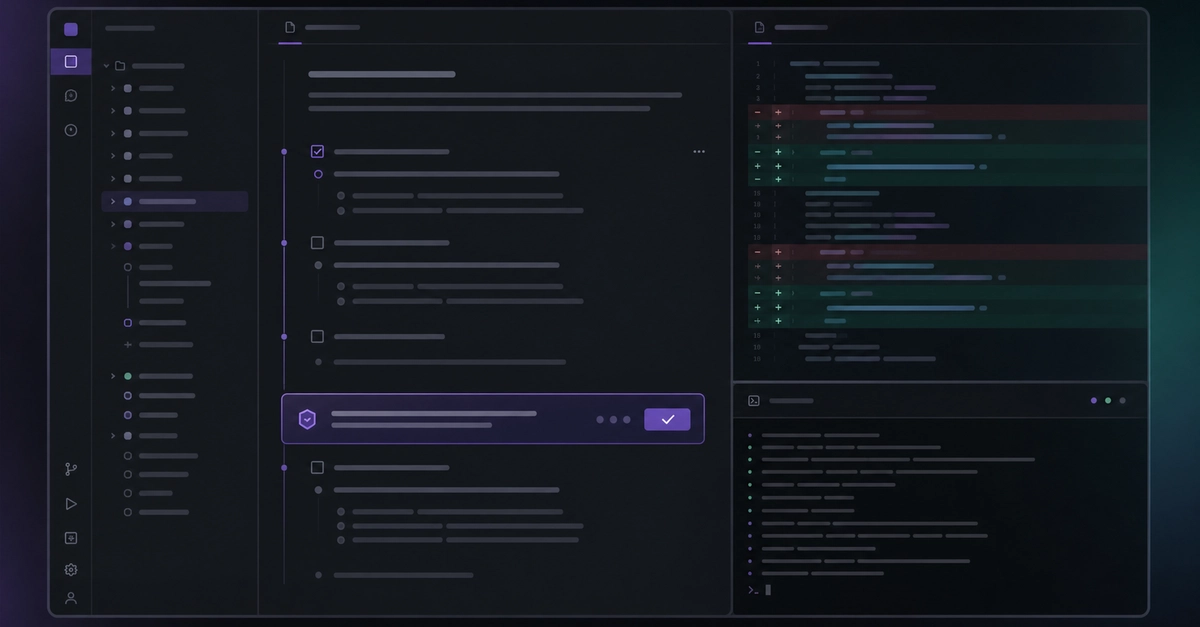
Claude Code's Plan mode directly addresses this deficiency by fundamentally restructuring the AI's workflow. Instead of a single-step process from prompt to patch, Plan mode bifurcates the task into two distinct, sequential phases: planning and implementation. The first phase focuses entirely on defining the approach – what needs to happen, how it should be structured, and which files are likely to be affected. Only after this plan is reviewed and approved does the AI proceed to the second phase: executing the code changes based on the agreed-upon strategy.
This two-step process is akin to a human developer sketching out an architectural diagram and outlining the steps before writing a single line of code for a major feature. For trivial edits, this overhead is unnecessary. But for changes that touch critical system areas or span numerous files – the author specifically mentions authentication, synchronization, migrations, and agent sessions – the plan becomes indispensable. It provides a crucial review point, allowing developers to scrutinize the proposed methodology before any code is generated, let alone committed. This dramatically reduces the risk of implementing flawed logic that might pass initial compilation but fail in practice.
Practical Application in Nimbalyst
The author integrates Claude Code, including its Plan mode, into their daily workflow via Nimbalyst, a custom desktop workspace. This demonstrates a real-world commitment to leveraging AI for software development, not just as a novelty, but as a core productivity tool. The consistent use of Plan mode for any task involving significant architectural shifts or broad file impact highlights its perceived value in mitigating risk and ensuring code quality.
Consider the scenario of refactoring a core data synchronization module. Without Plan mode, an AI might propose a series of direct code modifications that, while syntactically correct, could introduce race conditions or data inconsistencies under load. With Plan mode, the AI would first outline its strategy: identify key data structures, define locking mechanisms, specify the sequence of operations, and list the files to be modified. This plan would then be presented to the human developer for review. They could then identify potential issues, suggest alternative approaches, or confirm the AI's logic before any code is generated. This iterative refinement process, guided by the AI's planning capabilities, significantly enhances the reliability of AI-assisted code development.
The Developer's Role in Plan Mode
Plan mode doesn't abdicate responsibility to the AI; it redefines the developer's role. The developer transitions from a code reviewer of a final, potentially problematic patch to a strategic architect and approver of the AI's proposed plan. This shift is critical. Instead of sifting through lines of code to find logical flaws, the developer evaluates a high-level strategy. This is a more efficient and effective use of human expertise, particularly for complex systems where understanding the holistic approach is paramount.
The author's experience highlights that the AI's initial output is not always perfect. The compiler might be satisfied, but the underlying logic can be flawed. Plan mode provides the necessary checkpoint. It allows developers to ask: Does this approach make sense? Are there edge cases missed? Is this the most efficient way to solve the problem? The AI acts as a powerful assistant that can generate detailed plans, but the human developer remains the ultimate arbiter of correctness and best practices. This collaborative model, where the AI handles the heavy lifting of exploring implementation details based on a human-approved strategy, is likely the future of AI-assisted coding for complex tasks.
Benefits Beyond Error Reduction
While reducing subtle bugs in multi-file changes is a primary benefit, Plan mode offers additional advantages. It enhances code maintainability by ensuring that changes are implemented with a clear, documented strategy. This makes it easier for other developers to understand the rationale behind the modifications later on. Furthermore, for developers new to a codebase or a particular feature, reviewing an AI-generated plan can serve as an accelerated learning tool, providing insights into how a complex system is intended to be modified.
The efficiency gains are also significant. Developers can spend less time debugging subtle logical errors and more time on higher-level architectural design and feature development. The AI, guided by a clear plan, can generate more targeted and accurate code on the first attempt in the implementation phase. This iterative feedback loop, where planning precedes execution, mirrors best practices in human software engineering and brings AI-assisted development closer to a truly robust and reliable engineering discipline.