Claude Code's Web Fetching Limitations
Large language models like Claude Code are powerful tools for code generation and analysis. They can read local files and execute shell commands, offering a significant boost to developer workflows. However, a critical limitation has persisted: the inability to reliably access live web content. Standard tools like curl often fail against modern anti-bot measures, such as Cloudflare's, returning 403 Forbidden errors. This gap prevents agents from gathering real-time data or interacting with dynamic web applications directly.
This limitation means that while Claude Code can understand and manipulate code, it cannot independently research or fetch information from the live internet without external assistance. This hinders its utility for tasks requiring up-to-the-minute data, competitive analysis, or integration with live web services.
Introducing Scrapling MCP
To address this, a new integration brings the capabilities of the open-source web scraping framework, Scrapling, to Claude Code. The developer behind the integration, who wishes to remain anonymous but is credited with the integration work, adapted Scrapling's existing functionality and registered its MCP (Meta-Communication Protocol) server with Claude Code. This effectively grants the AI agent a suite of tools for real-time web data retrieval.
Scrapling itself is an adaptive web-scraping framework. The core component integrated here is its robust fetcher system. This system is built on curl_cffi, a fast HTTP client designed to impersonate real browser traffic, making it more resilient to detection and blocking by websites. The integration essentially exposes Scrapling's sophisticated fetching mechanisms as commands Claude Code can invoke.
Expanded Toolset for Claude Code
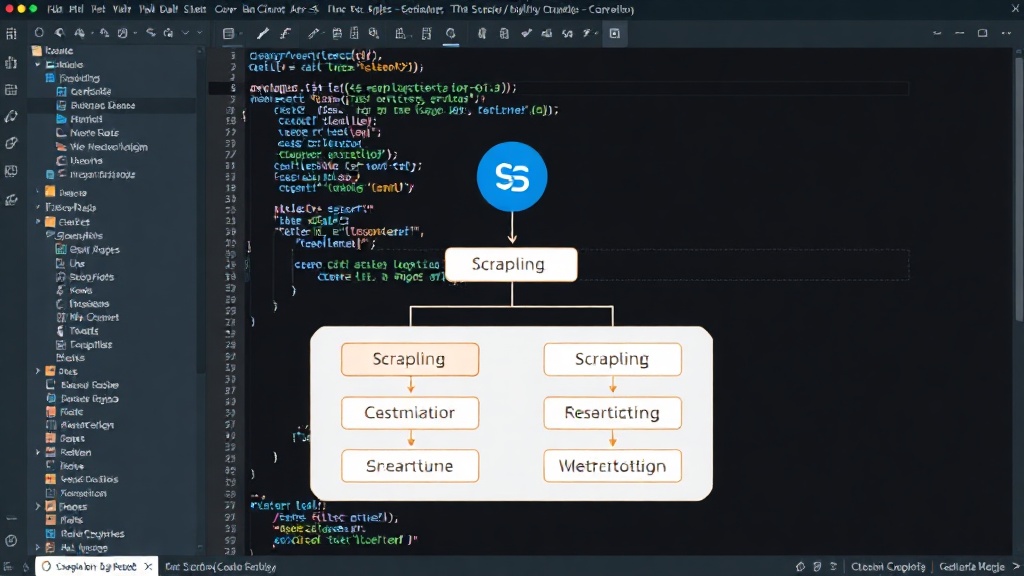
The integration provides Claude Code with ten distinct tools for accessing the web. These tools offer a range of capabilities:
- Plain Fetches: Basic HTTP requests for retrieving page content.
- Headless Browser Fetches: Utilizes headless browsers to render pages as a user would, handling JavaScript-heavy sites.
- Stealth Fetches: Specifically designed to bypass common anti-bot defenses like Cloudflare, enabling access to sites that would otherwise block standard requests.
- Screenshots: The ability to capture visual snapshots of web pages, useful for visual analysis or documentation.
The developer emphasizes that the scraper technology itself is not new; it is the existing Scrapling framework. The innovation lies in the local installation and the MCP integration, which bridges the gap between Scrapling's powerful scraping capabilities and Claude Code's agentic execution environment. This allows Claude Code to seamlessly use these advanced web-fetching tools as if they were native functions.
Implications for AI Agents and Developers
This development marks a significant step forward for AI agents that need to interact with the live internet. By equipping Claude Code with reliable web scraping tools, developers can now build more sophisticated applications that leverage real-time data. Imagine an AI that can monitor competitor pricing, track news sentiment, or automate data entry from dynamic websites – all without manual intervention or brittle workarounds.
For developers working with Claude Code, this means a broader scope of potential use cases. Tasks that previously required complex external scripting or manual data collection can now be handled directly by the AI. This could accelerate development cycles, reduce the complexity of AI-powered applications, and unlock new possibilities for automation and data analysis. The ability to overcome anti-bot measures is particularly crucial, as it opens up a vast portion of the web that was previously inaccessible to automated agents.
The Scrapling MCP integration is not just about fetching data; it's about empowering AI agents with a more realistic and capable interaction model with the digital world. As AI agents become more integrated into our workflows, their ability to access and process real-time information from the web will be paramount. This initiative demonstrates a practical, albeit specific, solution to a widespread challenge.
The Future of Web-Accessible AI
While this integration focuses on Claude Code and Scrapling, it highlights a broader trend: the increasing need for AI models to have robust, real-world data access. As AI agents evolve from passive information processors to active participants in digital environments, their toolkits must expand. This includes not only web scraping but also integrations with APIs, databases, and other services.
The success of this Scrapling MCP integration begs the question: what other specialized tools will be integrated into AI agents to enhance their capabilities? Will we see similar efforts to integrate advanced browser automation, specialized data parsers, or even direct interaction with IoT devices? The path forward suggests AI agents will become increasingly modular, capable of leveraging a diverse array of external tools to perform complex tasks. This approach allows AI developers to focus on agentic logic while relying on specialized, battle-tested tools for specific functionalities, much like how human developers use libraries and frameworks.