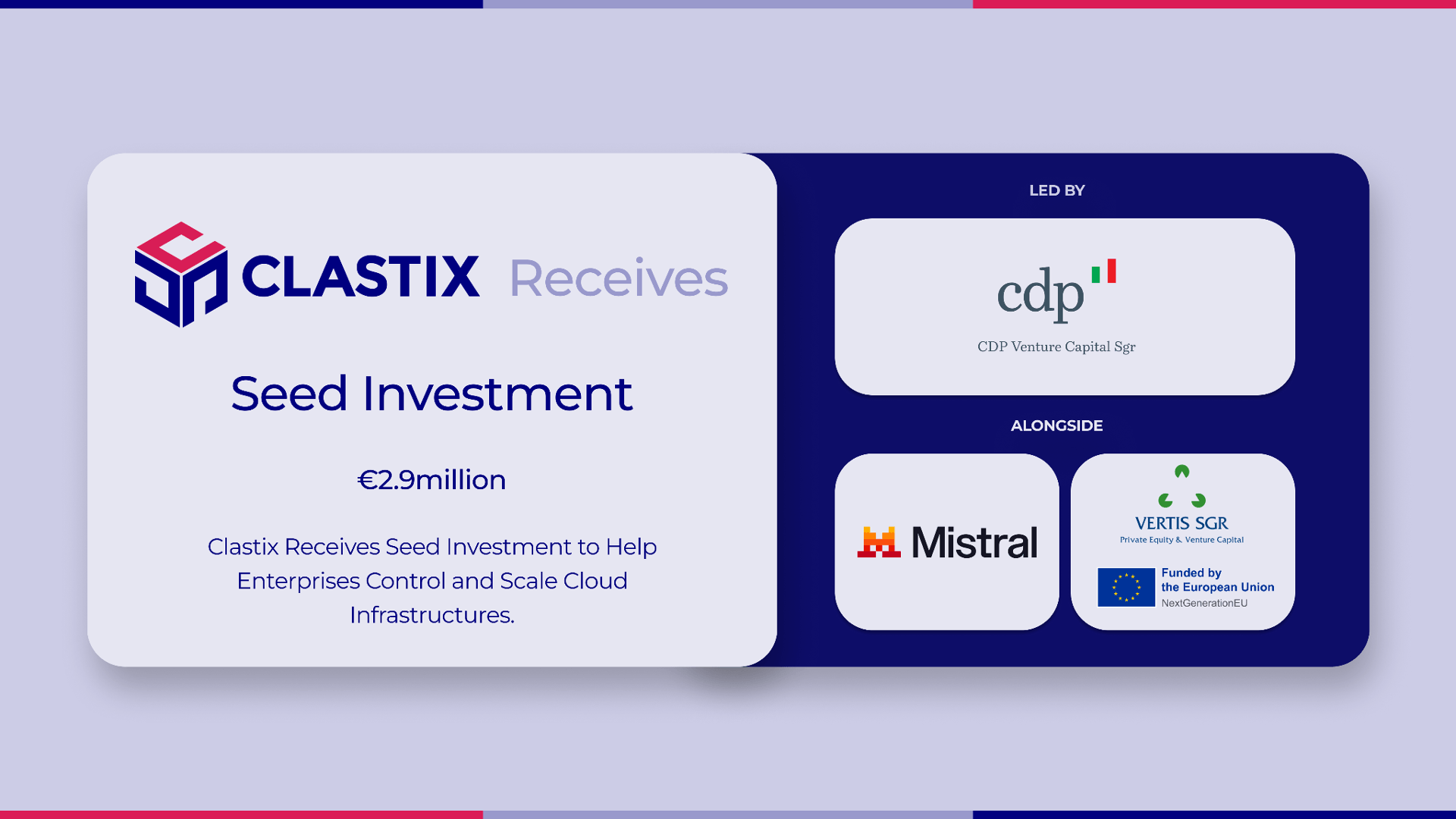
Clastix Secures €2.9 Million Seed Funding
Clastix, an Italian company focused on simplifying Kubernetes operations for large-scale deployments, has announced a €2.9 million seed funding round. The investment will fuel the expansion of its engineering team and accelerate the development of its platform, designed to tackle the inherent complexity of managing Kubernetes environments at scale. The round was led by a prominent European venture capital firm, with participation from several angel investors specializing in cloud infrastructure and enterprise software. This funding positions Clastix to address a significant pain point for organizations grappling with the operational overhead of Kubernetes.
The Kubernetes Complexity Challenge
Kubernetes has become the de facto standard for container orchestration, but its powerful capabilities come with a steep learning curve and significant operational complexity. For enterprises, managing Kubernetes clusters across multiple teams, projects, and environments can quickly become unwieldy. Issues such as resource contention, security policy enforcement, network segmentation, and efficient resource allocation require specialized tools and expertise. Many organizations find themselves spending considerable engineering effort on platform management rather than on developing core business applications. This is precisely the problem Clastix aims to solve with its platform.
Clastix Platform: Simplifying Multi-Tenancy and Resource Control
Clastix's core offering revolves around providing robust control and visibility over Kubernetes resources, particularly in multi-tenant scenarios. The platform introduces a layer of abstraction and policy enforcement that simplifies how organizations delegate access, manage namespaces, and control resource consumption. Think of it less like a complex set of Kubernetes manifests and more like a sophisticated concierge for your cluster, ensuring that each tenant gets precisely what they need without stepping on each other's toes or consuming excessive resources. This approach reduces the cognitive load on platform administrators and empowers development teams to operate more autonomously within defined guardrails.
Key features of the Clastix platform include:
- Tenant Isolation: Advanced mechanisms for isolating workloads, data, and network traffic between different tenants or teams within a shared Kubernetes cluster. This is crucial for security and compliance in multi-user environments.
- Resource Governance: Granular control over resource quotas, limits, and reservations, ensuring fair usage and preventing noisy neighbor issues. Administrators can define policies that automatically enforce these constraints.
- Policy Enforcement: A centralized policy engine that allows for the definition and enforcement of security, networking, and operational policies across all managed namespaces and tenants.
- Simplified Onboarding: Streamlined processes for onboarding new teams or applications onto the Kubernetes platform, reducing the time-to-productivity for developers.
Market Opportunity and Future Growth
The market for Kubernetes management tools is rapidly expanding as more enterprises adopt containerized workflows. Existing solutions often focus on specific aspects like monitoring, security, or CI/CD, leaving a gap for comprehensive, multi-tenant management platforms. Clastix's focus on simplifying operational complexity and enhancing governance positions it well within this growing ecosystem. The €2.9 million in seed funding will be instrumental in scaling the company's engineering and sales teams, further developing its product roadmap, and expanding its market reach, particularly in Europe and North America. The company plans to leverage this investment to solidify its position as a leader in enterprise Kubernetes management.
What nobody has addressed yet is how Clastix's approach will integrate with emerging Kubernetes distributions and cloud-native orchestration patterns, such as GitOps and service meshes, to offer a truly end-to-end simplified experience. The company's success will hinge on its ability to provide a platform that not only simplifies current Kubernetes challenges but also adapts to the rapid evolution of the cloud-native landscape.
The founders highlighted that a significant portion of the funding will be allocated to R&D, with a focus on enhancing AI-driven insights for cluster optimization and predictive resource management. This strategic investment aims to make Kubernetes not just manageable, but truly intelligent for enterprise users.