What is ChronicleOps?
ChronicleOps emerges as a novel platform designed to tackle the inherent complexities of microservice failures in cloud environments. Built natively on Zerops, it functions as an autonomous cloud chaos engineering, real-time observability, and self-healing system. The core proposition of ChronicleOps is to move beyond reactive troubleshooting and manual diagnostics. Instead, it enables developers to orchestrate controlled fault injection experiments, monitor the immediate impact on system telemetry, and automatically recover services. A key differentiator is its integration with Gemini AI to generate root-cause diagnoses for detected failures.
The platform addresses a critical pain point for modern software development: the difficulty in safely reproducing fault states without jeopardizing production infrastructure. Traditional approaches often require extensive monitoring setups to accurately measure Mean Time to Recovery (MTTR), a process ChronicleOps aims to streamline and automate. By simulating failures like process kills or container crashes, ChronicleOps provides a controlled environment to test system resilience and recovery mechanisms.
The Problem with Microservice Failures
The proliferation of microservices, while offering scalability and flexibility, introduces a new set of challenges. Failures in these distributed systems are often not isolated incidents but cascading events that are difficult to trace and diagnose. The interconnected nature of microservices means a single failure can propagate rapidly, leading to widespread service degradation or complete outages. Reproducing these complex fault scenarios in a safe, non-production environment is a significant hurdle. Developers often struggle to create realistic test environments that accurately mirror production conditions, leading to a false sense of security.
Furthermore, accurately measuring the effectiveness of recovery strategies, particularly MTTR, demands sophisticated monitoring and logging infrastructure. This often involves significant upfront investment in tooling and configuration, which can be a barrier for smaller teams or projects with tight deadlines. Without precise data on recovery times, it's challenging to identify bottlenecks in the incident response process or to optimize system design for resilience.
ChronicleOps' Autonomous Solution
ChronicleOps directly confronts these challenges by offering an end-to-end automated solution. The platform allows developers to spin up target application stacks within a controlled environment. Once the environment is set up, ChronicleOps facilitates the injection of controlled fault vectors. These can range from simple process kills to more disruptive container crashes, mimicking real-world failure scenarios.
During these experiments, ChronicleOps provides real-time observability into system telemetry. Developers can observe how key metrics degrade as faults are introduced, offering immediate insights into the system's behavior under stress. This live feedback loop is crucial for understanding the impact of specific failures and for identifying potential weaknesses in the application's architecture or its underlying infrastructure.
The self-healing aspect is where ChronicleOps truly distinguishes itself. After injecting faults and observing the telemetry, the system automatically initiates recovery processes. This could involve restarting failed services, reallocating resources, or triggering predefined failover mechanisms. The goal is to minimize downtime and bring services back to a healthy state with minimal human intervention. This automation not only speeds up recovery but also provides a measurable baseline for MTTR, allowing teams to benchmark and improve their resilience strategies.
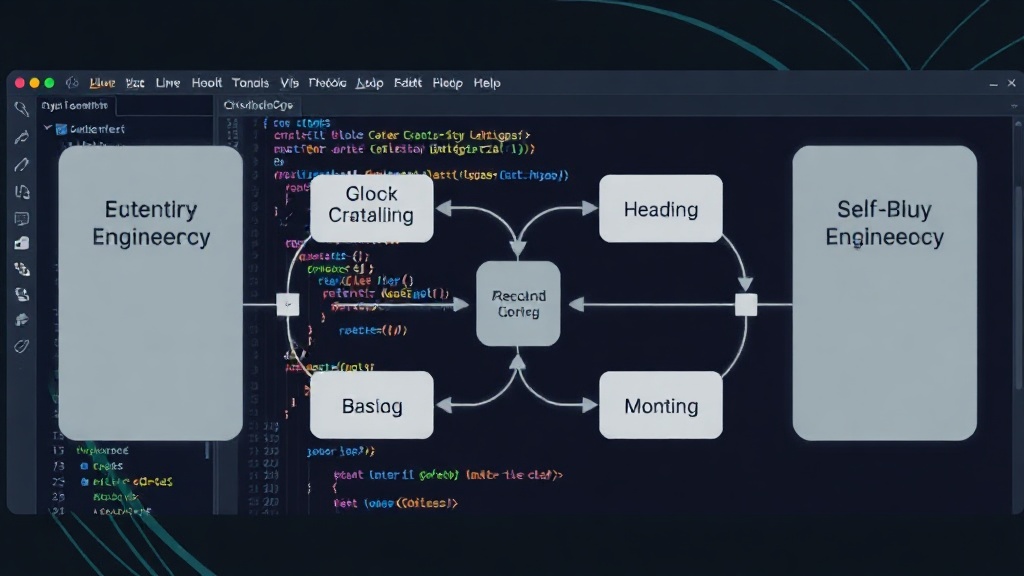
AI-Powered Root-Cause Diagnosis
A significant innovation within ChronicleOps is its integration with Gemini AI for root-cause diagnosis. Traditional chaos engineering often identifies that a failure occurred and how long it took to recover, but pinpointing the precise underlying cause can still be a manual, time-consuming process. ChronicleOps leverages AI to analyze the telemetry data collected during the fault injection and recovery phases. By correlating events, observing patterns in metric degradation, and understanding the sequence of actions taken by the self-healing mechanisms, Gemini AI can generate probable root causes for the observed failures.
This AI-driven diagnosis moves beyond simple error messages. It aims to provide a deeper understanding of why a specific failure occurred, how it impacted the system, and what architectural or configuration issues might have contributed to it. This capability is invaluable for developers seeking to not only fix immediate problems but also to prevent similar issues from recurring. The generated diagnoses can inform future design decisions, improve code quality, and enhance the overall robustness of microservice architectures. The output from Gemini AI is designed to be actionable, guiding developers toward specific areas for improvement.
Benefits and Target Audience
ChronicleOps offers several key benefits. For development teams, it provides a safe and automated way to test system resilience, reduce MTTR, and gain deeper insights into failure modes. This proactive approach to reliability can significantly reduce the risk of unexpected downtime in production environments. For SREs and operations teams, it automates the laborious task of setting up and running chaos experiments, while also providing immediate, AI-assisted diagnostics.
The platform is particularly well-suited for organizations heavily invested in microservices architectures, cloud-native applications, and CI/CD pipelines. Companies that prioritize high availability, rapid recovery, and continuous improvement in system reliability will find ChronicleOps to be a powerful addition to their toolset. By abstracting away much of the complexity involved in chaos engineering and incident analysis, ChronicleOps democratizes advanced resilience testing, making it accessible to a broader range of engineering teams.
The Future of Resilient Systems
ChronicleOps represents a significant step towards more autonomous and intelligent systems for managing cloud infrastructure reliability. The combination of automated chaos engineering, real-time observability, self-healing capabilities, and AI-driven diagnostics points to a future where system resilience is not an afterthought but an integrated, continuously evolving aspect of software development. As microservice architectures continue to dominate, tools like ChronicleOps will become increasingly critical for ensuring the stability and performance of complex distributed systems.