
China Considers AI Export Controls
China is reportedly contemplating new regulations to restrict the overseas access and export of its advanced artificial intelligence models. This move, if enacted, would represent a significant policy shift, mirroring the United States' own export controls on AI hardware and technology. The discussions come as Chinese AI companies, such as DeepSeek, are making strides in developing their own foundational AI models and, crucially, the underlying hardware to power them.
The potential restrictions are seen as a dual-edged sword. On one hand, they could aim to prevent foreign entities from gaining unfettered access to China's cutting-edge AI research and development, thereby protecting domestic innovation and national security interests. This aligns with a broader global trend of nations seeking to secure critical technologies and maintain a competitive edge in the AI race. The specific nature of these curbs remains undefined, but possibilities range from limitations on API access for foreign developers to outright bans on exporting certain types of AI models or datasets.
On the other hand, such measures could stifle international collaboration and slow down the global dissemination of AI advancements. Chinese AI firms have increasingly sought to position themselves on the world stage, offering their models and services to a global market. Restricting this outward flow could isolate Chinese AI innovation and limit its global impact, potentially hindering its own development trajectory in the long run.
The timing of these deliberations is particularly noteworthy. The United States has, for some time, implemented export controls on advanced AI chips, such as those manufactured by Nvidia, to China. These controls aim to limit China's ability to develop and deploy advanced AI for military and surveillance purposes. Beijing's consideration of reciprocal measures suggests a strategic response to these geopolitical pressures, indicating a desire to exert its own leverage in the global AI landscape.
DeepSeek's Pursuit of Hardware Independence
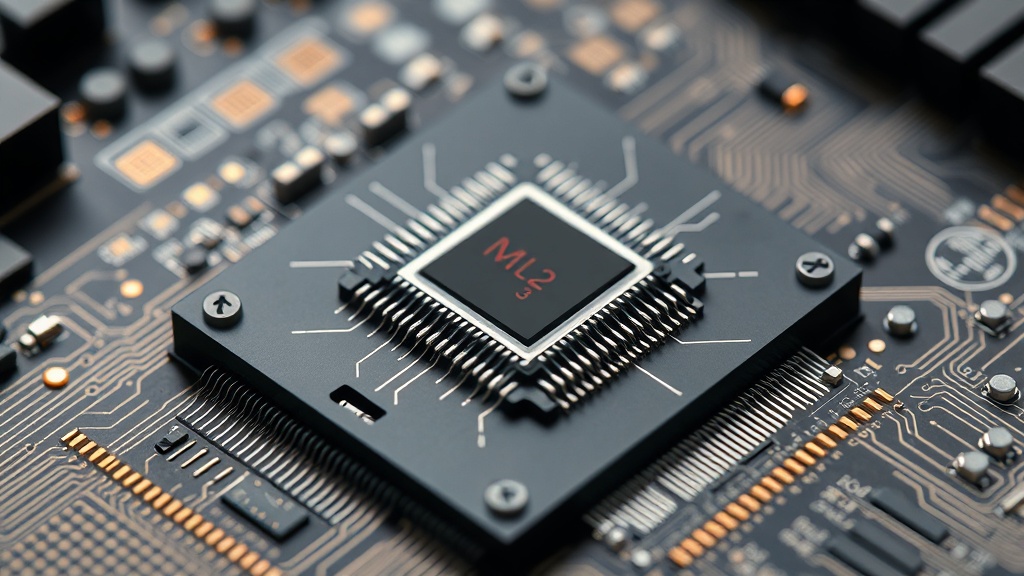
Parallel to these regulatory discussions, Chinese AI companies are aggressively pursuing self-sufficiency, particularly in hardware. DeepSeek, a prominent AI research firm known for its open-source large language models (LLMs), is reportedly developing its own AI chips. This initiative is a direct response to the challenges posed by U.S. export controls, which have made it difficult for Chinese firms to acquire the high-performance GPUs essential for training and deploying state-of-the-art AI models.
Developing proprietary AI chips is a monumental undertaking. It requires substantial investment in research and development, advanced manufacturing capabilities, and a deep understanding of chip architecture and design. However, success in this area would grant Chinese AI companies like DeepSeek a critical advantage: control over their own supply chain and the ability to tailor hardware specifically for their AI workloads. This independence would insulate them from external geopolitical pressures and allow for more agile innovation.
DeepSeek's reported foray into chip development is not an isolated incident. Several other Chinese tech giants and AI startups are understood to be exploring similar paths, investing heavily in custom AI silicon. This push is driven by a national imperative to reduce reliance on foreign technology and build a robust domestic AI ecosystem. The development of indigenous AI chips is considered a cornerstone of China's ambition to become a global leader in artificial intelligence.
The Geopolitical AI Tug-of-War
The interplay between China's potential AI export curbs and its domestic chip development efforts highlights the increasingly complex geopolitical landscape of artificial intelligence. AI is no longer just a technological frontier; it is a strategic domain where national security, economic competitiveness, and global influence are at stake.
For years, the global AI development relied heavily on a few key players, particularly in the United States, for both hardware (like GPUs from Nvidia) and foundational models. U.S. export controls have disrupted this ecosystem, forcing countries like China to accelerate their efforts towards technological independence. This has created a bifurcated AI development path, with distinct ecosystems emerging in different geopolitical blocs.
The implications of China potentially restricting its AI model exports are significant. It could lead to a more fragmented global AI market, where different regions operate with distinct sets of tools and capabilities. For international researchers and developers, this could mean reduced access to potentially valuable Chinese AI models and datasets, limiting the breadth of global AI research. For Chinese companies, it could mean a more insular domestic market, focused on serving internal needs and potentially lagging in global best practices if not carefully managed.
The development of indigenous AI chips by companies like DeepSeek is a critical piece of this puzzle. If successful, it could significantly de-risk their operations from U.S. sanctions and empower them to innovate at their own pace. However, building competitive AI chips is an immense challenge, fraught with technical hurdles and requiring sustained, massive investment. The success of these domestic chip initiatives will be a key determinant of China's future AI capabilities and its ability to compete on the global stage.
What nobody has fully addressed yet is the long-term consequence of this technological decoupling. Will it lead to parallel but incompatible AI standards and infrastructure? And how will this impact the pace of global AI progress, which has historically benefited from open exchange and collaboration?
Conclusion: A Path Towards Strategic Autonomy
China's contemplation of AI export restrictions and its concurrent push for domestic chip innovation signal a clear strategic direction: towards greater technological autonomy. This approach is a direct response to the escalating geopolitical tensions surrounding AI and a determination to secure its position in the future of artificial intelligence. While the path ahead is challenging, marked by significant technical and economic hurdles, the ambition is clear. The global AI landscape is evolving rapidly, and these developments in China are a critical part of that transformation, reshaping the dynamics of innovation, competition, and international cooperation in the years to come.