A New Era in Rocket Recovery
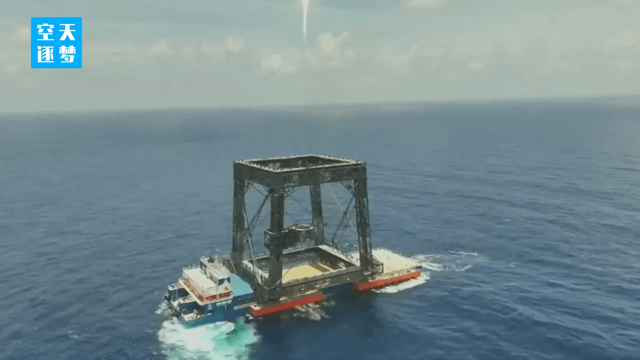
China's space program has achieved a significant milestone with the successful mid-air recovery of a Long March 10B booster using a net-cable system. This event marks a divergence from the widely recognized vertical landing methods pioneered by companies like SpaceX, showcasing an alternative pathway toward reusable rocket technology. The recovery operation, conducted at sea, involved a specialized vessel designed to capture the descending booster with a large net suspended by cables. This method aims to reduce the stress on the booster's structure compared to a direct ground landing, potentially leading to faster refurbishment cycles and lower operational costs.
The Long March 10B, a component of China's next-generation heavy-lift launch vehicle, is designed for a variety of missions, including lunar exploration and crewed spaceflight. The successful recovery of its first-stage booster is a critical step in validating the reusability architecture for this new family of rockets. Unlike vertical landings, which require precise engine burns and landing legs, the net-catch method relies on aerodynamic stabilization of the booster and a robust capture system on the recovery ship. This approach presents unique engineering challenges, particularly in accurately predicting the booster's trajectory and ensuring the net system can withstand the impact forces.
Engineering Divergence: Net Catch vs. Vertical Landing
The contrast between China's net-catch strategy and SpaceX's vertical landing system highlights different philosophies in tackling the complex problem of rocket reusability. SpaceX's Falcon 9 and Falcon Heavy rockets employ propulsive landings, where the booster performs a series of engine burns to decelerate and land vertically on either a drone ship or a land-based landing pad. This method has been refined over years of testing and operational flights, becoming a hallmark of the company's space launch services. The core principle is to actively control the booster's descent using its own engines, bringing it to a near-zero velocity at the point of touchdown.
China's net-catch method, however, shifts the burden of deceleration and capture to an external system. The booster is designed to deploy a parachute or deploy aerodynamic surfaces to stabilize its descent through the atmosphere. The recovery vessel then maneuvers into position and deploys a large, reinforced net that ensnares the booster. This strategy might be particularly advantageous for boosters that are not designed for the high thermal and structural loads associated with multiple propulsive landings, or for missions where the recovery footprint needs to be minimized. The success of this operation suggests that the Chinese space agency has made substantial progress in developing the precision guidance, control, and capture technologies required for this unique recovery technique.
Implications for the Future of Spaceflight
The successful net-catch recovery of the Long March 10B booster has several important implications for the global space industry. Firstly, it demonstrates that reusable rocket technology is not a one-size-fits-all solution. Different nations and companies are exploring diverse engineering approaches, each with its own set of advantages and disadvantages. This diversification could lead to a broader range of launch capabilities and cost efficiencies in the long run.
Secondly, this achievement signals China's growing ambition and capability in advanced space technologies. As China continues to expand its space station, lunar ambitions, and interplanetary missions, reliable and cost-effective launch systems are paramount. The development of reusable boosters is a key enabler for these long-term goals, potentially reducing the cost per kilogram to orbit and increasing launch cadence. The net-catch system, if proven reliable and efficient, could offer a competitive alternative to existing reusable rocket designs.
What remains to be seen is the operational cadence and cost-effectiveness of this net-catch system. While the initial recovery is a success, the true value of reusability lies in its ability to be performed rapidly and affordably over many missions. The engineering required to inspect, refurbish, and re-certify a booster caught in a net, potentially experiencing different types of stress than a propulsively landed booster, will be crucial. Furthermore, the logistical complexity of operating specialized recovery ships and ensuring their safety in diverse maritime conditions will be a significant factor in its widespread adoption.