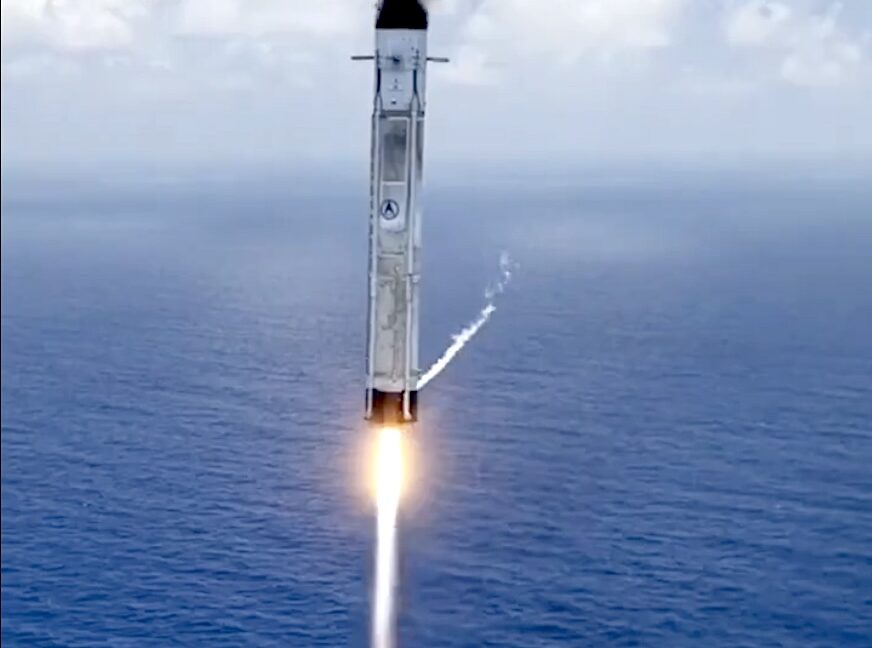
China's Reusable Rocket Milestone
China has successfully recovered its first reusable rocket stage, marking a significant advancement in its domestic space launch capabilities. The recovery, achieved using a new method, underscores the nation's increasing focus on developing cost-effective and sustainable access to space. This development positions China as a growing contender in the global race for reusable launch systems, a field currently dominated by companies like SpaceX.
While the specifics of the recovery method remain partially undisclosed, reports indicate a departure from traditional vertical landing techniques. This suggests an exploration of alternative strategies to achieve reusability, potentially involving mid-air recovery or novel landing mechanisms. The successful recovery is not merely a technical feat; it represents a strategic step towards reducing launch costs and increasing launch frequency, critical factors for ambitious space programs.
The successful recovery of a reusable rocket stage is analogous to a pilot successfully executing a complex maneuver in challenging weather conditions. It requires precise control, timely execution, and a deep understanding of aerodynamics and propulsion. For China, this successful test flight demonstrates a growing mastery of these complex dynamics, moving beyond theoretical concepts to practical application. The nation's space agency has been steadily building its capabilities, and this recovery is a tangible result of that sustained effort.
Technical Approach and Implications
Details emerging from the recovery operation suggest a sophisticated approach. Unlike SpaceX's signature vertical landing of its Falcon 9 first stages, which requires significant engine burns and precise control to land propulsively back on a launch pad or drone ship, China's method appears to involve a different set of challenges and potential advantages. One possibility is a parachute-assisted descent combined with a recovery vessel at sea, or perhaps a form of powered descent that does not require the same level of precision as a vertical landing. The Ars Technica report notes that China is clearly admiring and attempting to replicate the work being done by SpaceX. However, the specific techniques employed may differ to suit their existing infrastructure, technological strengths, and strategic goals.
The implications of this successful recovery are far-reaching. For the Chinese space program, it means a potential reduction in the cost per launch. Reusable rockets, by definition, can be refurbished and flown multiple times, amortizing the expensive development and manufacturing costs over many missions. This is crucial for supporting China's ambitious plans, which include establishing a permanent lunar presence, conducting extensive deep-space exploration, and launching a large constellation of satellites for various purposes, from communication to Earth observation.
Furthermore, this achievement signals a maturing of China's indigenous space industry. It moves beyond simply assembling components or launching existing designs to innovating and mastering complex, cutting-edge technologies. The ability to recover and potentially reuse rocket stages is a hallmark of advanced spacefaring nations and indicates a growing self-sufficiency and competitive edge in the global commercial launch market.
Global Space Race Dynamics
The successful recovery of a reusable rocket stage by China injects new dynamics into the international space race. For years, SpaceX has been the undisputed leader in reusable launch vehicle technology, demonstrating its capabilities with hundreds of successful booster recoveries and re-launches. This has allowed SpaceX to offer more competitive pricing and increase its launch cadence significantly, capturing a substantial share of the global launch market.
China's achievement, even if employing a different methodology, directly challenges this de facto monopoly. It signals that other major space powers are not only capable of developing similar technologies but are also actively pursuing their own unique paths to reusability. This competition can spur further innovation across the board. As more nations and private entities develop reusable launch systems, the overall cost of accessing space is likely to decrease, opening up new possibilities for scientific research, commercial ventures, and even space tourism.
The question that remains is how quickly China can operationalize this technology. Recovering a single stage is a significant milestone, but demonstrating routine, reliable, and cost-effective reuse requires a robust infrastructure for recovery, refurbishment, and re-flight. The speed at which China can bridge this gap will determine its impact on the global launch market in the short to medium term. If they can achieve rapid turnaround times and high recovery success rates, they could become a formidable competitor to established players.
Future Outlook
China's successful recovery of its first reusable rocket stage is more than just a technical accomplishment; it is a declaration of intent. It indicates a long-term strategy to leverage reusable launch technology for national objectives and potentially for commercial gain. The development of such capabilities is essential for any nation aspiring to be a major player in space exploration and utilization in the 21st century.
As China continues to refine its recovery techniques and increase the reliability of its reusable systems, the global aerospace industry will be watching closely. The development of alternative reusable technologies could lead to new design philosophies and operational strategies, diversifying the landscape beyond current paradigms. This successful recovery is a clear signal that the era of disposable rockets is gradually drawing to a close, and the future of space access is increasingly defined by sustainability and efficiency.
The journey from recovering a single rocket stage to a fully operational reusable launch system is complex and demanding. It requires not only advanced engineering but also significant investment in infrastructure and logistics. However, with this successful demonstration, China has taken a critical step forward, solidifying its position as a key player in the evolving architecture of space access.