
Bridging the Agent-Channel Divide
The burgeoning field of AI agents, capable of performing complex tasks and interacting with users, has largely operated in its own digital ecosystem. While powerful, these agents often lack direct, seamless integration with the communication tools where many users spend their days. This disconnect creates friction, requiring users to copy-paste information or switch between applications. Enter the Channels SDK, an open-source project aiming to solve this problem by enabling any AI agent to connect with popular communication platforms like Slack and Microsoft Teams.
The core idea behind the Channels SDK is to abstract away the complexities of each platform's API. Instead of developers needing to learn the intricacies of Slack's RTM API or Microsoft Graph for Teams, they can use a unified interface provided by the SDK. This allows agents to send and receive messages, manage channels, and even integrate richer interactive elements, all through a consistent programming model.
The project, showcased on Hacker News as a "Show HN," highlights a common pain point for developers building AI-powered applications. The ability to embed AI functionality directly into workflows that already exist within Slack or Teams is a significant step toward making AI agents more practical and accessible for everyday use. Imagine an AI assistant that can not only summarize a meeting transcript but also post the key action items directly into a project channel in Slack, or an agent that can monitor support tickets and automatically create a new issue in a Teams channel when a high-priority alert is triggered.
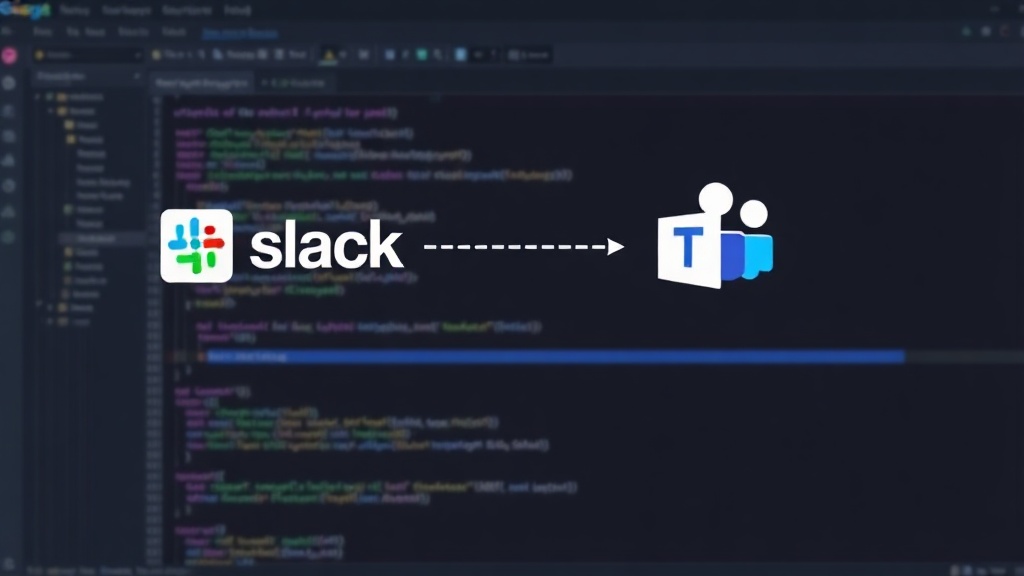
Unified Interface for Agent Communication
At its heart, the Channels SDK provides a set of tools and abstractions that simplify the process of integrating AI agents with communication platforms. Developers can define how their agent should behave within a channel, including how it should respond to messages, what commands it should recognize, and how it should present information. The SDK then handles the translation of these agent actions into the specific API calls required by Slack or Microsoft Teams.
This abstraction is crucial. Each platform has its own unique set of features, limitations, and authentication mechanisms. Slack, for instance, has a rich ecosystem of bots and apps built around its API, while Microsoft Teams offers deep integration with the broader Microsoft 365 suite. The Channels SDK acts as a universal translator, allowing developers to write agent logic once and deploy it across multiple channels with minimal modification. This significantly reduces development time and the barrier to entry for building sophisticated AI integrations.
The project's GitHub repository provides initial examples and documentation, suggesting a focus on enabling core functionalities such as message broadcasting, direct messaging, and basic command handling. For developers, this means they can start experimenting with bringing their agents into these familiar environments without becoming API experts for each platform. The promise is to make AI agents feel less like standalone tools and more like integrated team members.
The Developer Experience and Future Potential
The "Show HN" format on Hacker News often surfaces projects that resonate with the developer community because they address real-world problems. The Channels SDK appears to fall into this category. By simplifying the integration process, it empowers developers to:
- Build richer conversational AI experiences: Agents can now participate in real-time conversations, providing context-aware assistance directly within team chats.
- Automate workflows across platforms: Tasks that previously required manual intervention or complex cross-platform scripting can now be handled by agents integrated into communication channels.
- Lower the barrier for AI adoption: Businesses can more easily deploy AI assistants into their existing communication infrastructure, making AI more accessible to their workforce.
The project is still in its early stages, as indicated by its "Show HN" debut. The current implementation likely focuses on the most common use cases. However, the potential for future expansion is significant. One can envision the SDK evolving to support more advanced features, such as:
- Interactive UI elements: Allowing agents to present buttons, forms, or carousels within chat interfaces, enabling richer user interactions.
- Contextual awareness: Agents that can understand the broader conversation history and user context within a channel to provide more relevant responses.
- Integration with other tools: Extending the SDK's reach beyond chat platforms to include other collaboration tools or even project management software.
What remains to be seen is how robust the SDK will become in handling the nuances and evolving APIs of Slack and Microsoft Teams. As these platforms introduce new features, the SDK will need to keep pace. Furthermore, the security implications of integrating AI agents into sensitive communication channels will require careful consideration and robust authentication/authorization mechanisms. The success of the Channels SDK will depend on its ability to provide a stable, secure, and comprehensive bridge for AI agents into the daily workflows of millions of users.