The Unraveling of TerraUSD
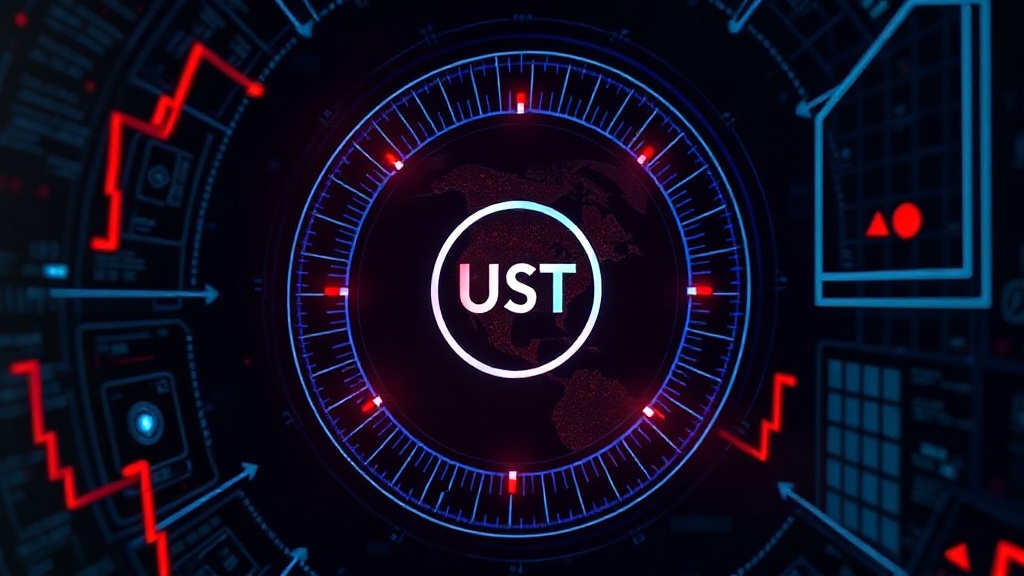
The collapse of TerraUSD (UST), once a stablecoin boasting over $18 billion in circulation, serves as a stark warning for the decentralized finance (DeFi) ecosystem. Unlike traditional financial instruments, UST's stability was not anchored by tangible, independently verified reserves. Instead, its value was intrinsically linked to its sister token, LUNA. This circular dependency meant that UST's perceived value was directly proportional to the demand for LUNA, and LUNA's demand was, in turn, driven by UST's perceived stability. This created a self-reinforcing loop that proved catastrophic when confidence wavered.
When the peg began to crack, existing protocols failed to act as a circuit breaker. They continued to accept UST as collateral, issue loans against it, and execute liquidations based on a price that was plummeting in real time. This failure highlights a fundamental vulnerability in systems that rely on unverified or internally dependent collateralization. The absence of an automated, on-chain mechanism to continuously verify the existence and value of actual reserves meant that the system lacked a critical safety net.
Chainlink's Solution: Verifiable Collateral and Real-Time Data
Chainlink offers two products that directly address the systemic failures exposed by the TerraUSD collapse: Chainlink Proof of Reserve (PoR) and Chainlink Data Streams.
Proof of Reserve: The On-Chain Auditor
Chainlink Proof of Reserve acts as an independent, on-chain auditor for tokenized assets. Its primary function is to continuously verify that reserves backing a token exist and are sufficient. For a stablecoin like UST, PoR would monitor the actual reserves held by the issuer and compare them against the circulating supply of UST. If the reserves fell short or were found to be non-existent, PoR would flag this discrepancy on the blockchain. This provides an immutable, auditable record that any protocol or user can access to assess the true backing of an asset.
Consider it less like a company's unaudited financial report and more like a real-time, publicly accessible ledger showing exactly how many physical gold bars are in the vault for every digital gold token issued. If the number of bars in the vault doesn't match the number of tokens in circulation, the system immediately flags it. This continuous verification is crucial because it prevents the accumulation of risk based on false pretenses. In the case of UST, an independent PoR feed would have revealed the lack of genuine, external collateral long before the $18 billion evaporated.
Data Streams: Ensuring Timely Price Feeds
Beyond collateral verification, the TerraUSD implosion also underscored the importance of timely and reliable price data. Protocols accepting UST as collateral were operating on price feeds that, while perhaps accurate moments before, did not reflect the rapid depreciation occurring. Chainlink Data Streams addresses this by providing high-throughput, low-latency data feeds. These streams ensure that smart contracts have access to the most up-to-date information, allowing them to react quickly to market volatility.
For systems handling collateral, having access to real-time price data is paramount. When an asset's value is rapidly declining, smart contracts need to be able to trigger necessary actions—like adjusting collateralization ratios or initiating liquidations—without delay. Data Streams provide the necessary speed and reliability to make these automated risk management systems effective, preventing the kind of cascading failures witnessed with UST.
Broader Implications for DeFi Security
The TerraUSD collapse is not merely an isolated incident; it is a symptom of a larger challenge within DeFi: ensuring the integrity and transparency of collateral. Many DeFi protocols rely on oracles to feed external data into smart contracts, but the quality and verifiability of that data are paramount. Chainlink's suite of services, particularly Proof of Reserve, offers a robust framework for building more resilient and trustworthy decentralized systems.
For developers and auditors building or managing protocols that handle collateral, the lessons are clear. Relying on internal, circular, or unverified collateral mechanisms is an invitation to disaster. The integration of independent, on-chain verification mechanisms like Chainlink PoR provides an essential layer of security. It moves beyond trusting the issuer's word or the internal logic of a token's economic design, offering instead verifiable proof that the underlying assets are sound. This shifts the paradigm from opaque internal bookkeeping to transparent, auditable on-chain reality.
What remains to be seen is how widely these robust verification mechanisms will be adopted across the DeFi landscape. The economic incentives for issuers to maintain transparent reserves are often at odds with the desire for simpler, more opaque financial engineering. However, the catastrophic failure of UST, with its $18 billion in circulation, has undoubtedly raised the stakes, making the case for verifiable collateral stronger than ever.