AI-Powered 3D Modeling Enters the Design Arena
The complex and time-consuming process of translating 2D design concepts into 3D models is a persistent bottleneck in product development. Traditional methods often require specialized software, extensive training, and iterative manual work. Cartesian, a new AI-powered platform, aims to fundamentally alter this workflow by enabling designers to generate editable 3D models directly from sketches and images.
The core innovation lies in Cartesian's ability to interpret visual input and reconstruct it into a coherent, manipulable 3D representation. This goes beyond simple photogrammetry, which typically requires multiple high-resolution photographs from various angles. Cartesian's AI is trained to understand the nuances of design intent conveyed in a single sketch or a few reference images, a capability that could significantly accelerate the early stages of design and prototyping.
For designers accustomed to tools like Adobe Photoshop for 2D work or SolidWorks and Blender for 3D, Cartesian presents a new paradigm. Instead of painstakingly building a model from scratch or wrestling with complex import/export settings, users can upload their visual assets and receive an AI-generated 3D model within minutes. The platform promises not just a visual output, but an editable mesh that can be further refined, textured, and integrated into existing design pipelines.
Streamlining the Design-to-3D Workflow
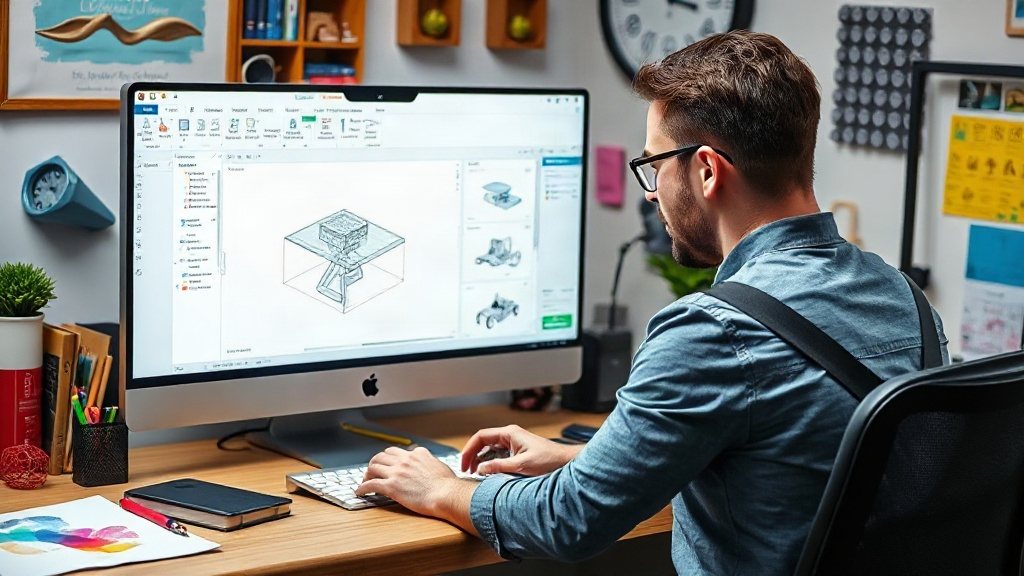
The potential impact on design workflows is substantial. Consider the journey of a product designer tasked with creating a new consumer electronic device. Typically, this involves creating detailed 2D sketches, then handing those off to a 3D modeler or spending hours themselves in CAD software to build the initial 3D form. This handoff is often where misunderstandings occur, leading to revisions and delays. With Cartesian, a designer could potentially generate an initial 3D model directly from their sketch, providing a tangible, three-dimensional representation of their idea much earlier in the process.
This early 3D visualization allows for more immediate feedback and iteration. Stakeholders can review a 3D model that more closely reflects the designer's intent, rather than interpreting a flat sketch. This reduces the risk of fundamental design flaws being discovered late in the development cycle, saving both time and money. The editable nature of the generated models is key here; it means the AI output is not a dead end but a starting point for further creative refinement.
The technology behind Cartesian appears to draw from advancements in generative AI, particularly in areas like neural radiance fields (NeRFs) and diffusion models, adapted for 3D geometry reconstruction. While the specifics of their proprietary algorithms remain undisclosed, the outcome suggests a sophisticated understanding of shape, form, and material properties as inferred from 2D inputs. This is akin to an AI that has studied thousands of product designs and understands not just how objects look, but how they are constructed and how light interacts with their surfaces.
Bridging the Gap for Non-3D Specialists
Cartesian's promise extends to a broader audience than just seasoned 3D artists. For industrial designers, graphic designers, or even marketing teams who might need to visualize a product concept in 3D for presentations or early mockups, the barrier to entry has historically been high. Learning complex 3D modeling software requires a significant time investment. Cartesian democratizes this capability, allowing individuals with strong 2D visualization skills to enter the 3D realm with greater ease.
Imagine a shoe designer sketching a new sneaker. With Cartesian, they could upload that sketch and, with a few adjustments, generate a 3D model that can be viewed from any angle, potentially even used for early virtual try-on simulations or marketing materials. This rapid prototyping of visual concepts can accelerate market testing and user feedback loops, crucial for agile product development.
The implications for workflows are significant. Instead of a linear progression from 2D concept to 3D model, the process can become more fluid. Designers can rapidly generate multiple 3D variations of a single sketch, exploring different forms or details. This iterative speed, powered by AI, could lead to more innovative and refined final products. The surprise here is not necessarily the existence of AI in 3D generation, but the apparent maturity of the technology in producing editable, high-fidelity models from what might appear to be simple 2D inputs.
Future Directions and Market Impact
While Cartesian's initial offering focuses on converting sketches and images to editable 3D models, the platform's potential future directions are vast. Integration with existing CAD software, advanced texturing capabilities, and even AI-driven material suggestions could further enhance its utility. The ability to generate not just geometry but also realistic renderings from minimal input would be a significant leap.
The competitive landscape for 3D modeling tools is robust, with established players and emerging AI-focused startups. Cartesian's success will hinge on the quality and editability of its AI-generated models, the speed of its processing, and its seamless integration into existing professional design workflows. If the platform can deliver on its promise of significantly reducing the time and expertise required to move from concept to 3D, it could become an indispensable tool for a wide range of design professionals.
What remains to be seen is how well Cartesian's AI handles complex geometries, intricate details, and the subtle curves that define many high-end product designs. The true test will be in the hands of experienced designers who push the boundaries of what the tool can do. For now, Cartesian represents a compelling step forward in making 3D design more accessible and efficient.