Demystifying Asynchronous Event Handling in Camunda 7
Managing asynchronous event processing in complex systems, especially when integrating with workflow engines like Camunda 7, presents a significant challenge. Ensuring reliability, preventing message loss, and avoiding duplicate processing are critical for production-grade applications. A new reference project, available on GitHub, offers a practical, fully functional solution to these problems, showcasing a robust pattern for extracting data from Camunda 7 asynchronously without compromising message integrity.
The project, titled 'camunda-async-events', focuses on demonstrating a production-quality approach to asynchronous eventing. While the BPMN processes themselves are deliberately simple – a customer registration that fetches address details via a CEP (Código de Endereçamento Postal) lookup – the underlying mechanisms for transaction management, retries, dead-lettering, and idempotency are rigorously tested and designed for real-world deployment. This focus on the 'gears' around the workflow engine is where the true value of this demonstration lies.
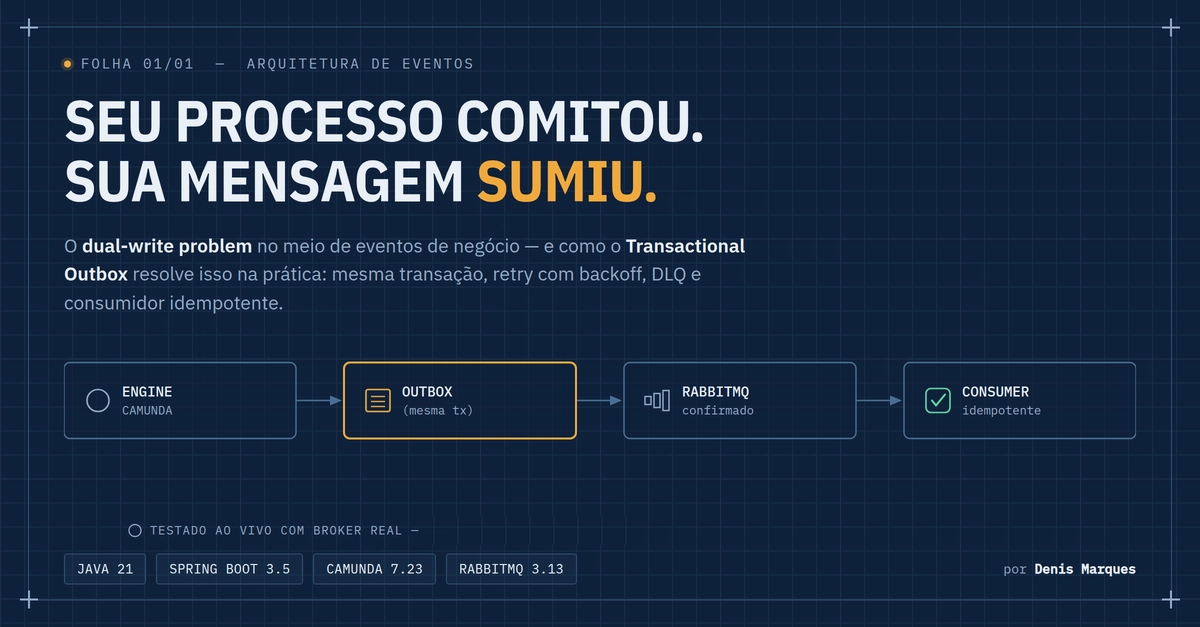
At its core, the solution leverages the Transactional Outbox pattern. This pattern ensures that when a business event occurs within a transaction, the event itself is recorded in a dedicated 'outbox' table within the same database transaction. This guarantees that the event is persisted if and only if the primary business transaction commits successfully. This atomic commitment of both the business data change and the event record is a cornerstone of reliable event-driven architectures.
Implementing the Transactional Outbox Pattern
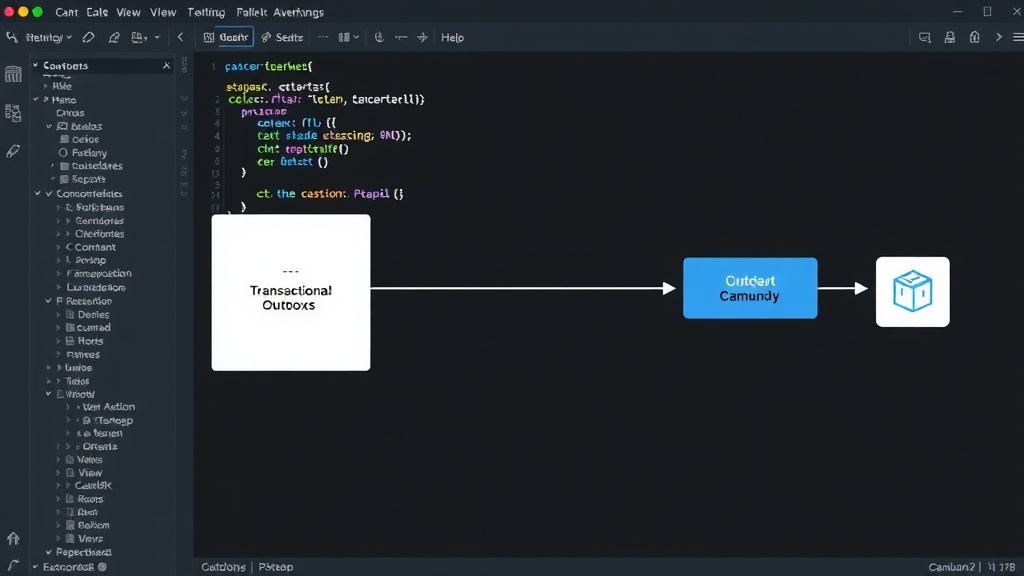
The project meticulously implements the Transactional Outbox pattern. When a service task within Camunda 7 needs to publish an event, it first writes the event payload to an outbox table in the same database transaction. This table acts as a durable log of all events that have occurred. A separate, independent process then monitors this outbox table. This monitor's sole responsibility is to read committed events from the outbox and publish them to a message broker, in this case, RabbitMQ.
This separation of concerns is key. The Camunda engine remains focused on orchestrating business processes. The persistence of outgoing events is handled atomically within the same transaction, eliminating the risk of the engine committing a process change but failing to record the associated event. The separate monitoring process then decouples the event publishing from the business transaction, allowing for independent scaling and failure handling of the message publishing mechanism.
Leveraging RabbitMQ for Reliable Messaging
RabbitMQ serves as the message broker, providing a robust and feature-rich platform for asynchronous communication. The project utilizes RabbitMQ's capabilities to ensure messages are delivered reliably. Events published from the outbox monitor are routed to specific queues. This setup allows for decoupling the event producers (within Camunda) from the event consumers.
The choice of RabbitMQ is significant. It offers features like durable queues, message acknowledgments, and routing capabilities that are essential for building resilient event-driven systems. The project demonstrates how to configure RabbitMQ exchanges and queues to ensure that messages are not lost, even in the face of network issues or broker restarts. Dead-lettering is also configured, meaning that messages that repeatedly fail to be processed by consumers can be shunted to a separate dead-letter queue for later inspection, preventing them from blocking the main processing flow.
Ensuring Idempotency in Consumers
The most critical piece of the puzzle for asynchronous processing is handling potential duplicate messages. Network glitches, broker restarts, or consumer failures can all lead to a message being delivered more than once. To combat this, the consuming applications must be strictly idempotent. Idempotency means that processing the same message multiple times has the exact same effect as processing it only once.
The reference project demonstrates a well-tested idempotent consumer. This is typically achieved by including a unique identifier (like a message ID or a combination of business keys) with each event. The consumer then checks if it has already processed an event with that specific identifier before performing any actions. If the ID is recognized, the message is simply acknowledged and discarded. If it's new, the consumer processes it and records the processed ID, often in a separate database table or using a distributed cache.
This idempotency mechanism is vital. Without it, asynchronous operations triggered by Camunda events could lead to data corruption or inconsistent states. For example, if an order processing event were processed twice, it might result in a customer being charged twice or an item being shipped two times. The project's emphasis on a thoroughly tested idempotent consumer provides a clear blueprint for developers to follow.
Testing and Production Readiness
The project's strength lies not just in its architectural choices but also in its comprehensive testing strategy. The codebase includes unit tests, integration tests, and end-to-end tests that cover various failure scenarios. This includes testing message retries, dead-lettering behavior, and the core idempotency checks. The goal is to prove that the system can handle unexpected events gracefully and maintain data consistency.
Developers looking to implement similar asynchronous patterns in their Camunda 7 projects will find this reference implementation invaluable. It provides a concrete example of how to combine established patterns like Transactional Outbox with robust messaging infrastructure like RabbitMQ and critical consumer design principles like idempotency. The project serves as a practical guide, reducing the guesswork and accelerating the development of reliable, event-driven workflows.