
A New Paradigm for LLM Interaction
Large Language Models (LLMs) have demonstrated remarkable capabilities, but their interactions have largely been limited to sequential processing or passing information through external intermediaries. Now, a paper titled "Cache-to-Cache: Direct Semantic Communication Between Large Language Models" introduces a paradigm shift: enabling LLMs to communicate directly by leveraging their internal memory structures, specifically the key-value (KV) cache.
This research, originating from academic circles and discussed on platforms like Hacker News, proposes a method where one LLM can access and interpret the KV cache of another. The KV cache stores intermediate representations of the input data that the LLM has processed. By making this cache directly accessible and semantically interpretable by another model, the researchers have created a pathway for direct, low-latency information exchange.
Think of it less like sending an email between two people and more like two people sharing a whiteboard. Instead of one person erasing their thoughts and writing new ones for the other to read later, they can both look at the same evolving drawing and add to it, or modify it, in near real-time. This direct access to the internal state of another model is the core innovation.
How Cache-to-Cache Works
The proposed mechanism bypasses the traditional method of generating output text and then feeding that text as new input to the next model. This standard approach involves significant overhead: the first LLM must serialize its internal state into a text string, and the second LLM must then parse this string and deserialize it back into its own internal representations. This process is not only slow but also loses a significant amount of the nuanced information contained within the original KV cache.
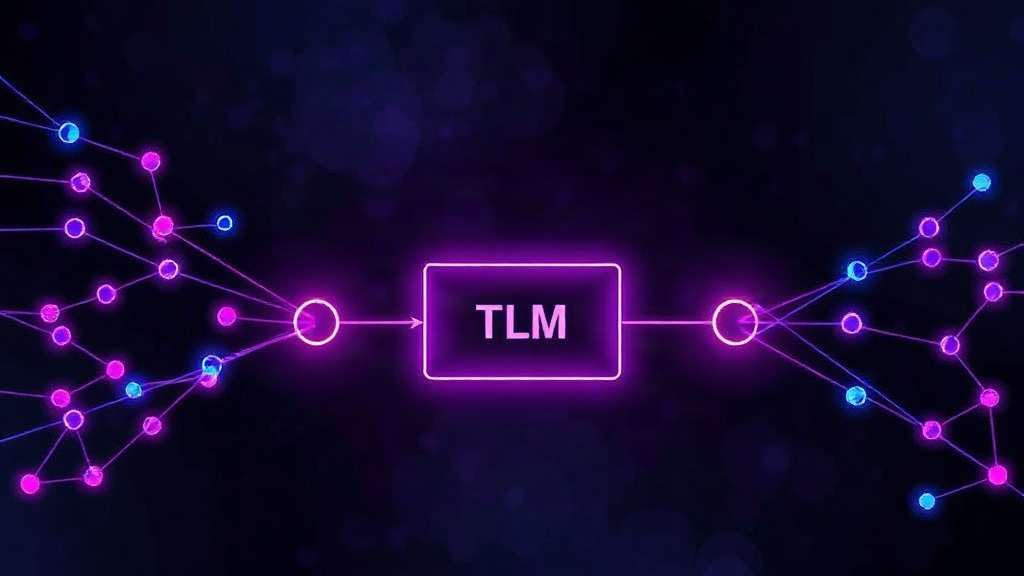
Cache-to-Cache aims to solve this by allowing direct access to the KV cache. The researchers envision a system where an LLM can query another LLM's KV cache, extract relevant semantic information, and integrate it into its own processing flow. This could involve a 'writer' LLM populating its KV cache and a 'reader' LLM accessing that cache to inform its next generation step, or vice-versa. The key is that the information is shared at the representation level, not just at the output token level.
The implications are substantial. By sharing semantic information directly, models can achieve a more profound understanding of context and intent. This could lead to more coherent multi-agent systems, more efficient collaborative reasoning, and faster response times in complex tasks that require the coordinated effort of multiple AI agents.
Potential Applications and Benefits
The immediate benefit of Cache-to-Cache is speed. Eliminating the serialization and deserialization steps dramatically reduces latency. For tasks that require rapid iteration or real-time collaboration between AI agents, this could be a game-changer.
Consider complex problem-solving scenarios. One LLM might be adept at mathematical reasoning, while another excels at creative writing. Traditionally, the math LLM would output its solution, which the writing LLM would then have to interpret and incorporate. With Cache-to-Cache, the math LLM could directly share its intermediate calculation states (its KV cache) with the writing LLM, allowing for a much more fluid and integrated response generation. The writing LLM could then, in turn, share its developing narrative structure back to the math LLM to guide further calculations, creating a true dialogue of representations.
Furthermore, this approach could enhance the ability of LLMs to learn from each other. Instead of fine-tuning on static datasets, models could potentially learn from the dynamically evolving internal states of other models, leading to more adaptive and specialized AI agents.
Challenges and Future Directions
While promising, Cache-to-Cache is not without its challenges. The primary hurdle is ensuring semantic alignment and interpretability. LLM caches are complex, and a direct dump of one model's cache into another might not be directly meaningful without a sophisticated interpretation layer. The research needs to address how to standardize or translate these internal representations across different model architectures and training regimes.
Security and privacy are also significant concerns. If LLMs can directly access each other's internal states, what prevents malicious actors from exploiting this to extract sensitive training data or proprietary model information? The mechanisms for controlled access and data sanitization will be critical.
Another question is the computational overhead of managing these direct cache-to-cache connections. While it reduces I/O, the processing required to interpret and integrate foreign cache data could introduce new computational bottlenecks. The research must also explore the scalability of this approach to systems with many interacting LLMs.
What remains to be seen is how this technique will be integrated into existing LLM frameworks. Will it require fundamental changes to how models are deployed, or can it be implemented as a middleware layer? The practical engineering challenges of making Cache-to-Cache a robust and widely adopted communication protocol are substantial.
Conclusion
The Cache-to-Cache protocol represents a significant theoretical advance in how LLMs can interact. By enabling direct semantic communication through shared KV caches, it promises to unlock new levels of efficiency, speed, and collaborative intelligence. As research progresses, addressing the challenges of semantic alignment, security, and scalability will be crucial for realizing its full potential.