Shipping a Multilingual Flutter AI Therapist: Gemini First, Claude as Fallback
Safe Space, a new Flutter application aimed at everyday mental health self-help, has launched. The app offers AI-driven chat, a mood journal, CBT-style thought records, PHQ-9 and GAD-7 screening tools, and breathing exercises. It is crucial to note that Safe Space is explicitly positioned as a self-help tool, not a replacement for professional therapy, a medical device, or a crisis hotline. This disclaimer is prominently featured across the user interface, backend systems, and public website.
The core innovation lies not merely in integrating a chatbot but in maintaining the integrity of the product when an AI model is a central component of the user experience. This build log details the technical stack and strategic decisions behind Safe Space's development.
Technical Stack and Core Features
The application is built using Flutter, enabling cross-platform development for Android and web. iOS support is planned for a future release. User authentication is handled by Firebase Authentication, providing a secure and scalable login system. The AI capabilities are powered by Google Gemini on the backend, with Anthropic Claude serving as a fallback mechanism should Gemini become unavailable. This dual-AI approach ensures a more robust and consistent user experience.
Safe Space supports an impressive array of languages, including English, Russian, Turkish, Spanish, German, Portuguese, Japanese, and Korean. This multilingual support is critical for its mission of providing accessible mental health tools to a global audience.
Maintaining Product Integrity with AI
The most significant challenge in developing an AI-powered mental health application is ensuring it remains ethically sound and does not overstep its boundaries. The developers of Safe Space have implemented several strategies to address this:
1. Explicit Consent and Disclaimers
From the outset, users are presented with clear consent forms and disclaimers. These explain the nature of the AI, its limitations, and the fact that it is not a substitute for professional medical advice or therapy. This transparency is fundamental to building user trust and managing expectations.
2. AI as a Tool, Not a Therapist
The AI's role is carefully defined as a supportive tool for self-reflection and self-help. It is programmed to guide users through exercises, offer insights based on their input, and provide coping mechanisms. It is not designed to diagnose, prescribe, or offer definitive therapeutic advice. The conversational design aims to be empathetic and helpful without claiming clinical expertise.
3. Content Moderation and Safety Filters
Robust content moderation systems are in place to detect and filter harmful or inappropriate content. This includes monitoring both user input and AI output to prevent the generation of unsafe responses. While AI models have their own safety guardrails, an additional layer of application-specific moderation is crucial for a sensitive domain like mental health.
4. Data Privacy and Security
Given the sensitive nature of mental health data, stringent data privacy and security measures have been implemented. User data is encrypted, and access is restricted. The use of Firebase Authentication and secure backend practices ensures that user information is protected. The app adheres to relevant data protection regulations.
AI Model Selection and Fallback Strategy
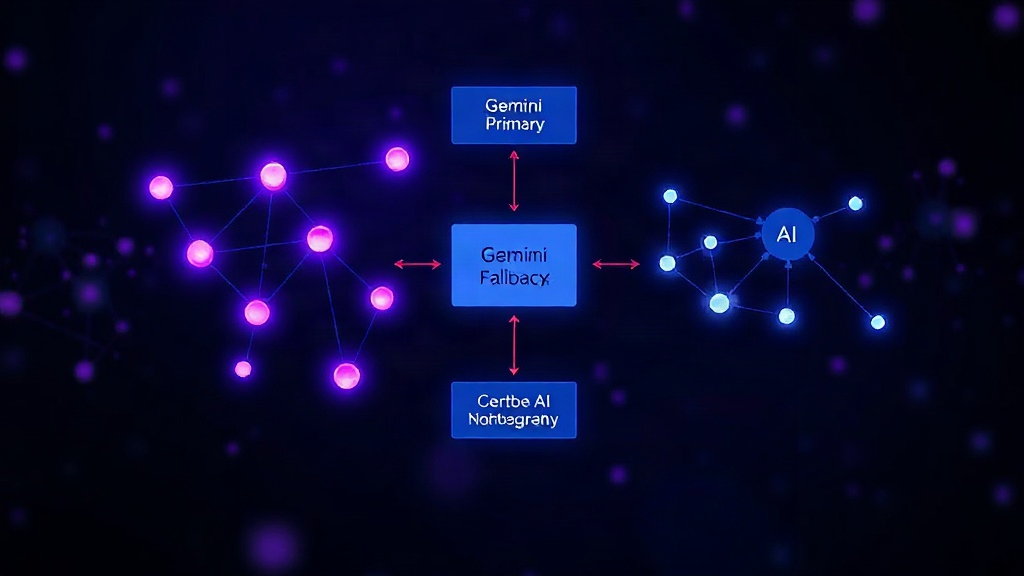
The decision to use Google Gemini as the primary AI model was driven by its advanced natural language understanding capabilities and its suitability for generating empathetic and contextually relevant responses. Gemini's performance in handling multilingual inputs was also a key factor. However, relying on a single AI provider introduces a potential point of failure.
To mitigate this, Anthropic Claude is integrated as a fallback. This strategy ensures that if Gemini experiences downtime or performance issues, the core AI chat functionality remains available. Claude, known for its strong performance in creative writing and conversational AI, provides a reliable alternative. The seamless transition between models is managed by the backend, aiming for minimal disruption to the user experience. This dual-model approach is akin to having a highly trained assistant who can step in if the primary expert is temporarily unavailable, ensuring continuous service.
Multilingual Support Implementation
Achieving true multilingual support in an AI application involves more than just translation. It requires the AI model to understand nuances, cultural contexts, and idiomatic expressions in each supported language. Safe Space leverages Gemini's inherent multilingual capabilities and has further refined its prompts and response processing to ensure accuracy and cultural appropriateness across English, Russian, Turkish, Spanish, German, Portuguese, Japanese, and Korean.
The development team meticulously tested the AI's performance in each language, iterating on prompt engineering to optimize for clarity, empathy, and safety. This extensive localization effort is what elevates Safe Space beyond a simple chatbot into a potentially valuable tool for a diverse user base.
Future Development and Considerations
The immediate next steps for Safe Space include the launch of its iOS version and continued refinement of the AI models and user experience. The team is also exploring ways to enhance the journaling and thought-record features, potentially integrating more advanced AI analysis to help users identify patterns in their moods and thoughts. The ethical considerations surrounding AI in mental health will remain a central focus, guiding future development and ensuring the app's responsible growth.
The success of Safe Space hinges on its ability to provide genuine utility as a self-help tool while strictly adhering to its non-therapeutic positioning. The technical architecture, particularly the dual-AI fallback and robust multilingual support, forms a strong foundation for this mission.