
The Case for Another Systems Language
Rust has proven the viability of safe systems programming without a garbage collector, filling a critical market need. For decades, C/C++ codebases have accumulated thousands of critical errors, leading to widespread exploits, system breaches, and instability. Memory bugs are a primary source of these vulnerabilities and system crashes.
However, Rust's approach to memory safety, while effective, comes at a steep learning curve. Its strictness is embedded deeply within the language and type system, making it semantically challenging and difficult to master. The question arises: can a new language offer similar compile-time safety guarantees without Rust's inherent complexity?
This is the question the creators of Buk set out to answer. The goal was to design a systems programming language that leverages compile-time checks to prevent common memory errors, thereby enhancing security and stability, but with a syntax and semantic model that is more approachable for developers transitioning from languages like C++ or even those finding Rust too steep.
Buk's Design Philosophy: Safety and Simplicity
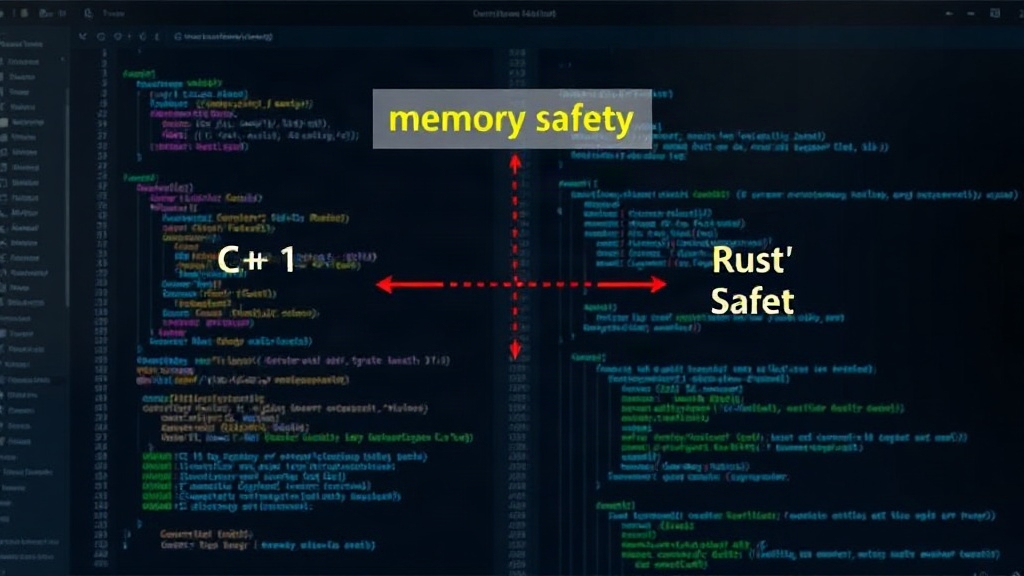
Buk's core tenet is to achieve memory safety at compile time. This means catching potential issues like null pointer dereferences, buffer overflows, and data races before the code even runs. This is a significant departure from languages like C and C++, which defer most memory management and safety checks to runtime, often with catastrophic consequences.
Unlike Rust, which relies heavily on its borrow checker and ownership system – a powerful but often criticized feature for its steep learning curve – Buk aims for a different path. While the specifics of Buk's internal mechanisms are still emerging, the stated intention is to abstract away some of the more intricate aspects of memory management that contribute to Rust's complexity. This could involve a more streamlined ownership model, alternative approaches to concurrency safety, or a different type system that still enforces safety without demanding the same level of upfront cognitive load from the programmer.
The challenge for Buk will be to strike a delicate balance. It needs to provide guarantees strong enough to prevent the kinds of bugs that plague older systems languages, yet remain accessible enough to attract a developer base. This involves not just syntactic sugar, but a fundamental rethinking of how memory and concurrency are managed and reasoned about within the language's design.
Addressing the Developer Bottleneck
The success of any new programming language hinges not just on its technical merits but on its adoption. Rust's adoption, while significant, has been hampered by its learning curve. Many organizations that could benefit from Rust's safety guarantees hesitate due to the time and resources required to train their existing developer workforce. This creates an opportunity for languages like Buk.
If Buk can deliver on its promise of Rust-like safety with improved developer ergonomics, it could become a compelling alternative for projects where Rust's complexity is a barrier. This includes embedded systems, operating system development, game engines, and high-performance backend services – areas where memory safety is paramount but the cost of developer ramp-up is a significant consideration.
The development team behind Buk is reportedly focused on creating clear documentation and a supportive community from the outset. This is crucial for any language aiming to break into established ecosystems. Early access to tools, a well-defined roadmap, and responsive feedback channels will be key to fostering early adoption and building momentum.
The Road Ahead for Buk
The systems programming landscape is competitive, with established players like C++, Rust, and Go, along with emerging contenders. Buk's success will depend on its ability to clearly articulate its unique value proposition and demonstrate its practical advantages through benchmarks and real-world use cases.
Key questions remain about Buk's performance characteristics, its ecosystem maturity (e.g., library support, tooling, compiler optimizations), and its long-term maintenance strategy. Will it be able to compete with the battle-tested performance of C++ or the comprehensive ecosystem of Rust? Can it attract enough contributors and users to build a thriving community?
The journey from concept to widespread adoption is long and arduous for any programming language. Buk's ambition to carve out a niche by offering a more accessible path to systems programming safety is a bold one. Its future will be shaped by its ability to deliver on its core promises and resonate with developers seeking a safer, yet more manageable, alternative.