
The Annoyance of Unwanted Notifications
The silent hum of a mosque prayer service, a college lecture hall, or a crucial medical appointment can all be shattered by the jarring sound of a smartphone notification. This isn't just a minor inconvenience; it's a social disruption. For Haseeb, the breaking point came during a Friday sermon. A loud notification chime from his phone, despite his certainty he'd silenced it, caused visible embarrassment and drew unwanted attention. This recurring friction, this "did I remember to silence my phone?" anxiety, is a common experience in our hyper-connected world. It highlights a fundamental gap: our phones, capable of immense processing power, often fail at the simple, context-aware task of knowing when to be quiet.
Existing solutions, like time-based schedules, fall short because they lack real-world context. They don't adapt to spontaneous changes in plans or unexpected locations. This is the problem Haseeb set out to solve with Muffle, an application designed to intelligently manage phone silence based on location, not just manual input or rigid schedules.
The Core Problem: Contextual Awareness Deficit
The fundamental issue is a lack of contextual awareness in our mobile devices. While we have powerful tools for communication and information, they operate with a limited understanding of our immediate environment and social obligations. The friction arises from the mismatch between our real-world activities and the persistent, attention-demanding nature of digital notifications. Haseeb's journey began with an exploration of existing automation tools, but he found them either too resource-intensive or too complex for the straightforward goal of ensuring his phone remained silent when it mattered most.
This led to the realization that the solution needed to be more sophisticated than a simple timer. It required a system that understood presence – knowing when the user was within a specific, sensitive area. This is the domain of geofencing, but traditional geofencing approaches often come with a significant battery drain, posing a new challenge: how to implement precise location awareness without crippling the device's power source.
The goal for Muffle became clear: to create a geofencing engine that was both highly accurate and exceptionally battery-efficient. This isn't a trivial task. GPS, while precise, is notoriously power-hungry. Relying on it constantly would defeat the purpose of a low-power solution. Therefore, a multi-faceted approach was necessary, combining various location technologies and intelligent algorithms to strike the right balance.
Architecting for Low Power: The Technical Hurdles
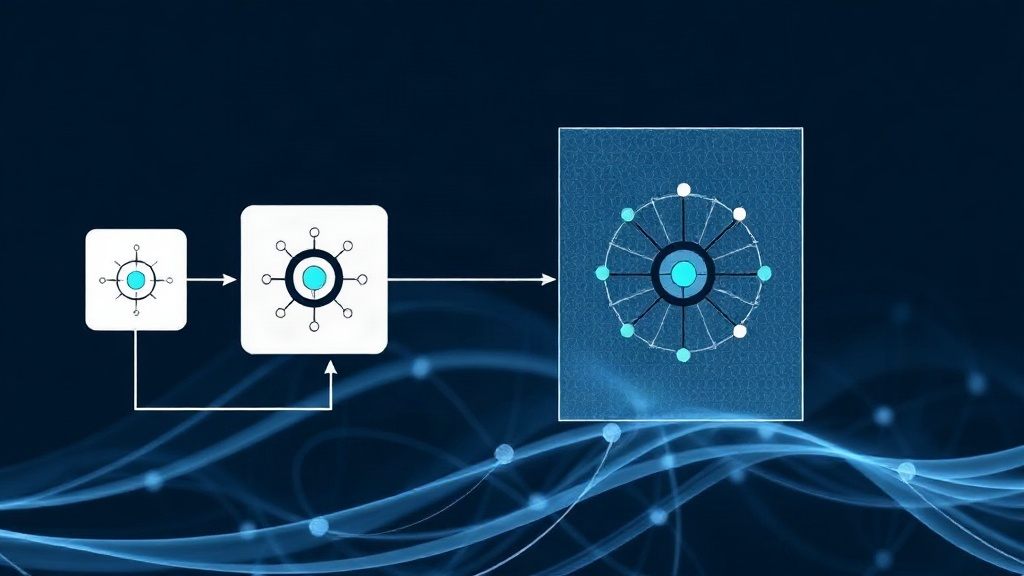
Building a low-power geofencing engine involves navigating several technical complexities. The primary challenge is minimizing battery consumption while maintaining accuracy. Constant GPS polling is the most straightforward way to achieve accuracy but is unsustainable for a background service. This necessitates a smarter strategy.
One key technique is adaptive polling. Instead of checking the location at fixed intervals, the system can adjust its polling frequency based on various factors. For instance, when the user is stationary or moving slowly within a geofenced area, the polling can be less frequent. As the user approaches the boundary of a geofenced zone, the polling rate can increase to ensure timely detection of entry or exit. This dynamic adjustment is crucial for power saving.
Another critical aspect is leveraging fused location providers. Modern mobile operating systems offer APIs that combine data from multiple sensors – GPS, Wi-Fi, cellular triangulation, and even Bluetooth beacons – to provide a more accurate location with potentially lower power consumption than relying on GPS alone. By intelligently fusing these data sources, the engine can achieve a good balance between precision and efficiency. For example, Wi-Fi scanning can provide a rough location estimate, and GPS can be activated only when the user is likely within a geofenced region, reducing unnecessary GPS usage.
Furthermore, the design of the geofences themselves plays a role. Smaller, more numerous geofences can increase the overhead of managing and monitoring them. Conversely, overly large geofences might sacrifice the precision needed to trigger actions at the right moment, leading to premature silencing or delayed unsilencing. The engine must efficiently manage the state of multiple geofences, only actively monitoring those that are relevant to the user's current context.
Intelligent State Management and User Experience
Beyond the raw location tracking, Muffle's success hinges on intelligent state management and a seamless user experience. The engine needs to accurately track when a user enters or exits a defined geofenced area. This involves not just detecting the boundary crossing but also managing the state transitions reliably. For example, if a user briefly enters and then immediately exits a geofenced area (perhaps while driving past it), the system should ideally not trigger a state change, preventing unnecessary notification toggling.
This requires implementing hysteresis – a small buffer zone around the geofence boundary. The system waits for the user to be a certain distance *inside* the zone before registering entry, and a certain distance *outside* before registering exit. This prevents rapid state flapping and improves the perceived reliability of the application.
The user interface and experience are paramount. Setting up geofences should be intuitive. Users need to be able to easily define the locations where they want their phone to be silenced (e.g., home, work, mosque) and specify the desired behavior (e.g., silence all notifications, vibrate only). Muffle aims to abstract away the complexity of the underlying geofencing engine, providing a simple, user-friendly interface that empowers individuals to regain control over their device's attentiveness.
The ultimate goal is to create an application that fades into the background, working reliably without demanding constant attention or draining the battery. It's about building a system that understands the user's life, anticipates their needs, and acts proactively to prevent social awkwardness and maintain focus. This journey of balancing precision with power efficiency is a testament to the engineering required to make smart, context-aware technology a reality.