
The Challenge of Trustworthy RAG in Production
Retrieval Augmented Generation (RAG) systems promise to infuse large language models (LLMs) with external knowledge, making them more accurate and context-aware. However, moving RAG from a research prototype to a production-ready system presents significant challenges, primarily around maintaining trustworthiness. The core issue is that RAG systems are not static; their performance can degrade over time due to changes in the underlying data, the LLM itself, or the retrieval mechanisms. Without a robust evaluation strategy, retrieval failures, factual inaccuracies (hallucinations), and performance drift can go unnoticed, eroding user trust and undermining the system's utility.
Consider a customer support chatbot powered by RAG. Initially, it might flawlessly retrieve and synthesize information from a company's knowledge base. But what happens when new product documentation is released, or a critical policy is updated? If the RAG system fails to incorporate these changes or retrieves outdated information, the chatbot could provide incorrect advice, leading to customer frustration and potential business impact. This is akin to a meticulously organized library where, over time, books are misplaced, new acquisitions aren't cataloged, and the librarian can no longer reliably find the right book for a patron. The system's effectiveness degrades silently until a patron is given wrong information.
Designing a Continuous Evaluation Workflow
Building trustworthy RAG systems requires a shift from one-off, offline evaluations to a continuous, integrated evaluation workflow. This workflow must monitor several key aspects of the RAG system's performance in real-time or near real-time. The goal is to proactively identify and address issues before they affect end-users.
Key Evaluation Dimensions
A comprehensive evaluation strategy should focus on the following dimensions:
- Retrieval Quality: This assesses whether the retriever is fetching the most relevant documents for a given query. Metrics here include precision, recall, and Mean Reciprocal Rank (MRR) of the retrieved chunks. Drift in retrieval quality can indicate issues with indexing, embedding model decay, or changes in query patterns.
- Generation Faithfulness (Hallucination Detection): This measures how well the generated answer is grounded in the retrieved context. It's crucial to detect when the LLM fabricates information or misinterprets the retrieved documents. Techniques like fact-checking against the source or using another LLM as a judge can be employed.
- Answer Relevance: Beyond faithfulness, this dimension checks if the generated answer directly addresses the user's query, even if it's factually correct based on the retrieved context. A common failure mode is generating a correct but tangential answer.
- Performance and Latency: Production systems must be performant. Monitoring query response times and resource utilization is essential to ensure a good user experience and manage operational costs. Sudden spikes in latency can indicate retrieval bottlenecks or LLM overload.
- Data Freshness and Coverage: This involves ensuring the knowledge base is up-to-date and comprehensive. Periodic checks can verify that new information is being indexed and that the system can still access older, relevant data.
Implementing Continuous Evaluation
Integrating these evaluation dimensions into a production RAG system requires a multi-pronged approach:
Automated Monitoring and Alerting
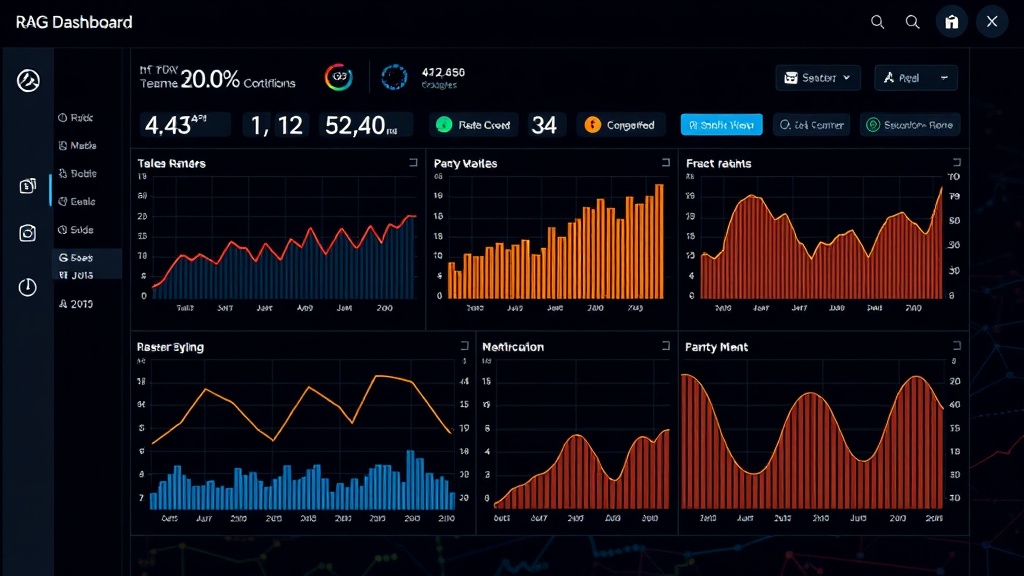
The first line of defense is automated monitoring. This involves setting up systems that continuously sample user queries and system responses. Key metrics for retrieval quality, faithfulness, and relevance should be tracked. When these metrics fall below predefined thresholds, automated alerts should be triggered, notifying the relevant teams. For instance, a sudden drop in the average faithfulness score across a sample of recent queries could indicate a problem with the LLM's fine-tuning or a degradation in the retriever's ability to find suitable context.
Human-in-the-Loop Feedback
While automated metrics are essential, human judgment remains critical, especially for nuanced aspects like answer relevance and subtle hallucinations. Implementing mechanisms for users to provide feedback (e.g., thumbs up/down, free-text comments) is invaluable. This feedback can be used to identify edge cases, correct misclassifications by automated metrics, and create new evaluation datasets. This human feedback loop acts as a continuous calibration for the automated systems, ensuring they remain aligned with user expectations.
Synthetic Data Generation
To supplement real user data, synthetic data generation can be employed. This involves using LLMs to create realistic queries and corresponding ideal answers based on existing knowledge base documents. This allows for more controlled testing of specific failure modes (e.g., queries that require synthesizing information from multiple documents) and for evaluating changes to the RAG pipeline before deploying them to production. It's like creating practice exams for the RAG system to ensure it can handle a wide variety of question types.
Regular Audits and Retraining
Beyond continuous monitoring, periodic, more in-depth audits are necessary. These audits might involve manually reviewing a larger sample of interactions, performing stress tests, and re-evaluating the entire system on curated benchmark datasets. Based on the findings from both continuous monitoring and audits, the RAG components—the retriever, the reranker, and the generator LLM—may need to be retrained or fine-tuned. This iterative process of evaluate-and-refine is key to maintaining trustworthiness over the system's lifecycle.
The Path to Trustworthy RAG
Building trustworthy RAG systems in production is not a one-time task but an ongoing commitment. By implementing a robust continuous evaluation workflow that monitors retrieval quality, generation faithfulness, answer relevance, and performance, organizations can proactively identify and address issues. Combining automated monitoring with human feedback and synthetic data generation provides a comprehensive approach to maintaining system integrity. This diligent evaluation process ensures that RAG systems remain reliable, accurate, and trustworthy as they evolve, ultimately delivering on their promise to enhance LLM capabilities with real-world knowledge.