The Limits of Personal AI Assistants for Legal Intake
Law firm intake is a critical process, often mistaken for a simple chatbot interaction. When a prospective client emails intake@yourfirm.com, the firm doesn't just need a conversational response. It requires meticulous data capture, rigorous name verification against existing clients and adverse parties, and a seamless handoff to a human attorney. The cardinal rule is to prevent any AI model from dispensing legal advice directly via email. This is where the common approach of pointing an AI at a human's inbox falls short. While suitable for personal assistants managing general correspondence, this model is ill-suited for regulated intake processes.
A dedicated intake agent requires its own identity: its own email address, a distinct audit trail, and a clear boundary. This ensures the agent acts solely as a fact-gathering entity, separate from the attorney's decision-making role. The process demands a secure, controlled environment where data is collected and processed without the AI overstepping its bounds. This architecture is crucial for maintaining compliance and client trust.
Architecting an Agent Account for Secure Intake
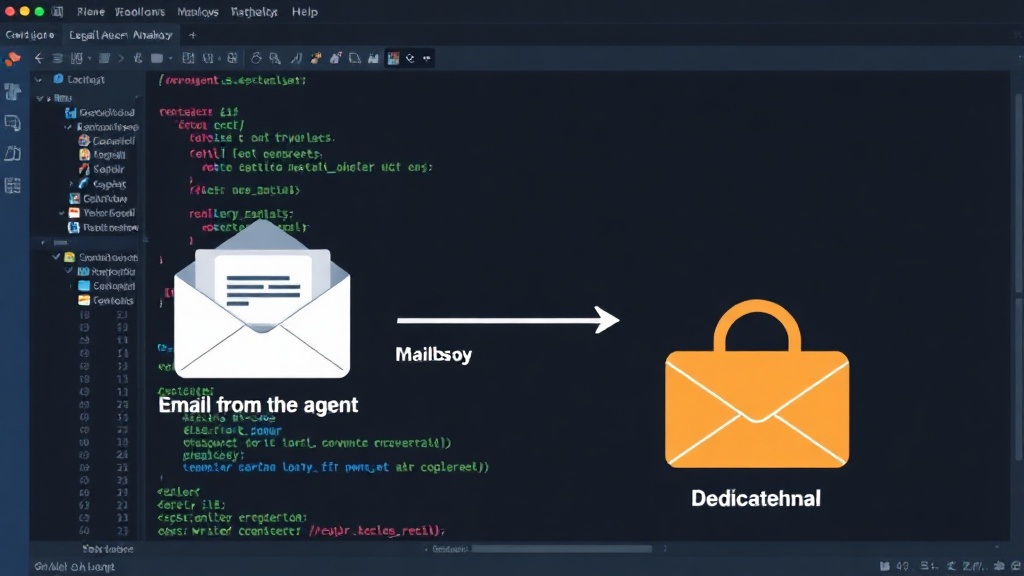
To achieve this, the agent must operate from its own dedicated mailbox. Using a service like Nylas, an Agent Account provides precisely this isolation. It grants the AI agent its own email address, effectively making it a participant in the communication flow rather than an invisible assistant. This dedicated address serves as the central point for all intake communications, ensuring that every piece of information is logged under the agent's identity.
The setup involves wiring up inbound webhooks to this dedicated mailbox. When a new email arrives at intake@yourfirm.com (managed by the agent's account), the webhook triggers the AI agent's workflow. This workflow is designed to parse the incoming email, extract relevant details about the potential case, and initiate a structured collection and reply loop. The agent's primary function is to gather information, not to provide legal counsel. It acknowledges receipt, asks clarifying questions, and requests necessary documentation, all while maintaining a clear record of its actions.
The Collect-and-Reply Loop: Fact Gathering, Not Advice
The core of the agent's operation is the collect-and-reply loop. Upon receiving an email, the AI agent analyzes the content to identify the nature of the dispute and key details. It then formulates a response that is designed to elicit further information or clarify ambiguities. This response is not drafted by the AI as if it were an attorney; instead, it's a system-generated prompt aimed at completing the data collection phase.
For instance, if a client emails about a landlord-tenant dispute, the agent might respond by asking for the lease agreement, dates of incidents, and specific issues faced. Crucially, the agent is programmed to avoid any language that could be construed as legal advice. It does not interpret laws, predict outcomes, or suggest legal strategies. Its sole purpose is to gather the facts necessary for an attorney to make an informed assessment. This distinction is paramount in a legal context.
Verification and Handoff: The Attorney's Role
Once the agent has collected a sufficient amount of information, it doesn't close the loop with the client. Instead, it prepares a structured summary of all gathered data. This summary includes the original email, the agent's interactions, extracted details, and any attached documents. This package is then securely handed off to a human attorney or paralegal. The attorney reviews the complete intake file, verifies the information, and decides on the next steps, which might include contacting the prospective client directly.
A vital part of this handoff involves checking the names mentioned in the intake against the firm's internal database of clients and known adverse parties. This is a critical step for conflict checking. The AI agent can facilitate this by extracting names, but the final verification and decision-making authority rests with the human legal professional. This ensures that the firm avoids conflicts of interest and maintains professional standards. The agent's role is to augment the intake process by ensuring thorough data collection and initial screening, thereby increasing efficiency without compromising the integrity of legal practice.
Audit Trails and Compliance
Operating from its own mailbox provides an inherent audit trail. Every email sent and received by the agent account is logged. This creates a transparent record of all communications related to a specific intake, which is invaluable for compliance and internal review. It clearly shows what information was requested, what was provided, and when interactions occurred. This level of detail is often difficult to achieve with agents that operate indirectly through a human's inbox.
This dedicated approach also creates a hard wall between the AI's fact-gathering function and the attorney's professional judgment. It reinforces that the AI is a tool for data collection and organization, not a substitute for legal expertise. For firms operating in regulated industries like law, this separation is not just good practice; it's often a requirement for maintaining ethical standards and avoiding liability. The agent's distinct digital identity ensures that its actions are attributable and its scope of operation is clearly defined.
The Future of AI in Legal Intake
This model of a dedicated AI agent with its own mailbox represents a more robust and responsible way to integrate AI into sensitive workflows like legal intake. It prioritizes security, compliance, and the clear delineation of roles. As AI capabilities advance, this pattern of creating distinct, auditable digital participants will likely become more common across various professional services where data integrity and regulatory adherence are paramount.