AI Agents for Real-World Trading: Beyond Chatbots
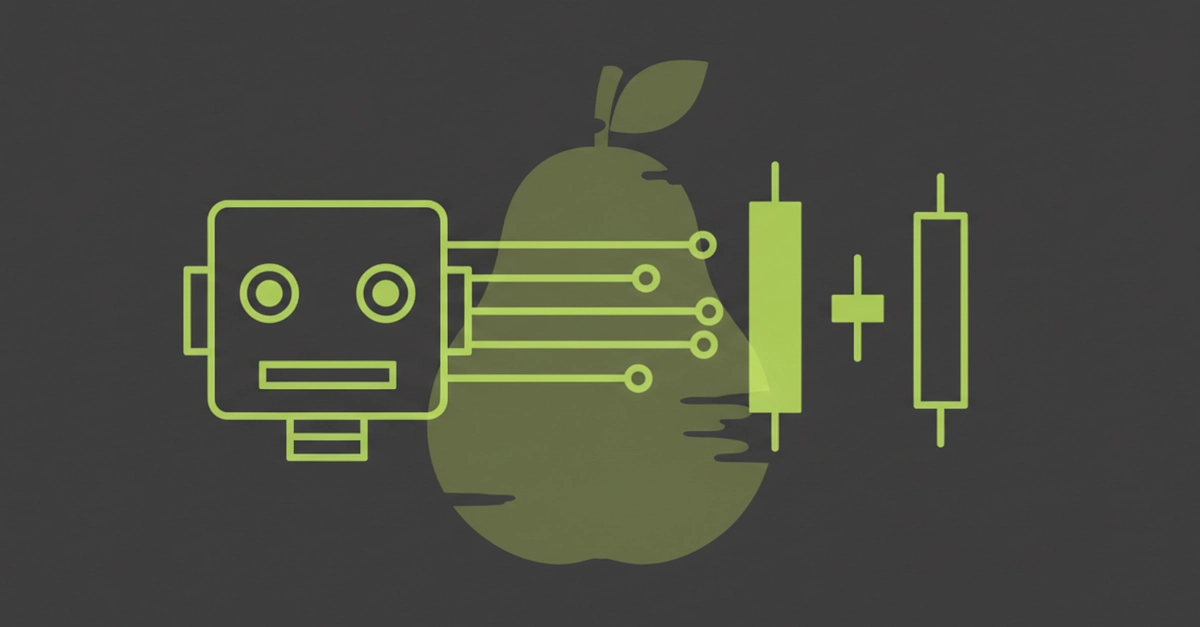
The dream of AI agents that can actively participate in financial markets, not just analyze them, is closer than ever. While many AI models excel at conversational tasks and data interpretation, wiring them to execute real-world financial transactions requires a robust protocol. The Model Context Protocol (MCP) emerges as a clean and efficient solution for connecting AI models to live exchanges, enabling them to perform actions beyond simple data retrieval. This article details how to build a decentralized finance (DeFi) trading agent using MCP, specifically targeting leveraged pair trading on the Hyperliquid exchange via Pear Protocol.
The core challenge in creating a trading agent is bridging the gap between an AI's understanding of market data and its ability to interact with a trading platform. Traditional approaches often involve complex API integrations and custom logic, which can be brittle and difficult to maintain. MCP simplifies this by providing a standardized framework for models to access market information, manage positions, and execute trades. It’s designed to be modular, allowing developers to plug in different AI models and connect to various trading venues.
Understanding Pear Protocol and Hyperliquid
Pear Protocol is a platform built on Hyperliquid that specializes in pair trading. Unlike traditional trading where you might go long or short a single asset, pair trading involves taking opposite positions on two related assets. The goal is to profit from the relative price movement (the ratio) between these assets, regardless of the overall market trend. A classic example is going long on Ethereum (ETH) and short on Bitcoin (BTC) if you believe ETH will outperform BTC, or vice versa. This strategy aims to hedge against broad market volatility.
Hyperliquid, the underlying infrastructure for Pear Protocol, is a high-performance, order-book-based perpetual futures exchange. It is known for its speed and efficiency, making it suitable for sophisticated trading strategies. By integrating with Hyperliquid, Pear Protocol offers leveraged trading capabilities, allowing traders to amplify their positions and potential profits (or losses).
The Model Context Protocol (MCP) Framework
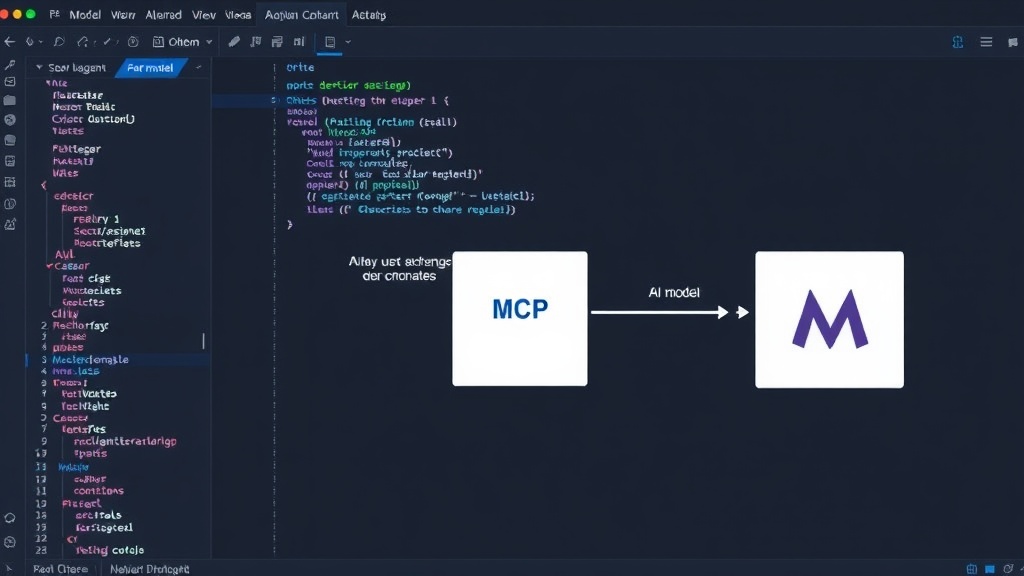
MCP is an open-source protocol designed to facilitate the interaction between large language models (LLMs) and external tools or APIs. It acts as an intermediary, enabling models to not only process information but also to take actions in the real world. For a trading agent, this means an LLM can analyze market data, understand your portfolio, browse available trading pairs, and, crucially, place orders.
The power of MCP lies in its context management. It allows the model to maintain a consistent understanding of the current state of the market, user positions, and available actions. This is critical for trading, where decisions must be based on up-to-date information and a clear understanding of ongoing positions. Instead of stateless API calls, MCP provides a persistent context that the model can query and update.
Building the `mcp-pear` Agent
To build a Pear Protocol DeFi trading agent, we leverage mcp-pear, an open-source MCP server specifically developed to wrap Pear Protocol's API. This server acts as the bridge between the MCP framework and the Pear Protocol’s trading functionalities on Hyperliquid.
Core Functionalities of the Agent
The mcp-pear agent, powered by MCP, can perform several key functions:
- Browse Pair Markets: The agent can query Pear Protocol for available trading pairs, including their current price ratios, volatility, and other relevant market data.
- Read Positions and Portfolio: It can access your current open positions on Pear Protocol and analyze your overall portfolio status, including P&L, margin levels, and asset allocation.
- Open Leveraged Pair Trades: When enabled, the agent can initiate new leveraged pair trades. This involves selecting a pair, determining the direction (long one asset, short the other), setting the leverage, and submitting the order to Hyperliquid via Pear Protocol.
- Close Leveraged Pair Trades: The agent can also manage existing positions, closing them based on predefined strategies or market conditions. This is crucial for risk management and profit-taking.
Technical Implementation Details
The mcp-pear server is built using Python, a popular choice for AI and financial applications due to its extensive libraries and ease of use. It utilizes Pear Protocol's SDK to interact with the Hyperliquid exchange. The MCP server exposes an API that an LLM can call. The LLM, acting as the decision-maker, receives market data and user portfolio information, processes it, and then instructs the MCP server on what actions to take.
For instance, an LLM might be prompted with a scenario: 'Analyze the ETH/BTC pair. If ETH's dominance over BTC is expected to increase by 2% in the next 24 hours and my current margin allows, open a 5x leveraged long ETH/short BTC position with a target profit of 10%.' The MCP server would then translate this instruction into the necessary API calls to Pear Protocol.
The Power of Context in Trading Agents
What truly sets MCP-powered agents apart is their ability to maintain context. Imagine an agent that doesn't just react to the last price tick but remembers your entire trading history, your risk tolerance, and your current open positions. This is akin to having a seasoned trader who understands the nuances of your portfolio and the broader market landscape. The MCP framework allows the LLM to access and utilize this rich context, leading to more informed and strategic trading decisions.
This is fundamentally different from simple trading bots that execute pre-programmed if-then rules. An MCP agent can adapt its strategy based on changing market conditions and its understanding of your specific financial goals. It can browse through various pair trading opportunities, evaluate their risk-reward profiles, and execute trades dynamically. The model's natural language understanding capabilities can also be used to interpret complex market signals or news events, translating them into actionable trading strategies.
Turning on the Agent: Risks and Considerations
While the potential for an AI-powered trading agent is immense, enabling it to execute trades carries significant risks. Automated trading, especially with leverage, can lead to rapid and substantial financial losses if not managed carefully. It is imperative for users to understand:
- Risk Management: Implement robust stop-loss orders, position sizing, and daily loss limits. The AI agent should be configured with strict risk parameters.
- Backtesting and Paper Trading: Thoroughly backtest any trading strategy before deploying it with real capital. Utilize paper trading (simulated trading) features on Hyperliquid or Pear Protocol to validate the agent's performance in live market conditions without financial risk.
- Model Drift and Performance: AI models can change their behavior over time, or their performance may degrade as market dynamics shift. Continuous monitoring and periodic retraining or strategy adjustment are necessary.
- Security: Ensure the security of API keys and any credentials used to access the trading platform. Compromised keys can lead to unauthorized trading and loss of funds.
The ability to turn on the trading functionality should be a deliberate step, taken only after extensive testing and a clear understanding of the associated risks. The mcp-pear project provides the tools, but the ultimate responsibility for trading decisions and their outcomes rests with the user.
The Future of AI in DeFi Trading
The development of agents like the one described here marks a significant step towards more sophisticated and automated DeFi trading. By leveraging frameworks like MCP, developers can create AI agents that are not just passive analysts but active participants in the market. This opens up possibilities for novel trading strategies, personalized portfolio management, and potentially more efficient market operations. As AI capabilities continue to advance and protocols like MCP mature, we can expect to see more powerful and versatile AI-driven financial tools emerge in the DeFi space.