Why AI Agents are the Next Frontier for Developers
The journey for many .NET developers into the world of Artificial Intelligence begins with straightforward API calls to Large Language Models (LLMs). This approach is functional for basic tasks like question answering, but it quickly reaches its limits when the goal shifts from generating text to performing actions. This is where AI agents emerge as the critical next step. Agents represent the crucial bridge between simply invoking an LLM and architecting a system capable of complex reasoning, intelligent tool utilization, and autonomous action-taking. Azure AI Foundry, specifically its Agent Service, coupled with the robust .NET ecosystem, dramatically lowers the barrier to entry for building these sophisticated agents.
Unlike traditional chatbots that respond to direct input, AI agents are designed to understand goals, break them down into actionable steps, select and use appropriate tools (like APIs, databases, or code execution environments), and execute those steps to achieve a desired outcome. This shift from passive response to active problem-solving is fundamental to building truly intelligent applications. The concept is gaining traction rapidly, moving from theoretical exploration to practical application in various business workflows.
Building Your First Agent with Azure AI Foundry and .NET
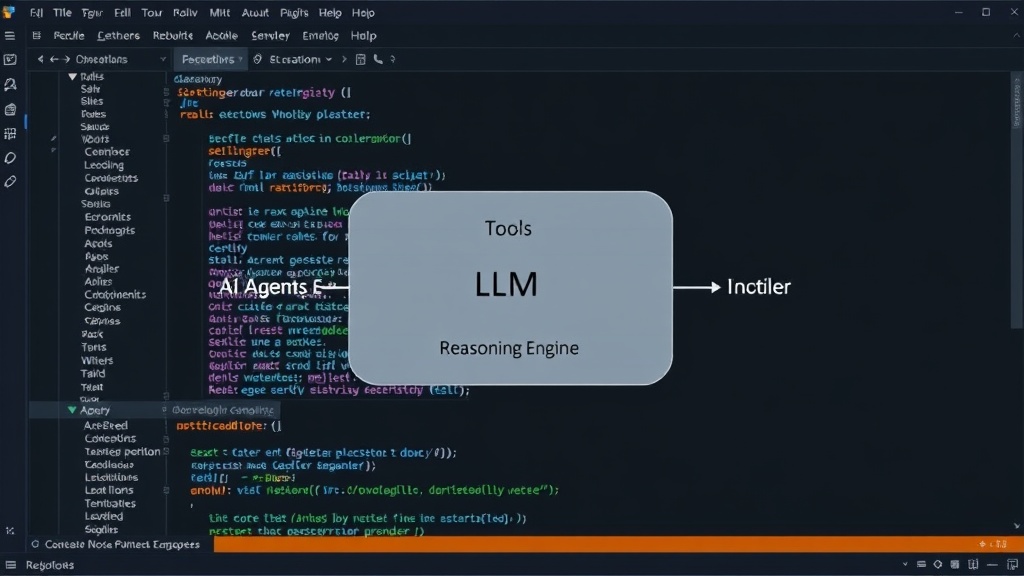
The process of standing up an AI agent can be broken down into several key stages, from the cloud infrastructure setup to the granular C# code that defines the agent's behavior. Azure AI Foundry provides a managed service designed to simplify the deployment and management of these agents. This platform abstracts away much of the underlying complexity associated with orchestrating LLM interactions, managing state, and integrating external tools.
For .NET developers, this means leveraging familiar programming constructs and libraries to define the agent's capabilities. The core of agent development involves defining the agent's objectives, specifying the tools it can access, and configuring its reasoning loop. The Azure AI Foundry Agent Service handles the heavy lifting of prompt engineering, tool selection, and response generation, allowing developers to focus on the application logic and the specific business problems the agent needs to solve.
A typical agent workflow might involve the following steps:
- User Input: The agent receives a high-level goal or request from the user.
- Planning: The LLM, guided by the agent's configuration, decomposes the goal into a sequence of smaller, executable steps.
- Tool Selection: For each step, the agent identifies the most appropriate tool to use. This could be a custom API, a search engine, a database query, or even a code interpreter.
- Tool Execution: The agent invokes the selected tool with the necessary parameters.
- Observation: The agent receives the output from the tool.
- Reasoning/Iteration: The agent processes the observation, updates its internal state, and either proceeds to the next step, revises its plan, or formulates a final response.
- Response Generation: Once the goal is achieved, the agent presents the result to the user.
Beyond Chatbots: Real-World Applications
The power of AI agents extends far beyond simple conversational interfaces. Consider SmartStock AI, an inventory management platform built using Django and LangChain. This platform demonstrates how agents can be integrated into core business operations to drive proactive decision-making. SmartStock AI doesn't just track inventory; it actively forecasts future product demand, recommends optimal purchasing decisions through its AI agents, and answers complex inventory-related questions using Retrieval-Augmented Generation (RAG) with verifiable source citations. It also processes invoices using multimodal AI capabilities and generates real-time alerts, showcasing a comprehensive approach to inventory management.
Another compelling use case involves agents interacting with private user accounts. The challenge here lies in granting agents the specific permissions needed to perform actions within a signed-in environment without over-exposing sensitive data or enabling unintended operations. For example, an agent tasked with saving a draft article on a platform like DEV must be able to modify private account state (creating a draft) while being restricted from publishing it. This requires a nuanced approach to access control and task delegation, distinguishing between reading public data and manipulating private user data. Successfully navigating these permission boundaries is key to unlocking more advanced agent functionalities.
The .NET Advantage for Agent Development
.NET provides a mature, powerful, and familiar environment for developers to build sophisticated AI agents. Its extensive libraries, robust tooling, and strong community support make it an ideal choice for integrating complex AI functionalities into applications. The ability to define custom tools, manage agent state, and orchestrate multi-step processes using C# significantly enhances developer productivity.
When building agents, developers often face the challenge of integrating diverse tools and services. The .NET ecosystem offers seamless integration capabilities with Azure services, including Azure OpenAI for LLM access, Azure Blob Storage for data storage, and Azure Functions for serverless compute. This tight integration streamlines the development process, allowing developers to focus on the agent's core logic rather than on infrastructure plumbing.
The shift towards agents signifies a maturation of AI development. It moves the focus from isolated LLM calls to the creation of end-to-end intelligent systems. For .NET developers, embracing this paradigm shift with tools like Azure AI Foundry opens up a vast landscape of opportunities to build the next generation of intelligent applications. The ability to create agents that reason, use tools, and act autonomously transforms how we can leverage AI to solve complex problems and automate intricate workflows.