Why You Need First Principles for AI Agents
Many developers rely on frameworks like LangChain, CrewAI, or AutoGen for AI agent development. While effective, these tools often provide a pre-defined 'family structure' without explaining the underlying reasons for that structure. Elon Musk champions 'first principles' thinking, urging us to break down problems to their fundamental truths rather than relying on analogies. The FROST framework aims to bring this approach to AI agents, focusing on the essential questions: Why do agents need governance? Why is memory and inheritance crucial? Why is a hierarchical division of labor necessary? FROST-SOP then translates these first principles into a runnable system.
The Cell Division Analogy for AI Agent Essence
Consider the fundamental process of cell division. A single cell contains a nucleus (memory) and proteins (capabilities). When it divides, it produces two independent cells, Cell A and Cell B, each inheriting the same DNA. This biological process offers a powerful analogy for understanding the core components and behavior of AI agents.
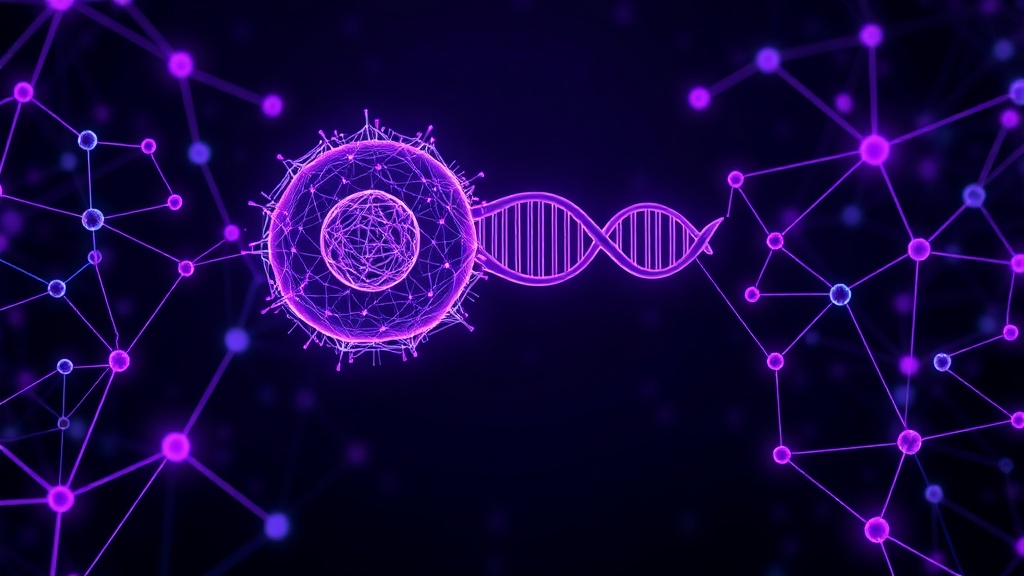
FROST abstracts this into four atomic elements, mirroring fundamental biological principles:
| Atom | Biological Analogy | AI Agent Parallel |
|---|---|---|
| Foundation (F) | Cell Nucleus (DNA) | Core Knowledge & Memory |
| Role (R) | Cellular Function/Specialization | Agent Persona & Capabilities |
| Orchestration (O) | Cell Signaling & Regulation | Inter-Agent Communication & Governance |
| Strategy (S) | Cell Growth & Adaptation | Long-term Goal Setting & Planning |
| Teamwork (T) | Cellular Cooperation | Multi-Agent Collaboration & Workflow |
FROST-SOP: From Principles to Practice
The FROST framework is not merely theoretical. FROST-SOP provides a concrete methodology and set of tools to implement these first principles. It guides developers in structuring AI agent teams, defining their roles, establishing communication protocols, and managing their collective memory and goals. This SOP acts as the blueprint for building resilient, understandable, and scalable AI agent systems from the ground up.
The Governance Imperative: Beyond Simple Task Execution
Traditional agent frameworks often focus on individual task execution. FROST emphasizes the necessity of robust governance structures, especially as agents become more complex and autonomous. This governance layer is akin to the regulatory mechanisms within a complex biological organism or a well-run organization. It ensures that agents operate within defined boundaries, manage conflicts effectively, and align their actions with overarching objectives. Without proper governance, even sophisticated agents can devolve into chaos, making unpredictable decisions or failing to achieve their intended purpose.
Memory and Inheritance: Building on Past Experience
Just as biological organisms learn and adapt through inherited traits and acquired memories, AI agents benefit immensely from sophisticated memory systems and inheritance. FROST posits that agents should not start from a blank slate with every new task. Instead, they should possess a persistent memory of past interactions, learned behaviors, and acquired knowledge. This memory can be inherited by new agents or passed down through generations of agents, fostering efficiency and continuous improvement. This is critical for complex, long-running AI projects where learning and adaptation are paramount.
Hierarchical Division of Labor: Efficiency Through Specialization
The 'family' structure in AI agents, as seen in FROST, often implies a hierarchical division of labor. This mirrors how complex organizations and even multicellular organisms function. Specialized agents, each with defined roles and capabilities (like the 'Role' atom), can handle specific sub-tasks more efficiently. A central 'Orchestration' layer then coordinates these specialized agents, ensuring smooth communication and workflow. This specialization prevents redundancy, optimizes resource utilization, and allows for more complex problem-solving than a single monolithic agent could achieve. The 'Teamwork' atom directly addresses how these specialized roles collaborate effectively.
Building Your AI 'First Principles' System
By dissecting AI agent development into these fundamental components—Foundation, Role, Orchestration, Strategy, and Teamwork—developers can move beyond simply using existing tools. They can build systems that are inherently more understandable, adaptable, and scalable. This first-principles approach allows for greater innovation and a deeper comprehension of the emergent behaviors within multi-agent systems. FROST-SOP provides the practical pathway to instantiate this understanding, turning theoretical concepts into functional, robust AI agent architectures.